

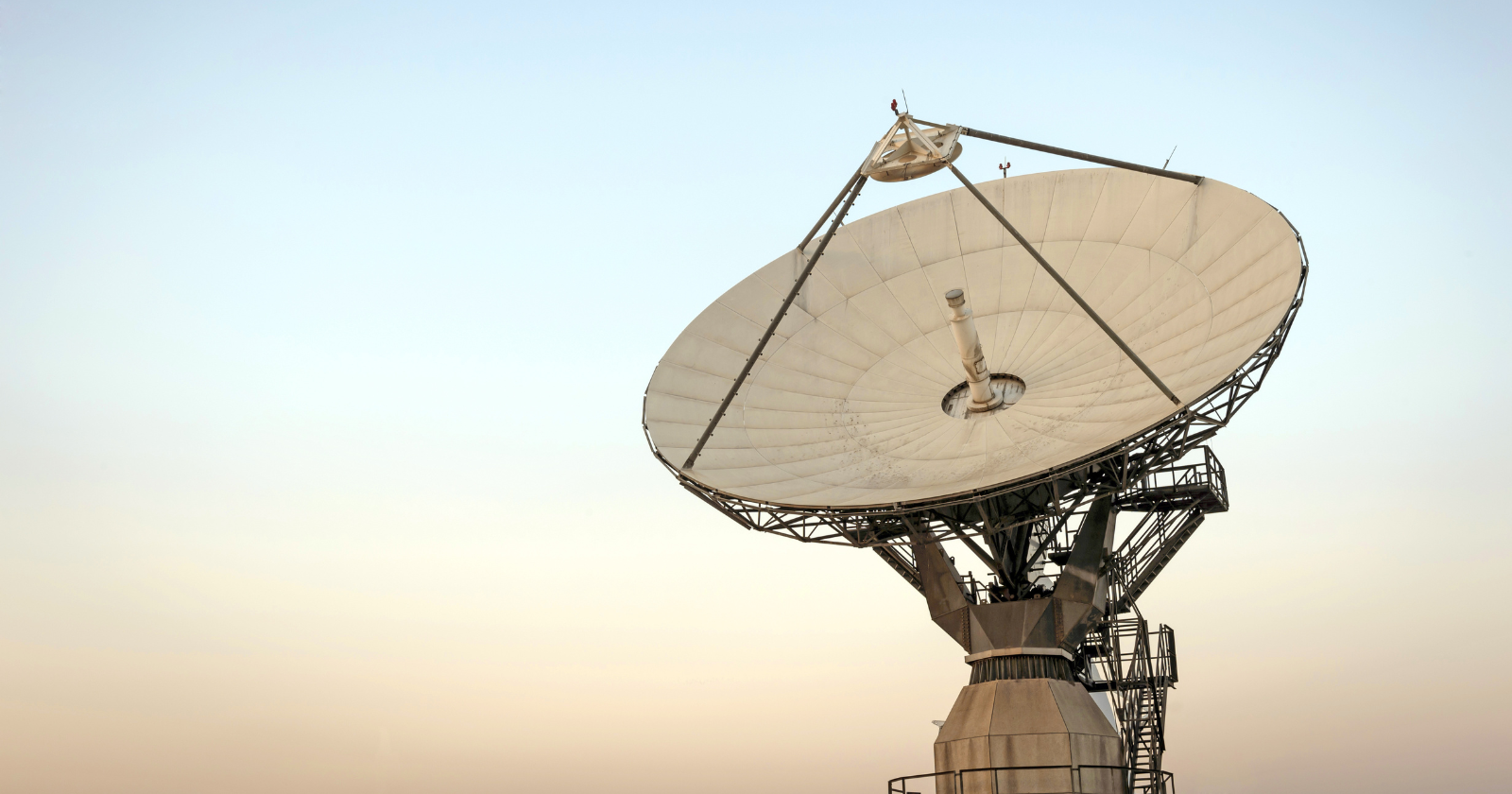
The HummingSat is a geostationary communications satellite roughly the size of an industrial washing machine, and it weighs about a ton — around a fifth the mass of the multi-ton spacecraft that have carried the world’s television, broadband and telephone traffic from 36,000 kilometers up for sixty years. On July 16, its Swiss maker, SWISSto12, closed a $70 million Series C funding round, betting that a satellite small enough for a single country to own outright is worth more to governments than leased capacity on someone else’s mega-constellation. The Renens-based company disclosed the raise alongside financial results showing $140 million in 2025 revenue and a contract backlog exceeding $500 million.
The round lands at a moment when the traditional GEO satellite business is being squeezed from two directions. Large low Earth orbit broadband constellations are eroding demand for legacy multi-ton geostationary spacecraft. At the same time, governments and regional operators want sovereign communications capacity they can afford to own outright.
The HummingSat is designed for exactly that gap. Roughly the size of an industrial washing machine and weighing about a ton, it comes in at about a fifth the mass of a conventional geostationary platform — small enough to ride to orbit as a secondary payload rather than commanding a dedicated launch.
The numbers behind the raise
Seven HummingSats have been ordered to date, with the first slated for completion in 2027 for SES, according to SpaceNews. Viasat is also among the announced customers. The company reports a 110 percent compound annual growth rate since 2022 and expects positive EBITDA in 2026.
According to a statement reported by Advanced Television, SWISSto12’s chief financial and strategy officer Fredrik Gustavsson said the company expects $140 million in revenue for 2025, has more than $500 million in customer contracts, and has achieved a 110% compound annual growth rate since 2022. Gustavsson characterized these metrics as indicators of an agile business deploying capital efficiently and operating at scale in a fast-growing industry, according to Advanced Television.
The private raise builds on public support. In January, ESA member states — Switzerland, Germany, Austria, Sweden, Norway and associate member Canada — pledged €73 million (about $84.8 million) to the HummingSat ARTES Partnership Project, as reported by AeroTime. Combined with private capital raised in late 2025, the total fresh funding for the company has surpassed €100 million.
A different bet than Astranis
The obvious comparison is Astranis, the San Francisco small-GEO maker. But the two companies have chosen fundamentally different business models, and that distinction matters more than the surface similarity of building smaller GEO satellites.
Astranis owns and operates its satellites, selling capacity to end customers. It is a vertically integrated operator with a manufacturing arm. SWISSto12 sells hardware. Its customers — SES, Viasat, and others still unannounced — own the spacecraft and integrate them into their own fleets.
That positions SWISSto12 as something closer to a Tier 1 supplier for the reshaped GEO market rather than a competitor to the operators it serves. It also diversifies revenue across three product lines: complete HummingSat platforms, HummingLink multi-orbit payloads, and the radio-frequency subsystems that were the company’s original business when it spun out of EPFL in 2011.
More than 2,000 SWISSto12 subsystems are currently deployed on active missions, spanning LEO constellations and traditional GEO spacecraft alike.
Why small GEO now
The economics of geostationary satellites have been under pressure for years. Starlink, OneWeb and China’s Guowang have redirected consumer broadband demand toward LEO. Traditional operators responded by delaying fleet renewals, cutting capex, and in some cases writing down entire orders.
What did not go away was the demand for specific regional, sovereign, and mission-tailored capacity — the kind of service that requires a dedicated satellite parked over a specific piece of geography. Building a $300 million spacecraft to serve a single country’s broadcast market or a mid-sized commercial contract stopped making sense. Building a $50-70 million one that fits the same slot still does.
According to SpaceNews, CEO and founder Emile de Rijk said small GEO satellites are increasingly viewed as a solution for multi-orbit, disaggregated constellations. De Rijk told SpaceNews there is significant interest in small GEO satellites for both commercial missions and government sovereign communications infrastructure.
The sovereign angle is doing more of the work in this pitch than it might appear. European governments in particular have grown wary of relying on American-owned LEO constellations for critical communications. A one-ton geostationary satellite that a national operator can own, control and place over its own territory is a very different proposition than leased capacity on someone else’s mega-constellation.
The manufacturing bottleneck

Seven HummingSats sounds modest until you consider that legacy GEO manufacturers like Airbus and Thales Alenia Space have seen order books shrink to a handful of large spacecraft per year. The industry’s problem is no longer designing satellites — it is building enough of them, fast enough, at a price that closes deals.
SWISSto12 is using the Series C to expand manufacturing and integration capacity. The company’s 3D-printed radio-frequency components, a technology it patented before it began building complete satellites, are central to that scaling story. Fewer parts, lighter assemblies, and shorter integration cycles are what make the HummingSat cost structure work.
Whether that scales cleanly to dozens of satellites per year is the open question. Every small-satellite manufacturer that has tried to industrialize has run into the same wall: the qualification, testing and integration steps that dominate cost do not shrink linearly with hardware size.
The broader market signal
SWISSto12’s raise is part of a wider pattern. Launch economics are collapsing — a recent Cambridge-led analysis of more than 4,400 rocket launches flown since 1960, published in PNAS Nexus, projects the cost of putting a kilogram into low Earth orbit falling from $3,868 last year to $273 by 2040. Cheaper launch changes what kind of satellite makes economic sense to build.
Europe is also investing more aggressively in sovereign space infrastructure across the board, from new launch sites like Sweden’s Esrange to national Earth observation programs like Canada’s RADARSAT replacement. The through-line is that governments no longer treat orbital hardware as an optional line item.
De Rijk told SpaceNews that the company’s diversified position as both a payload provider and satellite integrator through HummingSat gives it significant market potential across all orbits.
What to watch
The 2027 SES delivery is the milestone that matters. Every small-GEO program lives or dies on its first flight article — the moment when engineering ambition meets orbital reality. Astranis has flown; SWISSto12 has not yet.
If the first HummingSat performs as advertised, the seven-satellite backlog becomes a proof point, and the $500 million contract book turns into a manufacturing pipeline. If it doesn’t, or if it slips, the company’s growth curve compresses against a market window that other entrants are actively trying to close.
The Series C buys time and capacity. It does not buy certainty. The next 18 months, and specifically what rolls off the integration floor in Renens in 2027, will determine whether small GEO becomes a durable segment or a transitional one on the way to something else.