

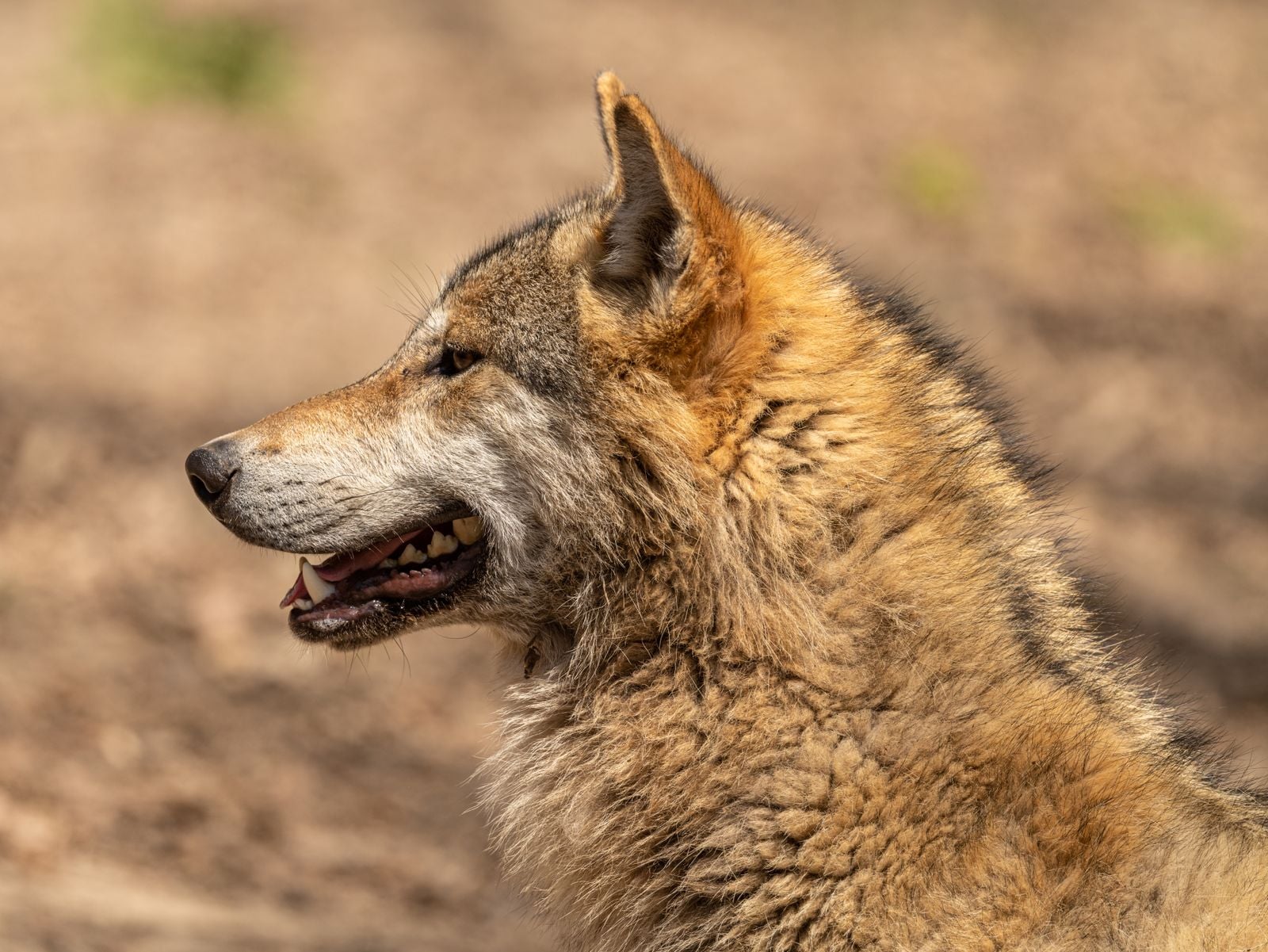
The gray wolf’s bite is powerful, but the familiar 1,200 psi figure needs context before it can be compared with a domestic dog’s. Yellowstone National Park lists a bite pressure of 1,200 psi on its wolf facts page, yet that number is a pressure estimate rather than a universal laboratory reading. Pressure depends on the contact area of the tooth, while biomechanics studies more often calculate force in newtons and show that the result changes with tooth position, skull dimensions, gape, and methodology.
A 2024 craniometric study of carnivore skulls provides a more useful wolf-to-dog comparison. It estimated an average force of 1,141 newtons at the canine and 2,426 newtons at the first lower molar for gray wolves, compared with 541 and 1,101 newtons for its domestic-dog sample. In that model, the wolf generated roughly 2.1 to 2.2 times the force of the domestic dog, but the study did not isolate German shepherds and used skull-based calculations rather than live biting trials.
Why tooth position changes the number
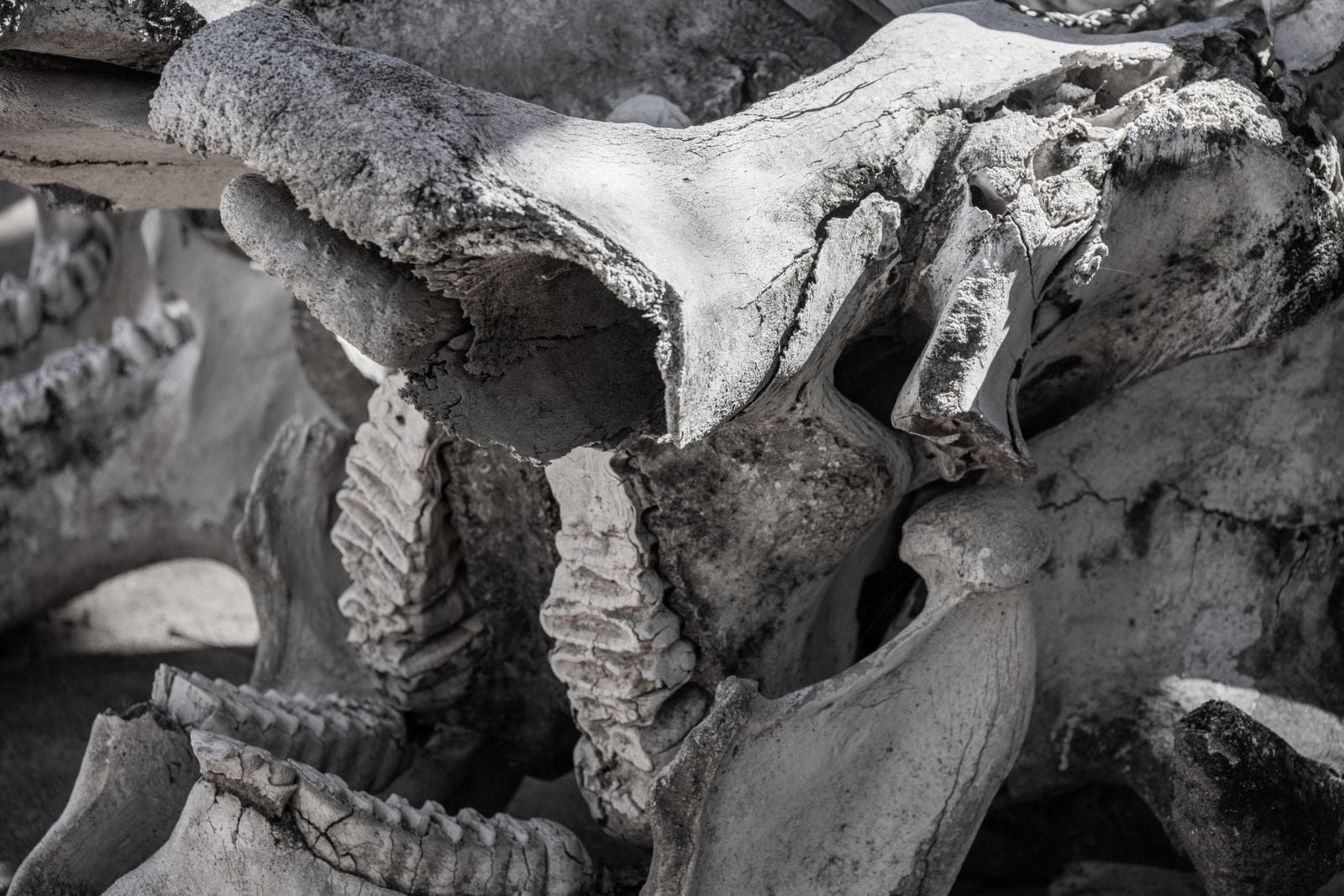
A wolf does not have one bite-force number that applies everywhere in its mouth. A bite delivered through the front canines is mechanically different from one delivered through the carnassials and molars closer to the jaw joint. In the 2024 model, forces at the rear teeth were between 1.7 and 2.2 times greater than the force generated at the canines across the animals studied.
The difference reflects basic lever mechanics. The canines sit farther from the jaw joint and are useful for reaching, gripping, and holding moving prey, while the rear teeth sit closer to the joint and can receive more force from the same muscle contraction. The wolf’s 42 teeth therefore perform different jobs rather than delivering a single maximum-pressure bite.
The skull is a force-delivery system
The power of the bite begins well before the teeth make contact. A 2020 study of jaw-adductor muscles in wild canids found that jaw-closing performance depends on the shape of the skull and mandible as well as the mass, architecture, and placement of the muscles. Its models also showed that canine biting placed particularly high mechanical demands on the zygomatic arches and the rear portion of the snout.
The temporalis, masseter, and pterygoid muscles pull on different regions of the jaw, with their combined action closing the mouth and transferring force through the teeth. A wolf’s large temporal region, pronounced muscle-attachment surfaces, and robust arches provide space for that machinery. The important point is not simply that a wolf has a wider head than a dog, since domestic breeds vary enormously, but that its skull, muscles, and teeth function as one system shaped by large-prey hunting.
What the skull sutures actually show
The original article’s skull-suture citation pointed to the wrong Nature page and described findings that the linked page did not contain. The relevant Scientific Reports study was published in 2025 and examined 371 known-age North American wolves alongside 576 domestic dogs. It found that medium and large dogs generally developed more extensive suture obliteration than wolves during adulthood.
The researchers discussed several possible explanations, including domestication, developmental timing, ageing, head-shape diversity, diet, and differences in physical strain. They also noted that open or unobliterated sutures may help redistribute biomechanical strain during heavy chewing, predation, and fighting. That is more cautious than claiming wolves definitively retain thicker, later-fusing sutures as a structural adaptation for repeated high-load impacts.
What bone processing really looks like
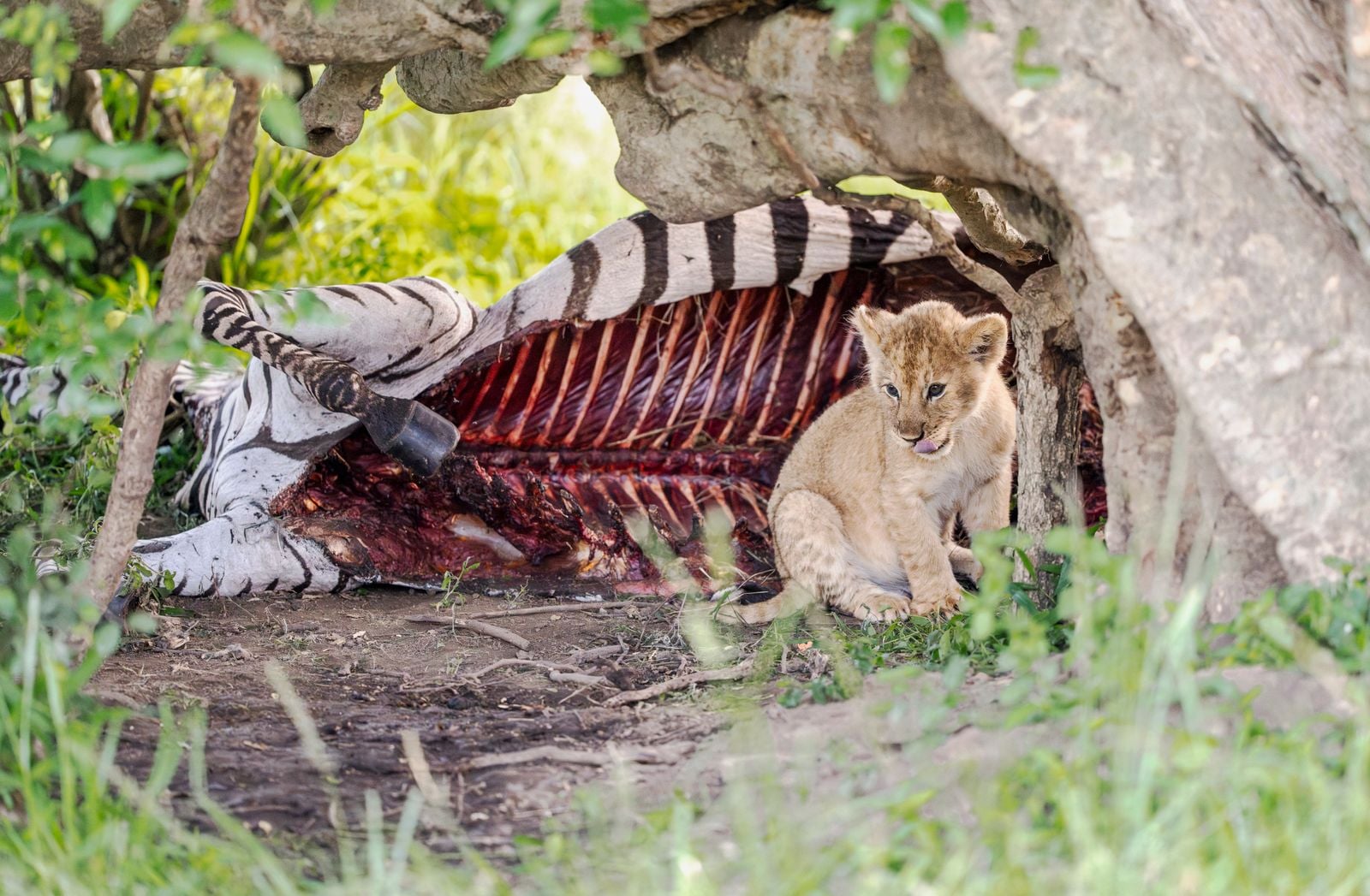
Wolves can chew and consume substantial portions of large-animal skeletons, particularly when prey is scarce and each carcass must be used more completely. Yellowstone researchers have reported that greater bone consumption during food stress produces more tooth wear and breakage. Their wolf-skull collection is used partly to track how completely packs process carcasses as prey availability changes.
This supports the broad claim that wolf jaws help extract nutrients from bones, including marrow. It does not establish that every carcass is consumed in a rigid sequence of organs, muscle, and then bone, or that every elk femur is split open. Wolves may leave considerable material behind, and carcasses are also used by bears, coyotes, ravens, eagles, insects, and other scavengers.
Why elk matter without being the whole evolutionary story
Elk are central to wolf ecology in Yellowstone, where the National Park Service reports that they make up most winter prey. Wolves also hunt or scavenge bison, deer, and other animals, while populations elsewhere rely on moose, caribou, and additional large ungulates. The feeding apparatus therefore cannot be reduced to a tool that evolved for one bone from one prey species.
Natural selection acted across many generations of chasing, gripping, killing, dismembering, and consuming large-bodied prey. The resulting anatomy combines long canines for holding, slicing carnassials, forceful rear teeth, and muscle-bearing skull structures capable of handling heavy loads. Elk femurs are a vivid example of what that system can process, but the evidence supports a broader adaptation to large-prey hunting and carcass use.
What returned to Yellowstone
The restoration of wolves to Yellowstone happened over more than one winter. According to the National Park Service’s history of the program, 14 Canadian wolves were temporarily held in acclimation pens in January 1995, followed by another 17 in January 1996. The animals were kept in their social groups, fitted with radio collars, and fed ungulate carcasses while contact with people was minimized.
What returned was not simply a set of powerful jaws. It was a social predator capable of locating vulnerable prey, coordinating a chase, defending a kill, feeding pack members, and leaving remains that supported a wider scavenger community. Bite mechanics made those activities physically possible, but pack behavior determined how that anatomy was used across the landscape.
The Yellowstone effect is real, but it is not simple
Most researchers agree that wolves contributed to lower elk abundance and changes in elk behavior after their return. The National Park Service’s account of Yellowstone’s trophic-cascade research, however, also emphasizes that the strength and mechanism of the cascade remain debated. Willow and aspen recovery cannot be attributed automatically to elk becoming afraid of every riverbank.
Changes in elk numbers, human hunting outside the park, predation by bears and cougars, groundwater availability, temperature, precipitation, and local browsing pressure have all influenced the northern range. Wolves are an important part of that system, but they are not its only moving part. Beaver and vegetation changes should therefore be described as outcomes to which wolf recovery contributed, not as direct products of bite pressure alone.
The bite is part of the story, not the whole story
The defensible anatomical story is still striking. In comparable skull models, a gray wolf’s front and rear bites generated more than twice the force estimated for the domestic-dog sample, and the difference was greatest at the teeth used for cutting and processing food. Its skull combines muscle architecture, lever mechanics, and specialized dentition that allow a roughly 90-to-110-pound predator to hunt and consume animals many times its size.
What returned to Yellowstone was not 1,200 psi operating in isolation. It was a pack-living predator with the anatomy and behavior to alter relationships among prey, scavengers, vegetation, water, weather, and other carnivores. The jaw made the wolf capable of filling that role, while the entire ecosystem determined what happened next.