
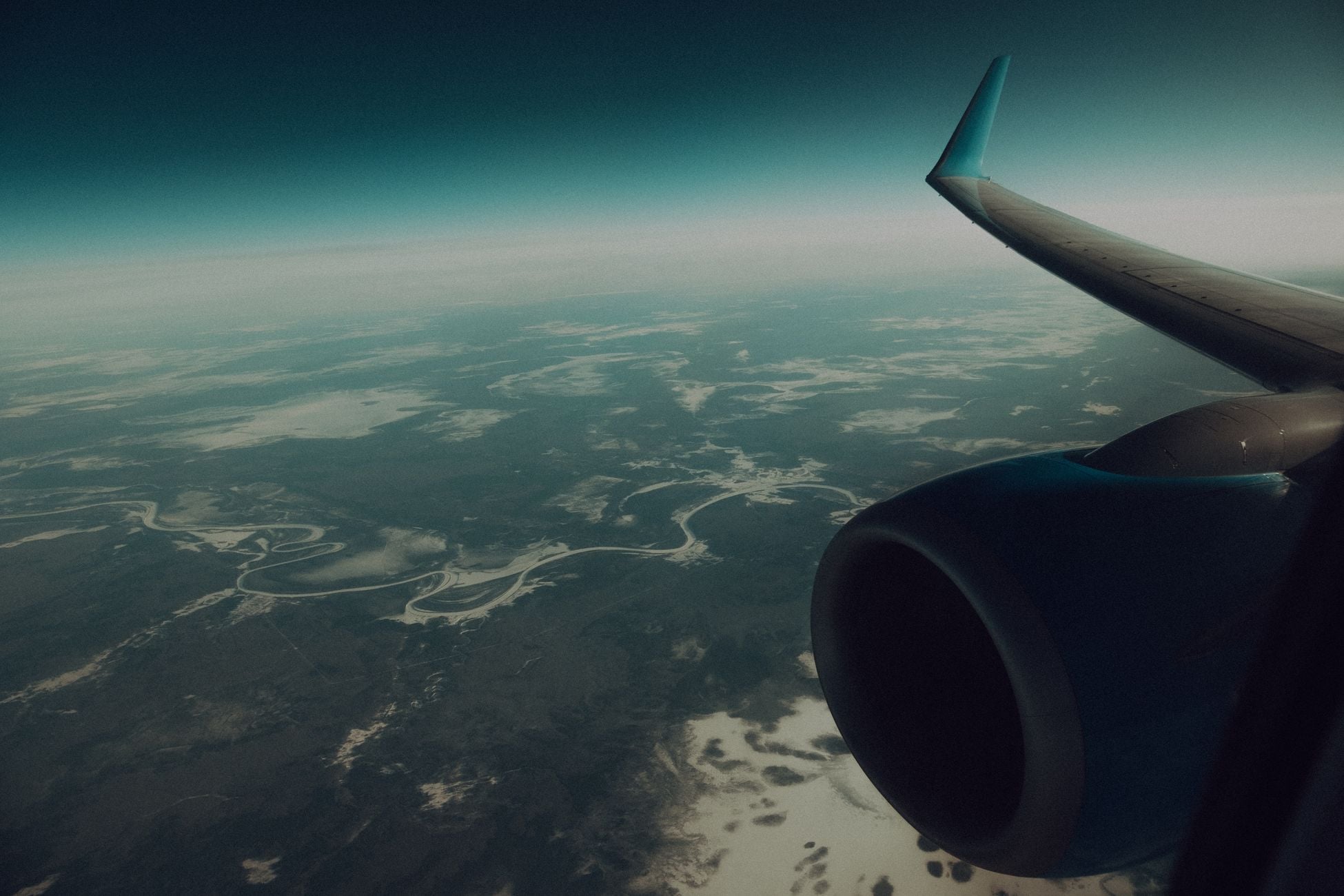
A British Airways 777 climbing out of Heathrow bound for JFK begins picking up cosmic radiation as it climbs to cruise altitude. By the time it lands at John F. Kennedy International Airport about seven hours later its passengers have absorbed roughly 37 microsieverts of ionising radiation from deep space — about 1 % of the natural dose an average person absorbs from rocks, air and ground across an entire year. That figure, a long-standing industry benchmark for the London–New York route, sits inside the broader assessment of radiation exposure for flight crewmembers published by the National Academies of Sciences, Engineering, and Medicine.
That number sounds abstract until you sit with it. Every transatlantic crossing is a small, invisible dose of the same particle storm that Voyager 1 is flying through beyond the heliosphere. The plane is thinner shielding than most people assume. And the radiation is not coming from the reactor of a distant power plant — it is coming from supernovae that exploded millions of years ago and from the Sun itself.
Where the radiation actually comes from
The bulk of the dose on a London–New York route is galactic cosmic radiation: protons and heavier atomic nuclei accelerated to nearly the speed of light by shockwaves from exploding stars elsewhere in the Milky Way. When those particles slam into nitrogen and oxygen atoms in the upper atmosphere, they produce showers of secondary particles — neutrons, muons, electrons, gamma rays — and a small fraction of that shower is still energetic enough at cruise altitude to pass through an aluminium fuselage and through human tissue.
At sea level, Earth’s atmosphere is doing the work of roughly a ten-metre-thick concrete wall. At cruise altitude, most of that shielding is below you. The dose rate at cruise is substantially higher than what it is on the ground, depending on latitude, altitude and where the Sun happens to be in its 11-year activity cycle.
Why the route matters more than the miles
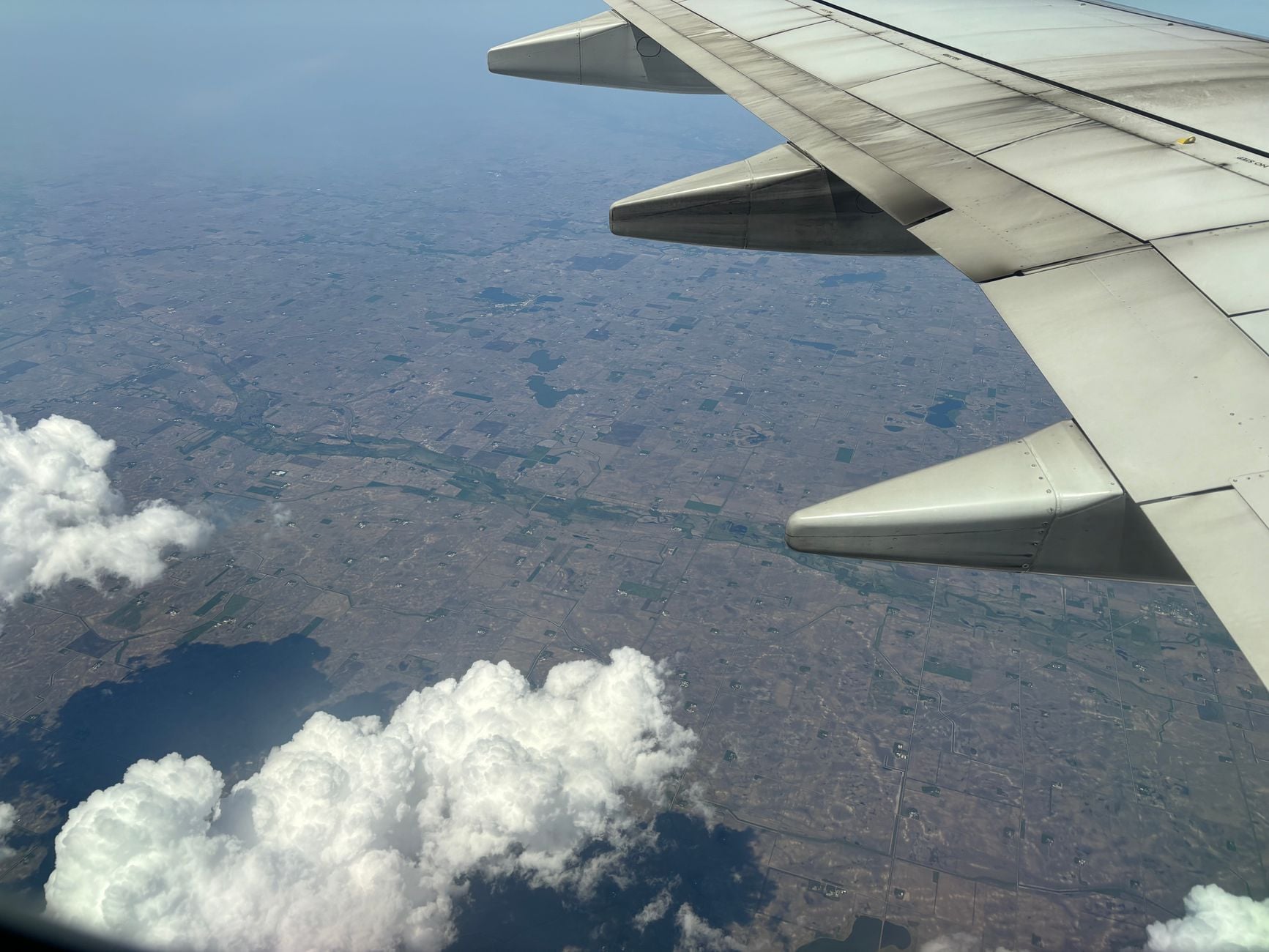
Not every flight of similar length delivers the same dose. Earth’s magnetic field deflects charged particles most effectively near the equator and least effectively over the poles, which is why polar routes — the great-circle tracks that carry flights from Europe to the west coast of North America over Greenland and northern Canada — pick up noticeably more radiation per hour than equatorial ones. A London–New York track runs at a latitude high enough to sit inside the higher-dose band, but not as high as a London–Los Angeles or a Tokyo–New York polar hop.
Altitude compounds the effect. A Boeing 787 cruising at a higher altitude will accumulate more dose per hour than a 737 at a lower altitude flying the same track. Concorde, back when it flew this route at high supersonic cruise altitudes, operated closer to the source of cosmic radiation.
The comparison that puts it in perspective
Cosmic radiation exposure during flight is, in radiation terms, a small number compared to other sources. Medical imaging procedures deliver measurably higher doses. The natural background dose that any human absorbs simply by existing on Earth for a year — from cosmic rays that reach the ground, from uranium and thorium in rocks, from radon seeping out of soil, from the potassium-40 in bananas and in your own body — varies widely by region. People living in Cornwall, Colorado or the Kerala coast of India can absorb two or three times the global average.
For a passenger who flies the route once a year, the exposure is statistically invisible against the background of everyday life.
The people for whom it stops being trivial
The arithmetic changes for the people at the front of the plane. Senior long-haul pilots and cabin crew flying hundreds of hours a year — much of it on transatlantic and polar sectors — can accumulate occupational radiation doses that put flight crew among the most radiation-exposed occupational groups in the civilian workforce, often absorbing more per year than workers at nuclear power stations, who are tightly monitored and dose-limited.
The occupational health literature on airline crew has been tracking this for decades. Studies of pilots and cabin crew have found elevated rates of certain cancers, particularly melanoma and, in female cabin crew, breast cancer, though disentangling cosmic radiation from circadian disruption, ultraviolet exposure through cockpit windows and other lifestyle factors remains an active research problem. The European Union has classified aircrew as radiation workers and requires airlines to monitor and record individual doses. The United States does not.
How the FAA handles it — and doesn’t
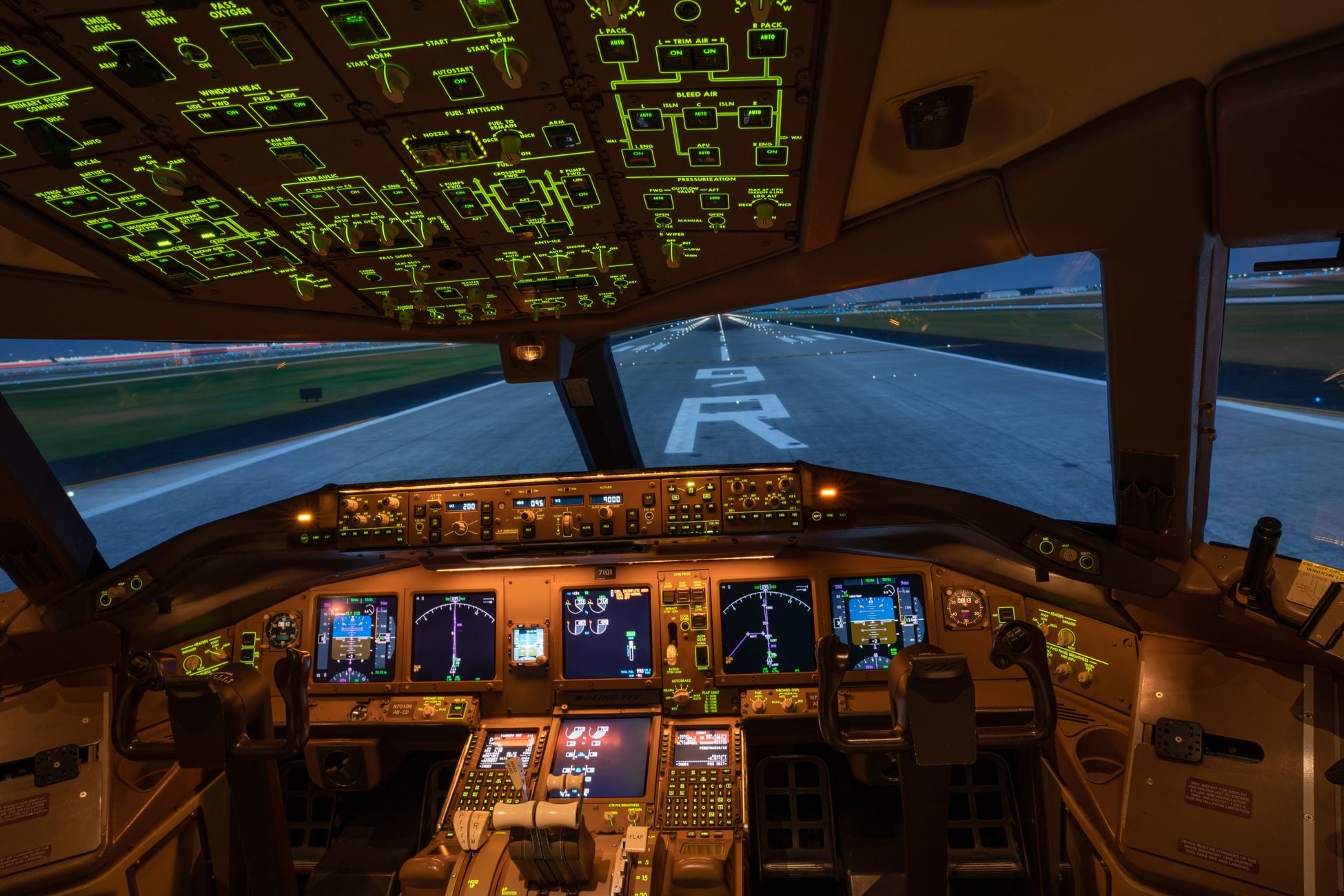
The Federal Aviation Administration publishes guidance and provides dose calculation tools, but it does not require U.S. airlines to measure crew exposure, cap it or disclose it to employees. A 2026 investigation into FAA oversight found that most American cabin crew have no idea what their annual dose actually is and receive no formal training on how solar storms can spike radiation levels mid-flight. Sara Nelson, president of the Association of Flight Attendants, has spent her career absorbing cosmic radiation every time she goes to work.
The National Academies convened an expert committee following a 2024 congressional mandate to assess the health outcomes and mitigation strategies for U.S. flight crew — the first serious federal-level review of the question in a generation. The committee’s remit includes not just measuring dose but examining whether current work-rules, route assignments and pregnancy protections are keeping pace with what the science actually shows about cumulative low-dose radiation.
Solar weather and the days when the number spikes
Typical cosmic radiation doses represent an average for quiet space weather. When the Sun launches a large coronal mass ejection or produces a strong solar proton event, dose rates on high-latitude flights can rise sharply for a few hours to a day. During major solar storms, polar flights have been rerouted southward and to lower altitudes, and airlines using the Arctic corridors between North America and Asia have diverted through alternate routes to stay clear of the worst of it.
These events are rare but real. Space weather forecasters at NOAA’s Space Weather Prediction Center issue radiation storm alerts specifically for aviation. At the highest alert levels, high-latitude flight operations are effectively suspended. At lower levels, dispatchers reroute or descend.
Why the number lands so oddly in people’s heads
Radiation is one of the risks humans are demonstrably bad at intuiting. People fear invisible, involuntary, unfamiliar exposures much more than they fear the everyday hazards that actually kill them. Cosmic radiation on a flight ticks every one of those boxes — you can’t see it, you didn’t choose it, and it comes from a source most passengers have never thought about.
Research on the psychological aftermath of nuclear accidents shows the same pattern in a more acute form: measured doses that fall well within background variation still produce durable anxiety in exposed populations. The cosmic radiation exposure benefits from being small, but for people who fly weekly for work, the trickle adds up in a way the once-a-year holiday flyer never has to consider.
What actually reduces the dose
Not much, in practice. Passengers cannot ask a captain to fly lower — fuel economics and air traffic control make cruise altitude nearly non-negotiable. Sitting in the middle of the cabin rather than by a window provides no meaningful shielding; the particles come from directly overhead and pass through the whole aircraft. Pregnancy is the one category where guidance changes: European regulators recommend that pregnant crew be reassigned to ground duty or short-haul flights to keep foetal dose to a minimum for the pregnancy.
For the ordinary transatlantic passenger, the honest answer is that the dose is small, the science on low-dose effects is uncertain at the level where uncertainty matters, and the seven hours in the seat carry many other, larger risks — dehydration, deep-vein thrombosis, the drive to the airport — that nobody thinks about because they lack the strangeness of the words cosmic radiation.
The exposure is still there, though. Every crossing. A thin, silent shower of particles from stars that died before humans existed, passing through the cabin and through the passengers and out the other side, while the seatbelt sign chimes off over Newfoundland.
