
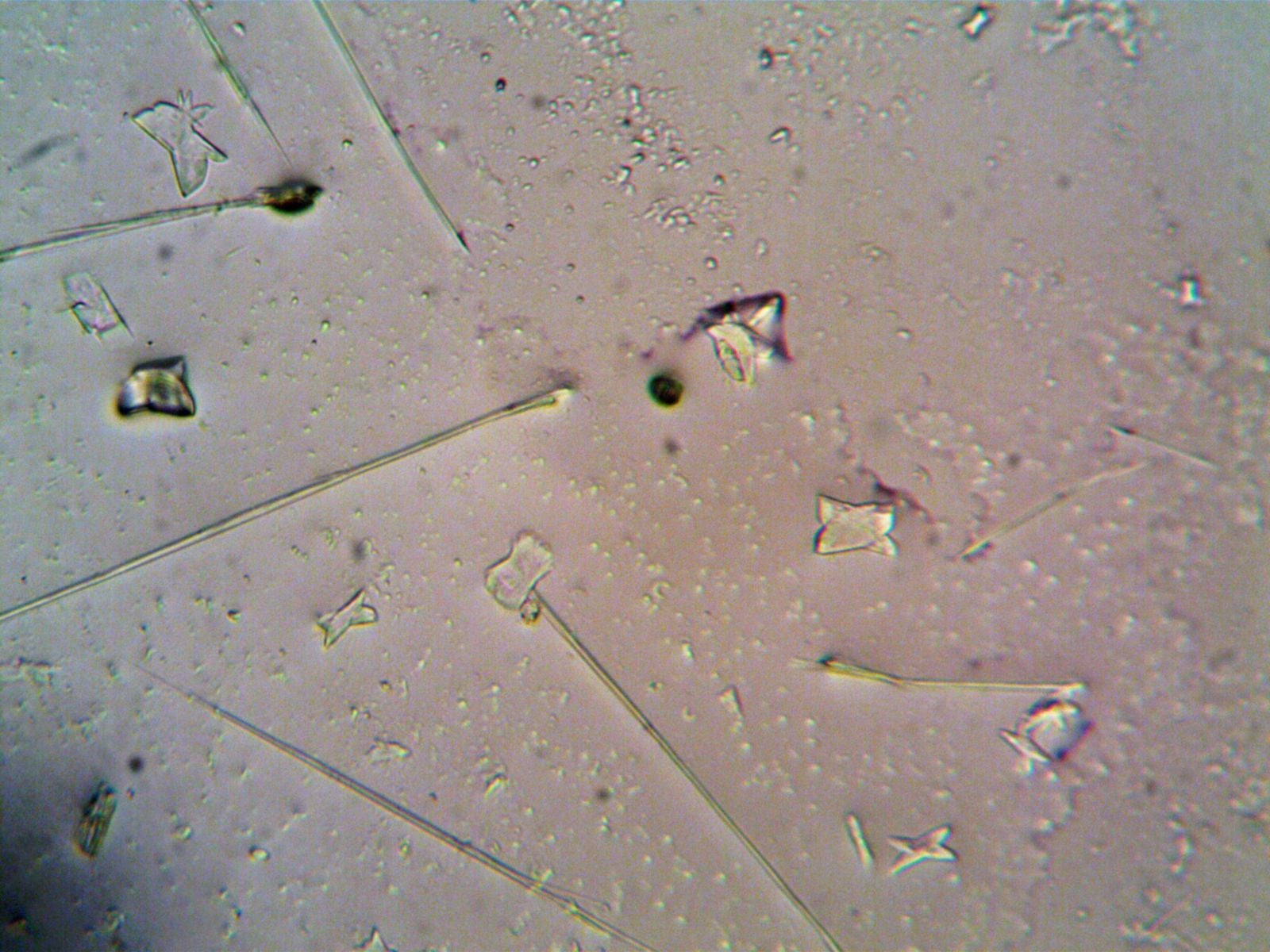
The average adult swallows, breathes, or drinks somewhere between a few milligrams and several grams of plastic every week — and the smallest of those fragments, the ones only a few hundred nanometers across, are physically small enough to slip past the blood-brain barrier and lodge in tissue that the body treats as sealed.
The credit-card comparison came from a widely circulated 2019 estimate by WWF and the University of Newcastle suggesting weekly human intake around 5 grams. That figure has since been challenged. A 2024 reassessment argued the original math overstated exposure by orders of magnitude, and, as Futura Sciences reported, most independent researchers now believe typical intake is much smaller — though no one has yet pinned down an accurate national average.
The exact gram count matters less than what the fragments do once they arrive.
The credit card figure, and why it stuck
The 5-gram number came from a 2019 review commissioned by WWF and carried out at the University of Newcastle in Australia. It landed in headlines everywhere because it gave the abstract problem of plastic pollution a shape you could hold in your hand. A rectangle of polymer. Something you already carry in your wallet.
The problem is that the original modelling extrapolated aggressively from limited data — a small number of studies on bottled water, shellfish, salt, and beer, generalised outward. Later work, including a 2024 analysis flagged by Futura’s write-up, found the true figure was probably far lower. Possibly closer to a few milligrams weekly rather than a few grams.
But even the revised numbers matter. Because the particles are being found in places the body is supposed to keep sealed.

What size does to the rules
Plastic doesn’t biodegrade. It fragments. A bottle cap becomes a fleck, the fleck becomes a shard smaller than a grain of sand, the shard becomes something smaller than a red blood cell. Anything below five millimeters is a microplastic. Below one micrometer, it’s a nanoplastic. At that scale, the fragment is small enough to cross biological membranes that evolved to keep foreign material out.
Your gut lining is one of those membranes. It works like a customs checkpoint. Nutrients pass. Toxins and microbes are supposed to be flushed. A particle at nanometer scale doesn’t queue. It slips between cells or gets ferried across by transport proteins that evolved for other cargo. Once through the wall, it enters the bloodstream, and the bloodstream reaches everything.
In 2022, a team at Vrije Universiteit Amsterdam published the first direct measurement of plastic in human blood — in samples drawn from healthy donors who had no idea. The BBC’s reporting on the years since tracks how quickly the finding has been replicated: particles in placentas, in breast milk, in testicular tissue, in the plaque lining arteries.
The size threshold
The blood-brain barrier is one of the tightest checkpoints in human anatomy. A single layer of specialised endothelial cells sealed together by tight junction proteins. It keeps out most drugs, most pathogens, and almost anything the body reads as foreign under normal conditions. But nanoplastics roughly 300 nanometers and smaller have been shown, in animal models, to cross it.
A 2023 study led by researchers at the Medical University of Vienna, published in the journal Nanomaterials, tracked orally ingested polystyrene nanoparticles about 300 nanometers across (0.293 micrometers) in mice. Within two hours, those particles were detectable in the brain — while larger, micrometer-scale particles were not. The team’s modelling suggested a specific mechanism: cholesterol molecules on the barrier’s surface enhanced uptake of the smallest particles and ferried them across like contraband tucked into a diplomatic pouch.
Two hours. From gut to brain.
Where the particles collect
The particles have been found embedded in arterial plaque — specifically the plaque that ruptures during heart attacks. A 2024 study in the New England Journal of Medicine examined carotid artery tissue removed from patients undergoing surgery to prevent stroke. In more than half of the samples, researchers detected polyethylene. Patients with plastic in their plaque were more than four times as likely to suffer a heart attack, stroke, or death from any cause over the following 34 months than those without.
That is an association, not proof of causation. The people with plastic in their arteries might share other risk factors. But the correlation is stark enough that cardiologists are paying attention.
The gut is where the mechanism is best understood. Lab models exposed to varied sizes of polystyrene microplastics reveal that in healthy tissue, the plastic didn’t trigger inflammation on its own. In tissue with pre-existing irritation, though, the plastic made everything worse, according to research covered by Neuroscience News — suppressing beneficial bacteria, dropping the production of butyrate (a short-chain fatty acid that fuels intestinal wall cells), and weakening the barrier that keeps gut contents from leaking into the body.
When affected models were supplemented with butyrate directly, symptoms partially improved. Which suggests the damage isn’t from the physical presence of plastic. It’s from what plastic does to the microbial community that keeps the gut wall intact.
How the particles get in
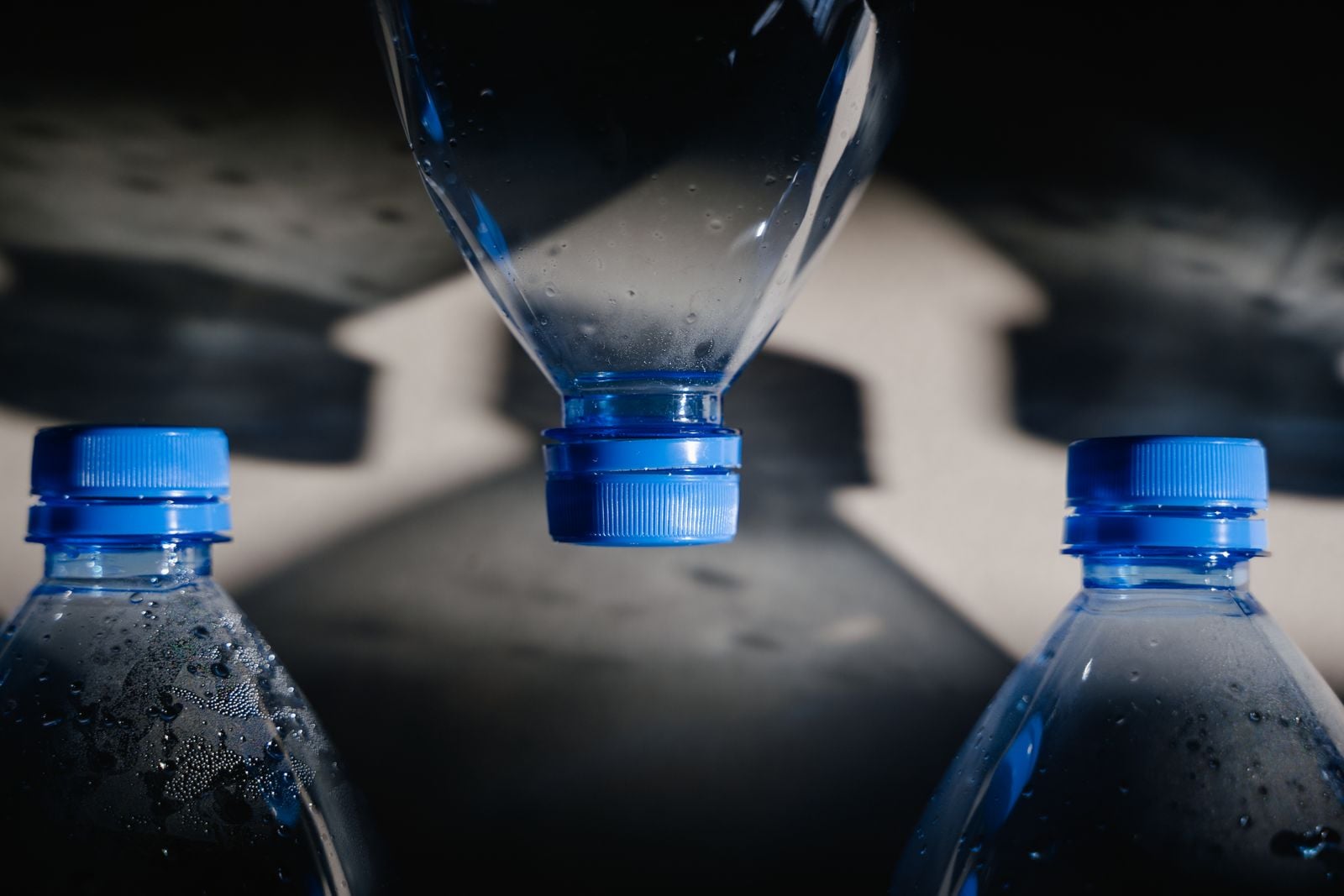
Bottled water is a major route. A 2024 Columbia University study using a new laser-based imaging technique found that a one-litre bottle of water contained on average about 240,000 plastic fragments, roughly 90 percent of them nanoplastics small enough to enter cells. Heating plastic containers accelerates the release. Microwaving food in a plastic container can shed vast numbers of nanoparticles in a matter of minutes.
Synthetic textiles shed fibers into indoor air. Tea bags release particles when brewed. Salt harvested from oceans carries the fragments already dissolved in seawater. Rain now contains plastic. North Carolina Health News documented microplastic contamination even in remote Appalachian watersheds far from any obvious industrial source. The particles arrive on wind.
Arctic sea ice is now embedded with them. Sediment cores from the deep ocean contain them. Human breast milk, cord blood, semen, and testicular tissue all contain them.
What the body does with a permanent guest
Human cells don’t have machinery to break down polymers like polyethylene or polystyrene. The bonds are wrong. So the immune system does what it does with any inert foreign object it can’t dissolve — it walls it off, or it tries to engulf it and fails, or it triggers a low-grade inflammatory response that never quite resolves.
That chronic low-grade inflammation is the leading hypothesis for how microplastics might contribute to disease. Not by poisoning outright but by keeping the body’s alarm system on a permanent dim setting. Cardiovascular disease, inflammatory bowel conditions, certain cancers, and neurodegenerative disease all involve some element of chronic inflammation. Whether plastics are a driver, a passenger, or an amplifier is what the current wave of research is trying to establish.
Multiple independent studies on microplastics and the gut show a consistent pattern across labs and continents. Repeated exposure correlated with long-term shifts in microbial diversity, declines in short-chain fatty acid production, and elevated inflammatory markers.
The atoms and the fragments
There is a strange thought that comes with all of this. Nearly every atom in your body is swapped out over the years — the material you were made of a decade ago has mostly cycled through and been replaced. Cells die and are rebuilt. Water passes through. Bone remodels. The body is less a static object than a slow-moving pattern.
But microplastics don’t participate in that turnover. They accumulate. The particle lodged in arterial plaque doesn’t get flushed with the next tidal exchange of atoms. It’s still there next year. And the year after. The pattern renews around it.
Which means the body a person carries at 60 contains a running total of every polystyrene fragment their gut wall failed to reject since childhood.
The claims worth ignoring
Because the problem is real and the science is early, an industry has grown up around selling protection from it. The BBC’s reporting on male fertility influencers catalogues some of the claims: donating blood to “filter out” microplastics, ice packs on the testicles, proprietary supplement stacks. None of these have scientific support. Blood donation removes about 500ml of a roughly 5-litre volume; whatever fraction of plastic sits in that removed portion would be a tiny share of the body’s total load, and the body replenishes plasma within days.
The interventions that actually reduce exposure are duller. Don’t heat food in plastic containers. Filter tap water rather than drinking from single-use bottles. Choose glass or stainless steel where practical. Vacuum with a HEPA filter to reduce airborne fibres from synthetic textiles. None of it is a fix. All of it is at the margins.
What the numbers can’t yet tell you
The honest position, held by most of the researchers actually doing the measuring, is that no one yet knows what a lifetime of internal plastic exposure does to human health. The particles are demonstrably present. The mechanisms by which they could cause harm are plausible and increasingly documented in animal models. The direct human evidence — the cohort studies, the long follow-ups, the dose-response curves — will take another decade at least.
The particles enter faster than the science can characterise them. The plastic in the plaque of a 55-year-old today was ingested over 55 years of a life during which the exposure kept rising. The person now 20 is building an internal record at a higher baseline than their parents did. What that record does over the next 60 years is the open question.
The credit card comparison, whether it was ever accurate or not, did something useful. It turned an invisible exposure into an object with edges. A rectangle of polymer per week. Held up against the light. Not a metaphor — a physical accumulation, quietly building, in tissue that was never supposed to receive it.
