

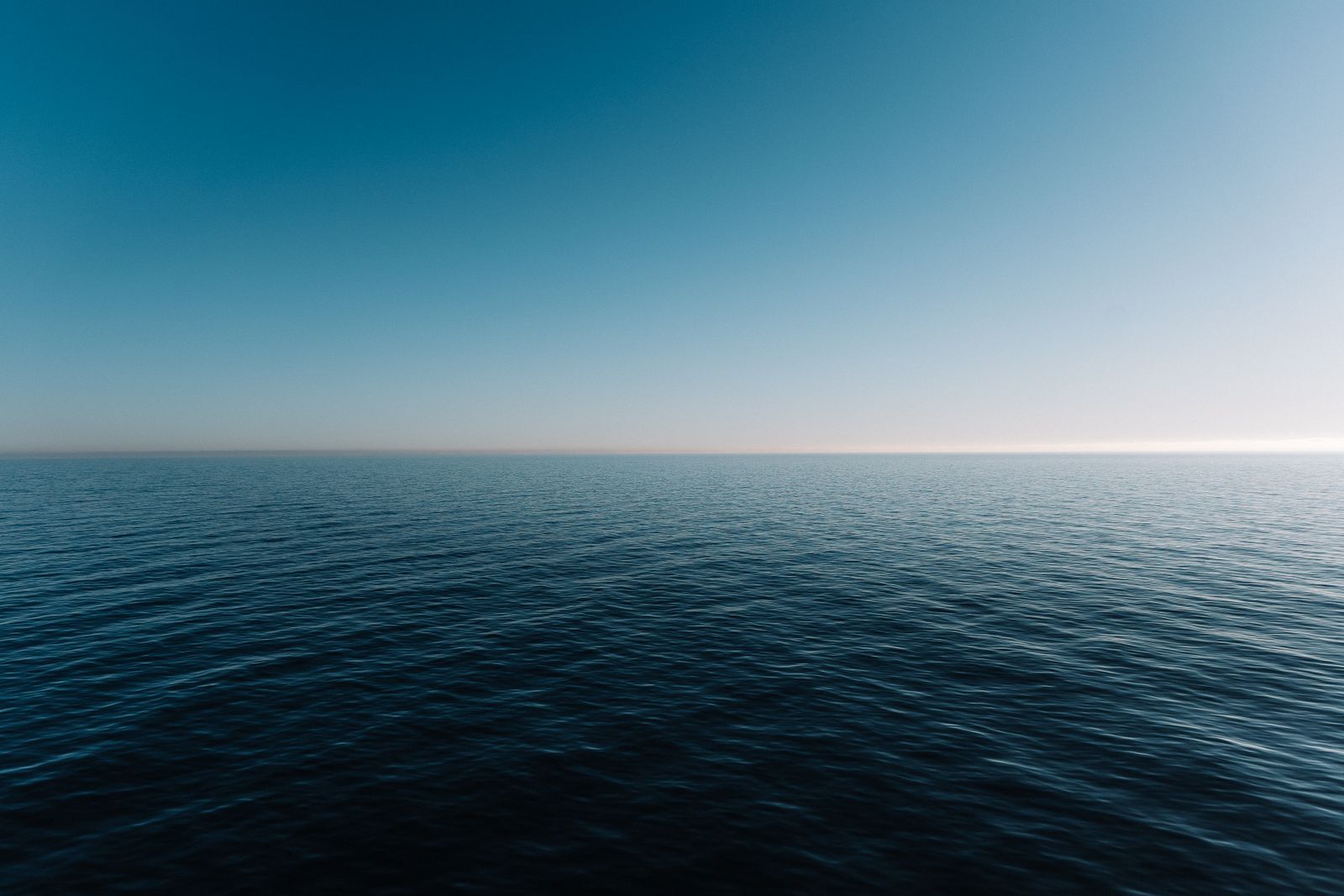
There is a spot in the South Pacific so far from any coastline that, when the International Space Station passes overhead, the astronauts on board are often the nearest human beings to it. The crew sits about 400 kilometres up. The nearest land is more than six times farther away, and there is no one living on it.
The place is called Point Nemo, and the claim about the astronauts is, with one fair qualification, true.
The most remote spot in any ocean
Point Nemo is the oceanic pole of inaccessibility, the single point in the world’s oceans farthest from any land. It sits at roughly 48.9 degrees south and 123.4 degrees west, and the nearest land in any direction is more than 2,688 kilometres away, according to the United States National Oceanic and Atmospheric Administration.
Three uninhabited specks of land sit at that same distance: Ducie Island, part of the Pitcairn group, to the north; Motu Nui, a tiny islet near Easter Island, to the north-east; and Maher Island, off the coast of Antarctica, to the south. None of them has anyone on it. The result is a circle of empty ocean roughly 22 million square kilometres across with no people in it at all.
The point was not stumbled upon by a ship. It was calculated in 1992 by a survey engineer, Hrvoje Lukatela, using geospatial software to find the place on the globe most distant from any coastline. The name is a nod to Captain Nemo from Jules Verne, and to the Latin word it comes from, which means “no one”.
Why the astronauts are closer
The Space Station orbits at around 400 kilometres of altitude. Point Nemo’s nearest land is nearly 2,700 kilometres away, and the nearest actual people are much farther than that, since the closest land is bare rock. The region also sits well away from the major shipping lanes, so on most days there is no vessel anywhere near it.
Put those together and the arithmetic is simple. When the Station’s orbit, tilted at about 51.6 degrees, carries it over that part of the southern ocean, the crew overhead really is the closest cluster of humans to the spot.
The fair qualification is the phrase “when it passes overhead”. The Station is not above Point Nemo continuously, and a passing ship would change the answer. But for a place this empty, the nearest people being a few hundred kilometres straight up rather than thousands of kilometres sideways is often exactly the situation.
The spacecraft cemetery
The same emptiness that makes Point Nemo remote has given it a second job: it is where spacecraft go to die.
Because the area is so far from anyone, space agencies use the ocean around Point Nemo as the disposal zone for hardware brought down from orbit. The Russian space station Mir was steered to a fiery end here in 2001, and cargo ferries and defunct satellites have followed, aimed at the one part of the planet where falling debris is least likely to reach a person.
The biggest arrival is still to come. NASA has contracted a dedicated deorbit vehicle to bring the International Space Station down at the end of its life, around 2030, into this same stretch of remote water. The astronauts who are now, on certain passes, the closest people to Point Nemo are flying the very station that is expected to end up in it.
The closest place to space
There is a neat inversion in all of this. The most isolated location on the surface of the ocean is, on a regular basis, one of the closest places on Earth to people in space, and one of the few places we deliberately point things falling out of orbit.
The remotest patch of sea, in other words, has more to do with what is above it than with anything around it.