

Astronomers searching the public archive of NASA’s Chandra X-ray Observatory have assembled a census of 84 unusually soft sources in six nearby galaxies. The objects appear at the lowest X-ray energies Chandra can reach, then almost vanish when researchers look just above 0.3 kiloelectronvolts. The team calls them hypersoft X-ray sources.
The NASA announcement describes a newly discovered class, but the most precise wording is a newly recognized population. A few of the nearest, faintest objects had earlier catalogue matches, including novae in Andromeda. What previous surveys missed was the shared spectral signature and the much larger census it revealed.
The researchers argue that these sources may radiate most of their energy in the extreme ultraviolet, or EUV. That conclusion is not a direct ultraviolet detection. It is an inference from the low-energy X-ray tail and thermal models, because interstellar hydrogen and helium absorb most EUV photons before they can reach instruments near Earth.
A search at Chandra’s softest edge
Most familiar X-ray binaries emit strongly above 0.3 keV. The peer-reviewed Nature Astronomy paper selected sources for the opposite behaviour: a significant signal between 0.15 and 0.3 keV, no significant detection above 0.3 keV, and a photon ratio greater than eight between the lower band and the 0.3 to 1.0 keV band.
An electronvolt measures energy, not temperature, although the two are connected in a thermal spectrum. One kiloelectronvolt is 1,000 electronvolts. A 0.3 keV photon is much more energetic than visible light, yet it sits at the very soft end of the X-ray range and close to the poorly observed EUV window.
The sample contains point-like sources located away from galactic nuclei. That distinction separates them from diffuse hot gas and from the supermassive black holes that can dominate a galaxy’s centre. The likely category is some form of compact binary, but “hypersoft” describes an observed spectrum rather than one proven physical engine.
The six-galaxy census
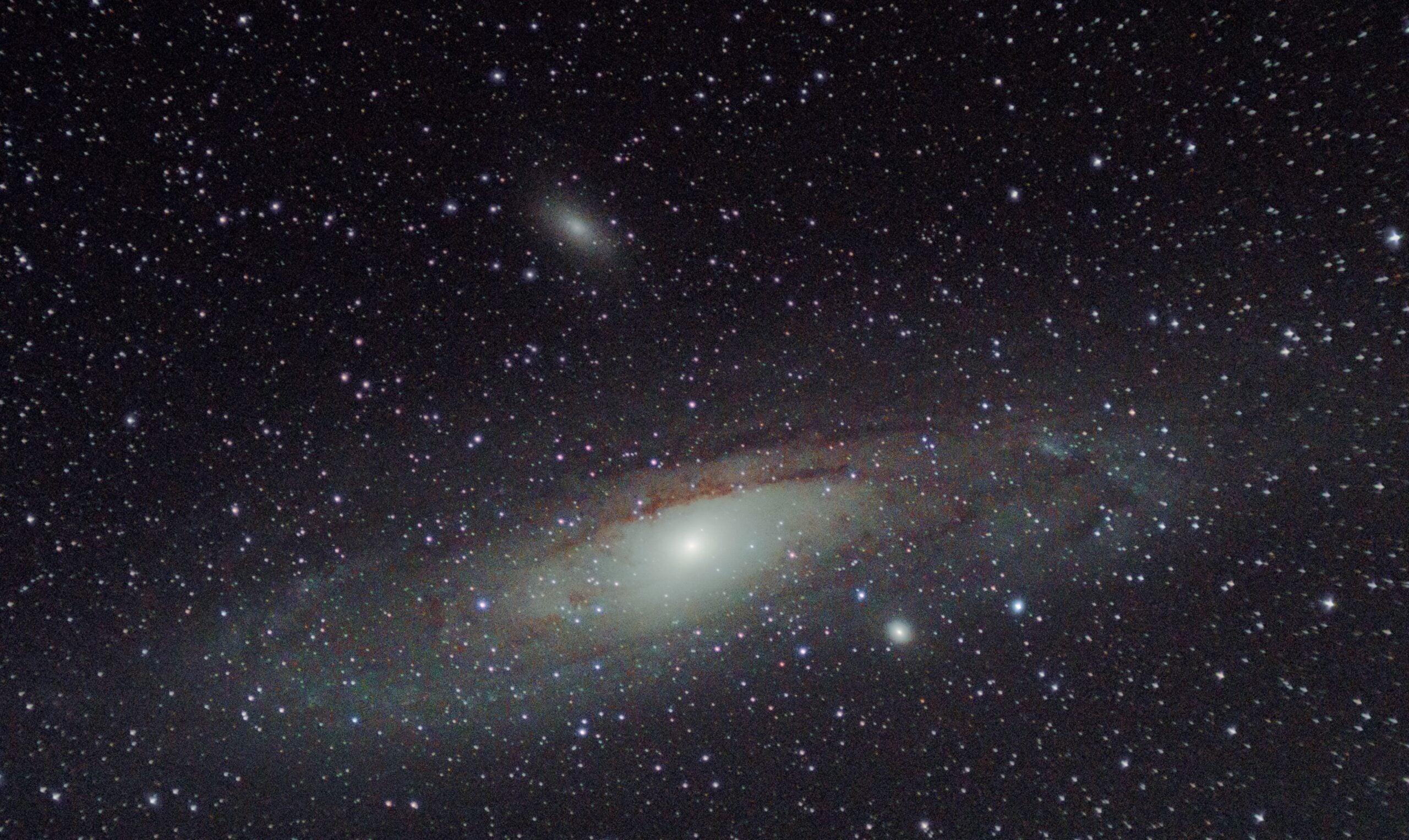
The team searched M31, better known as Andromeda; M101, the Pinwheel Galaxy; and four early-type systems, NGC 3115, NGC 3379, NGC 4697 and NGC 4472. The open preprint record reports 84 objects in all, with between seven and 21 hypersoft sources in each host.
The distribution matters. In M101, the seven marked objects tend to follow the galaxy’s spiral structure, as the Chandra image release shows. In NGC 3379, many lie closer to the centre. Hypersoft sources therefore appear both in regions of active star formation and in older stellar populations.
The archive exposures were substantial and uneven, ranging from hundreds of kiloseconds to more than one megasecond when observations were combined. Distance, foreground absorption, detector response and total observing time all affect what could be detected. The count of 84 is therefore not a fair ranking of how many such systems each galaxy truly contains.
Why a powerful source can disappear
The extreme ultraviolet is one of astronomy’s most frustrating blind spots. Neutral hydrogen and helium absorb EUV radiation efficiently. Even a very luminous extragalactic source can be hidden when its photons cross gas inside the host galaxy, the space between galaxies and the Milky Way before approaching a telescope.
The X-ray tail that escapes is also difficult to collect. Chandra was built for high-resolution X-ray astronomy, but its response declines toward the lowest accessible energies. A contaminant layer that has accumulated on the detector system over the mission has further reduced soft-energy sensitivity with time.
To guard against mistaking that instrumental change for a celestial population, the researchers used repeated observations of the galaxy cluster Abell 1795 to model the time-dependent response. As first author Mustafa Muhibullah explains in a technical Chandra essay, absorption, sensitivity loss and strong source variability together help explain why the objects escaped recognition.
How much energy is hidden below 0.3 keV
The most luminous examples approach 10^38 ergs per second in the narrow detected band alone, roughly the output of tens of thousands of Suns. Because a cool thermal spectrum can peak below Chandra’s band, the total radiated power may be much greater and concentrated mainly in the EUV.
That correction is highly temperature-sensitive. In the paper’s blackbody examples, moving from 25 electronvolts to 10 electronvolts increases the bolometric correction from single digits to thousands. The same faint X-ray tail can therefore correspond to very different total luminosities depending on where the unseen spectral peak lies.
For that reason, “enormous energy” should not be read as a direct measurement across all wavelengths. Chandra measured sparse photons between 0.15 and 0.3 keV. The larger EUV luminosity follows from fitted blackbody or multicolour-disc models, and the limited counts make each source’s exact temperature difficult to constrain.
Several engines may share the label
The authors do not claim that every hypersoft source is the same kind of object. Candidate engines include white dwarfs, neutron stars and black holes drawing gas from companion stars. Accreting material can create a disc or an expanded photosphere whose temperature shifts most radiation out of the usual X-ray bands.
Andromeda supplies an important clue because some lower-luminosity sources coincide with novae. A nova occurs when hydrogen accumulated on a white dwarf ignites in a thermonuclear runaway without necessarily destroying the star. After the eruption, the hot remnant can pass through very soft X-ray states.
More luminous sources may involve white dwarfs undergoing sustained nuclear burning. The brightest could require accreting black holes or another geometry with a large, comparatively cool emitting region. Brightness changes and occasional transitions into more familiar supersoft states also suggest the census may join several evolutionary phases under one spectral definition.
The possible Type Ia supernova connection
One proposed path to a Type Ia supernova begins with a white dwarf gaining matter from a companion and approaching a critical instability. These explosions are crucial distance markers, yet astronomers have struggled to identify enough progenitor systems before they detonate. Known supersoft X-ray sources appear too scarce to supply the full observed rate.
A population that releases most of its energy in an absorbed EUV band could hide part of that missing accretion activity. Some hypersoft sources may represent expanded white-dwarf photospheres or post-nova stages that ordinary X-ray selections overlook. The idea makes the new class relevant to the origin of Type Ia explosions.
It does not turn all 84 objects into future supernovae. The sample spans different host environments and a large luminosity range, while black-hole systems may occupy its bright end. Optical counterparts, orbital information, abundance measurements and long-term monitoring are needed before any individual object can be placed on a secure route to explosion.
Ionizing gas is not the same as measuring star formation
Energetic ultraviolet photons can strip electrons from hydrogen and helium. Ionization changes how interstellar gas cools and which spectral lines it emits, and those conditions feed into the regulation of star formation. Hot massive stars supply much of the ionizing radiation in young populations, but they do not explain every observed ionization signature.
If hypersoft sources are common and their inferred EUV output is correct, they could contribute substantially to a galaxy’s ionizing budget. The paper argues that this population may help explain ionized gas in both nearby systems and galaxies at earlier cosmic times, when binary populations and star-formation conditions differed.
The study did not measure a change in the star-formation rate caused by these 84 objects. It identified a plausible, previously undercounted source of ionizing photons. Moving from that energy budget to a demonstrated effect on star formation will require models of how the photons escape each binary’s surroundings and propagate through galactic gas.
Why an archive could reveal what surveys missed
Chandra has operated since 1999, collecting repeated views of many nearby galaxies. The new result did not require a newly launched telescope. It required the team to combine deep observations, search a band that standard catalogues often de-emphasize and correct for a detector whose soft response changed across the mission.
SpaceDaily has covered another case in which astronomers recovered a result from old Chandra data, but the present study goes further than revisiting one target. It defines a population by asking the archive for sources visible almost nowhere except the observatory’s lowest-energy channel.
Archive science also improves reproducibility. The underlying observations are identified in the public Chandra Data Collection 395, while the paper provides a machine-readable catalogue and analysis resources. Other teams can test the selection, search for counterparts and compare the candidates with ultraviolet, optical and radio data.
What would confirm the new population
The next task is classification. Strong variability may point to unstable accretion or nova cycles; persistent emission could favour sustained burning; and changes between hypersoft and supersoft states may reveal how an emitting photosphere expands and contracts. Secure counterparts could expose companions, orbital periods and the age of each surrounding stellar population.
The larger unknown is abundance. Interstellar absorption ensures that many EUV-peaking systems will remain invisible, and Chandra’s declining soft response means even the current census is shaped by observing date and exposure. Eighty-four is best treated as the detected sample in six deliberately chosen galaxies, not a complete inventory.
A future telescope with greater sensitivity and spectral resolution below 0.3 keV could determine temperatures instead of inferring them from a short tail. For now, the result exposes a powerful selection effect: an object can pour energy into its galaxy and still evade recognition when most of its light occupies the narrow gap between what detectors can see and what interstellar gas lets through.