

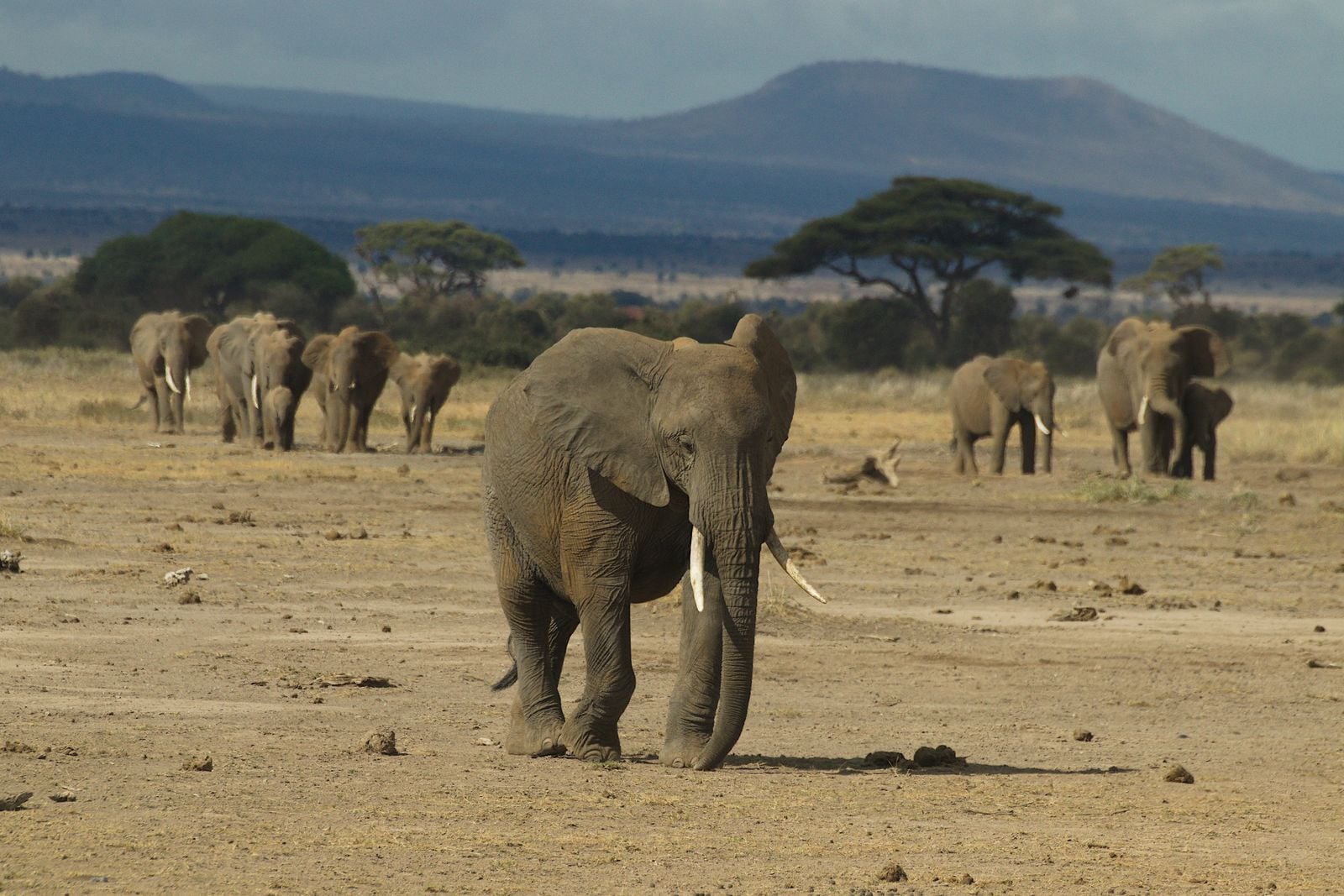
In the floodplains of Mozambique’s Gorongosa National Park, roughly a third of the female elephants born after the country’s civil war have no tusks at all. Before the war, around 18.5 percent of females were naturally tuskless. Among the adult females that survived the conflict, the figure rose to about 51 percent.
The difference is not a fluke of one generation. Research published in Science in October 2021 found evidence that 15 years of intense ivory hunting changed the frequency of inherited tusklessness within the population. The study, led by evolutionary biologist Shane Campbell-Staton, described the shift as rapid, poaching-mediated natural selection in a large, long-lived mammal. The Princeton research record summarises the genetic and population evidence behind the finding.
A war that ate the elephants
Mozambique’s civil war ran from 1977 to 1992. Gorongosa sat inside the conflict zone, and elephants were killed for meat and for ivory that could be exchanged for weapons and supplies.
By the end of the conflict, the park’s elephant population had fallen by roughly 90 percent. Estimates vary by source and census period, but the broad collapse is not in dispute: a population numbering in the thousands had been reduced to only a few hundred animals.
Among the survivors, a striking pattern emerged. A disproportionate number of adult females had no tusks. In an environment where elephants were being selected for their ivory, having no ivory offered an obvious survival advantage.
Historical footage and later surveys indicated that tusklessness among adult females rose from about 18.5 percent before the war to approximately 51 percent among survivors. Among females born after the war, the proportion was close to one-third.
The genes behind the pattern
Tusks are elongated upper incisors. They are made from the same basic dental tissues found in other mammalian teeth, including dentin and enamel-related structures.
Campbell-Staton’s team compared genomic data from tusked and tuskless females and identified two candidate regions associated with the trait. One contained AMELX, an X-chromosome gene involved in tooth development. The other contained MEP1a, which is associated with dentin formation.
The researchers did not claim that these two genes alone fully explain every case of tusklessness. Rather, the genomic signals, family patterns, and absence of tuskless males pointed toward an inherited mechanism involving the X chromosome.
BBC Science Focus reported that the inheritance pattern was consistent with an X-linked trait that may be lethal in males. AMELX is especially relevant because damaging variants in the human version of the gene can cause severe tooth-development abnormalities.
Why the population produces more daughters
The study found that tuskless mothers produced offspring that were about 65.7 percent female. That skew fits a genetic model in which a tuskless mother has a chance of passing an X-linked variant to each calf, while male embryos inheriting the affected chromosome may not survive.
This is an inference supported by the population and genomic evidence, not a direct observation of every affected pregnancy. The authors therefore described the pattern as consistent with an X-linked dominant, male-lethal trait.
The demographic consequence is still significant. Tuskless females may produce fewer surviving male calves than tusked females, while daughters that inherit the relevant variant can survive and pass it into another generation.
What an elephant loses when it loses its tusks
A full-grown African savanna elephant uses its tusks as tools. They help strip bark, dig for roots and water, move branches, open food sources, defend calves, and compete with other elephants.
Removing those tools can change how an elephant feeds and interacts with its environment. The Princeton study found dietary differences between tusked and tuskless females, suggesting that the anatomical shift may carry ecological consequences beyond the elephants themselves.
That matters because elephants are ecosystem engineers. Their digging, feeding, tree damage, and movement alter vegetation and create resources used by other animals. A substantial rise in tusklessness could therefore affect the physical structure of the savanna over time.
The effect should not be simplified into the idea that tuskless elephants are defective or unable to survive. The females that survived Gorongosa’s war demonstrated the opposite. The trade-off is that a trait that protected them from hunters may limit some of the ecological work tusks allow elephants to perform.
Gorongosa is not alone
Higher rates of tusklessness have been observed in other elephant populations exposed to heavy ivory hunting. Gorongosa is unusually valuable to researchers because its population history can be reconstructed through historical film, aerial surveys, field records, family observations, and modern genetic samples.
Together, those records allow researchers to compare the population before, during, and after an intense period of human selection. Few studies of large wild mammals can connect a visible anatomical change so clearly with a known historical event.
The recovery and what it cannot immediately undo
Gorongosa’s wider wildlife recovery began after the war, with restoration work gaining momentum in the 2000s. American philanthropist Greg Carr first visited the park in 2004 after being invited by Mozambique’s government. Following several years of preparation, a formal long-term management partnership was signed in 2008. Carr’s official Gorongosa biography describes that sequence directly.
Since then, anti-poaching patrols, habitat protection, species reintroductions, scientific research, and investment in surrounding communities have helped the park recover. Elephant numbers have increased, and calves are again surviving in a landscape that was once emptied by war.
Genetic recovery moves on a different clock. The females selected by the conflict can remain alive and reproductive for decades. Their descendants can continue carrying the variants associated with tusklessness even after the hunting pressure that favoured the trait has eased.
Researchers expect the evolutionary consequences to persist far longer than the period of violence that produced them. Whether tusklessness eventually becomes less common will depend on survival, reproduction, inheritance, ecological conditions, and future poaching pressure across many generations.
A signature visible at a glance
Most evidence of evolutionary change cannot be seen without genetic sampling and statistical analysis. Scientists compare genomes, family patterns, survival rates, and changes in allele frequencies before they can identify selection within a population.
Gorongosa is unusual because the result is also visible from a distance. A person watching a herd on the floodplain can see adult females whose faces carry no tusks.
The absence is not merely an injury or a mark left on one animal. It is an inherited trait whose frequency rose because human beings repeatedly killed elephants that possessed its alternative.
What the daughters inherit
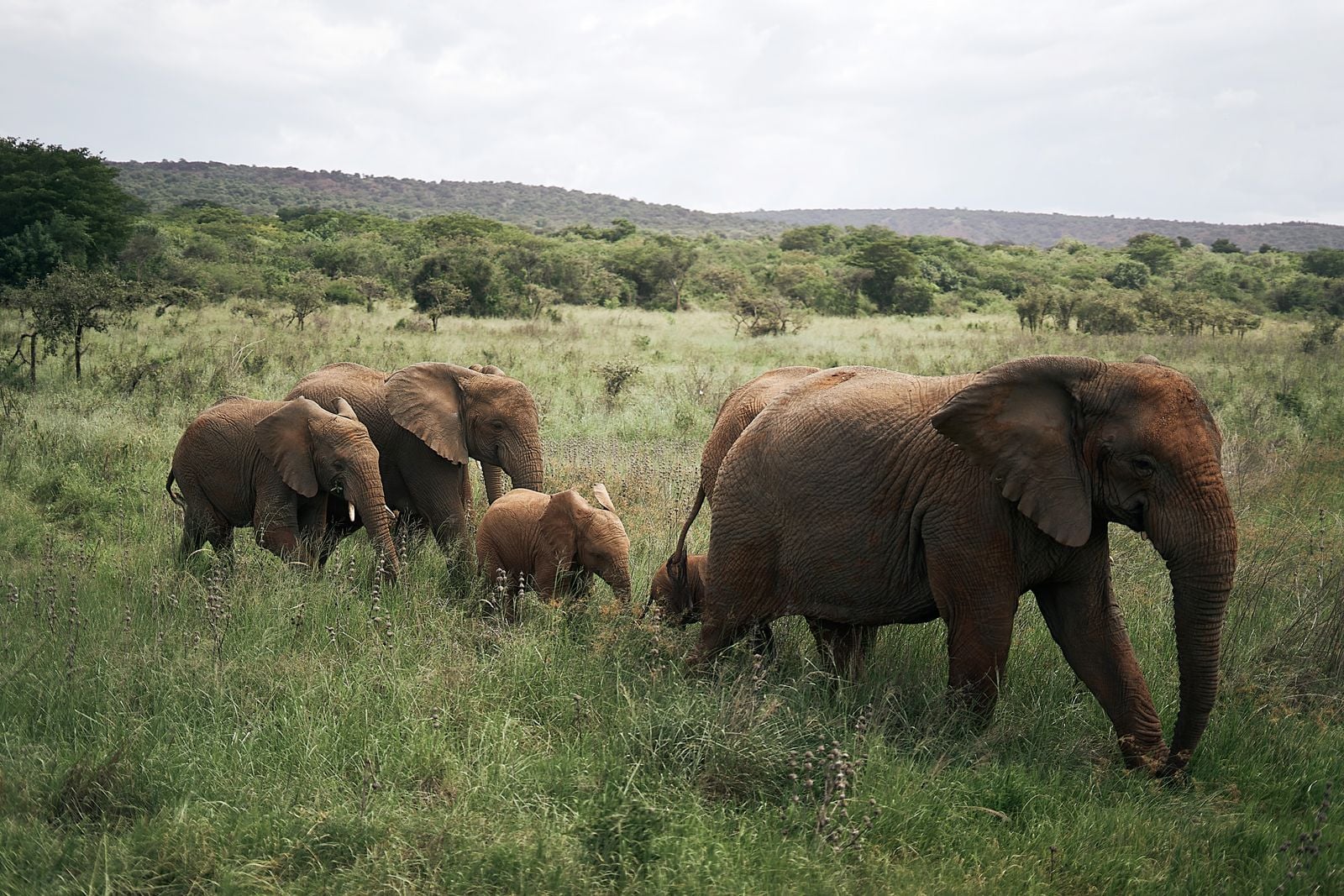
Many of the tuskless females alive in Gorongosa today were born after the war. They did not survive the original wave of ivory hunting themselves, but they inherited a trait that became more common because their mothers’ and grandmothers’ generations were subjected to it.
That is what makes the population scientifically important and historically unsettling. The conflict ended in 1992, but its evolutionary effects did not end with the peace agreement.
The war remains visible in living elephants: not as a wound on one body, but as a change passed between generations.