

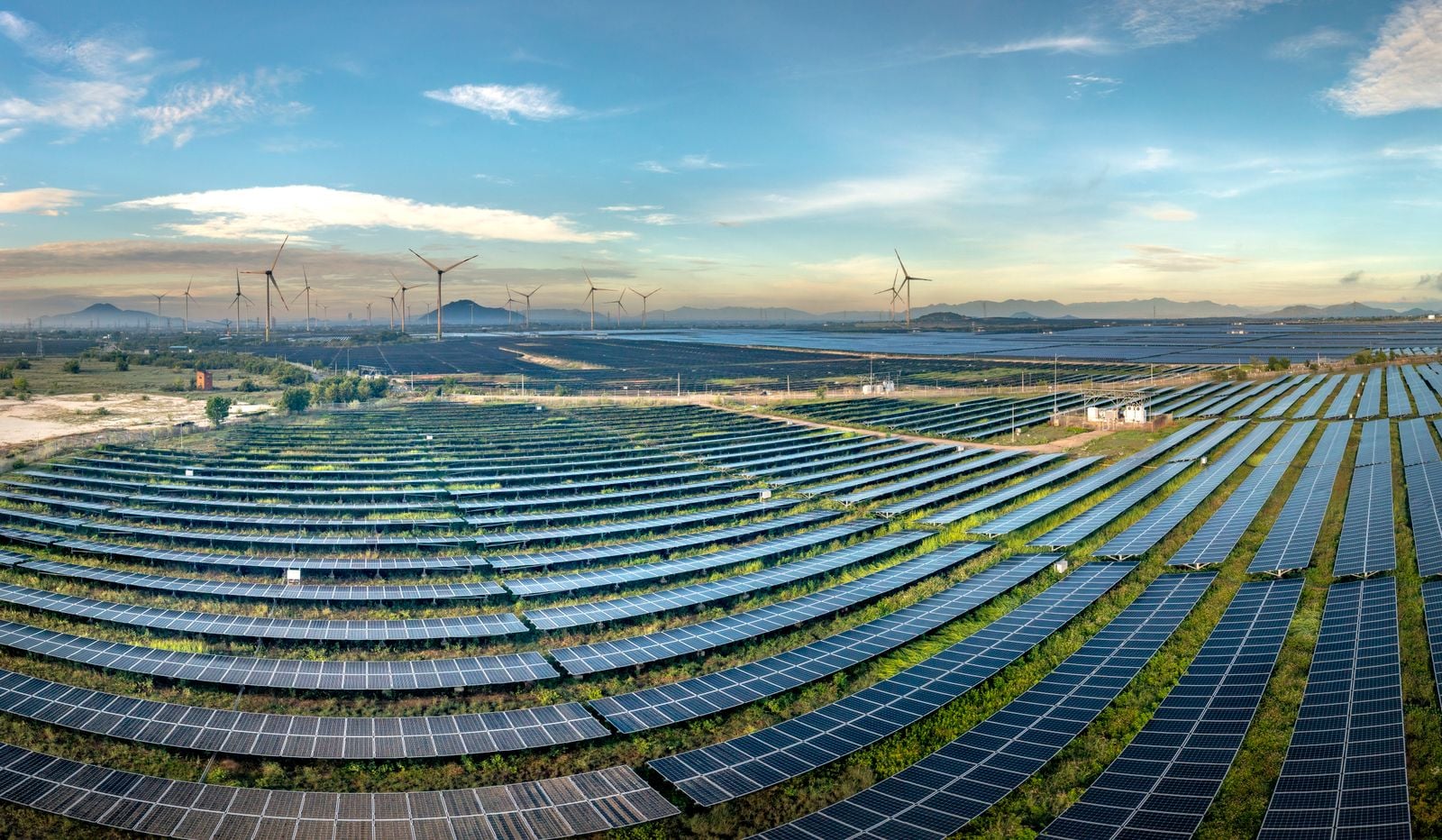
Power lines, substations and generating plants being approved right now are sized against decades of weather records, and those records describe a climate the planet no longer has. Many of them will still be carrying load in 2041 or 2046. That mismatch is the subject of a policy brief the United Nations University Institute for Water, Environment and Health published on 4 September 2026, warning that governments are still signing off on assets with 15 to 20 year lifespans on a baseline that has already moved. The brief from UNU-INWEH, written for national regulators and climate-finance institutions, frames this as a fiscal problem before it is a technical one. Capital is being committed, at scale, against a number that no longer describes the world.
The same document sets that against the scale of the build-out now under way. The International Energy Agency’s Renewables 2024 projects global renewable capacity growing 2.7 times by 2030, close to a tripling and close to the pace the world set itself at COP28. Two trajectories are colliding: an expansion unprecedented in the history of electricity, planned against weather assumptions that were already stale when the projects were approved.
The lead author, Dr Renee Obringer, a UNU-INWEH research fellow in urban and interdependent infrastructure systems, puts the contradiction plainly. “We are asking the grid to absorb more renewable energy and more demand at the same time, and we are making those decisions with data that describes a climate we no longer live in,” she said in the UNU release. “The uncomfortable part is that AI sits on both sides of the ledger. It is one of the reasons demand is climbing, and it is also the fastest route we have to planning for what is coming.”
What the brief actually says
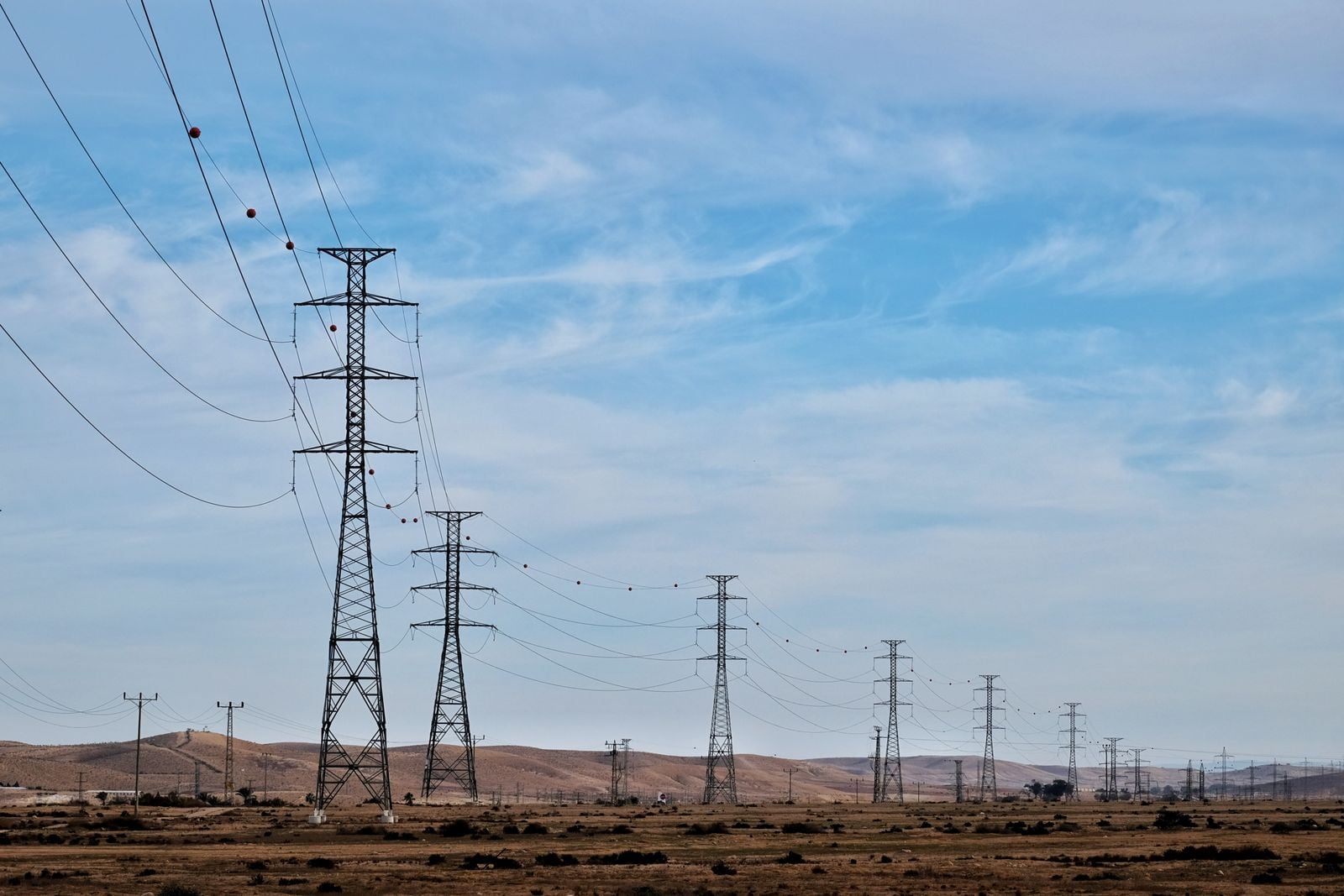
The publication, Employing Domain-Informed AI for Energy Planning and Decarbonization under Uncertainty, is not a study of a single grid failure or a single storm. It is a governance argument. Regulators approve capacity plans; capacity plans rest on demand forecasts; demand forecasts rest on historical weather. When the weather record stops predicting the weather, everything downstream of that record inherits the error.
A 15 to 20 year asset life is not long by infrastructure standards. Transmission corridors run for decades. Hydro dams run for a century. But it is exactly long enough for the underlying climate assumptions to drift materially before the asset is retired. The brief calls this the accumulation of stranded assets as physical climate risks materialise.
The authors describe a feedback loop that most policy documents on renewables tend to skip. Wind, solar and hydro generation are more sensitive to weather than gas or coal plants are. A heatwave that spikes air-conditioning demand also thins hydro reservoirs, cuts solar panel efficiency, and shifts wind patterns. The technologies deployed to slow warming become harder to predict as warming advances.
Demand is moving in the same direction. Warmer summers pull more electricity through air conditioners. Drier ground pulls more electricity through irrigation pumps. And on top of both, a new load has arrived that the 2015-era planning models never contemplated.
The data-centre load nobody planned for
The brief is blunt about where the demand shock is coming from. Power-intensive end-uses, including data centres and electric vehicles, are expanding faster than planners anticipated, outrunning the capacity expansion already scheduled to meet them. Unregulated AI data centres, the authors write, consume vast amounts of electricity and directly strain the grids they are built on. The release accompanying the brief puts the same point in one line: the grid is being asked to grow and to absorb an unfamiliar load at once.
The numbers behind that load are now reasonably well established. Space Daily has covered the projection that data centres may draw around 945 terawatt-hours a year by 2030, roughly the annual electricity use of Japan. A separate UNU-INWEH report published on 3 June 2026 reached the same figure by a different route, and UN News summarised its findings on the water, land and emissions consequences of the current build-out. GovTech’s coverage of that June report tracked how quickly this has moved from a specialist worry to a mainstream regulatory one.
Local governments are beginning to react. In New Jersey, Millburn introduced an ordinance to prohibit data centres across all zoning districts, an early instance of a municipality using land-use law to keep a specific class of grid load out entirely. The measure has been introduced, not enacted.
What the September brief captures is the awkward position AI now occupies in the energy conversation. It is a large new source of demand. It is also, the authors argue, one of the most promising tools available for modelling grid behaviour under climate stress. Both are true at once.
Why historical weather stopped working
Capacity planners have always used the past to anticipate the future. The standard approach is a design year: a synthetic weather profile stitched together from decades of records, used to size everything from substation transformers to reserve margins. The method assumes the climate is stationary — that the distribution of hot days, cold snaps, wind droughts and cloud cover this decade will look roughly like the last one.
That assumption is what the UNU brief says has broken.
The alternative — climate model output — is not easy to plug in. The general circulation models that underpin state-of-the-art climate impact assessment are hard to integrate into engineering workflows, hard to downscale to the specific geographies infrastructure decisions turn on, and slow to produce the variables energy modellers actually need. Research on climate impacts has advanced considerably, the brief concludes, but it is not consistently reaching the regulatory agencies responsible for capacity planning.
So the planners keep using the historical record. Not because they think it is right, but because nothing else fits inside the approval timelines they work to.
The domain-informed AI proposal
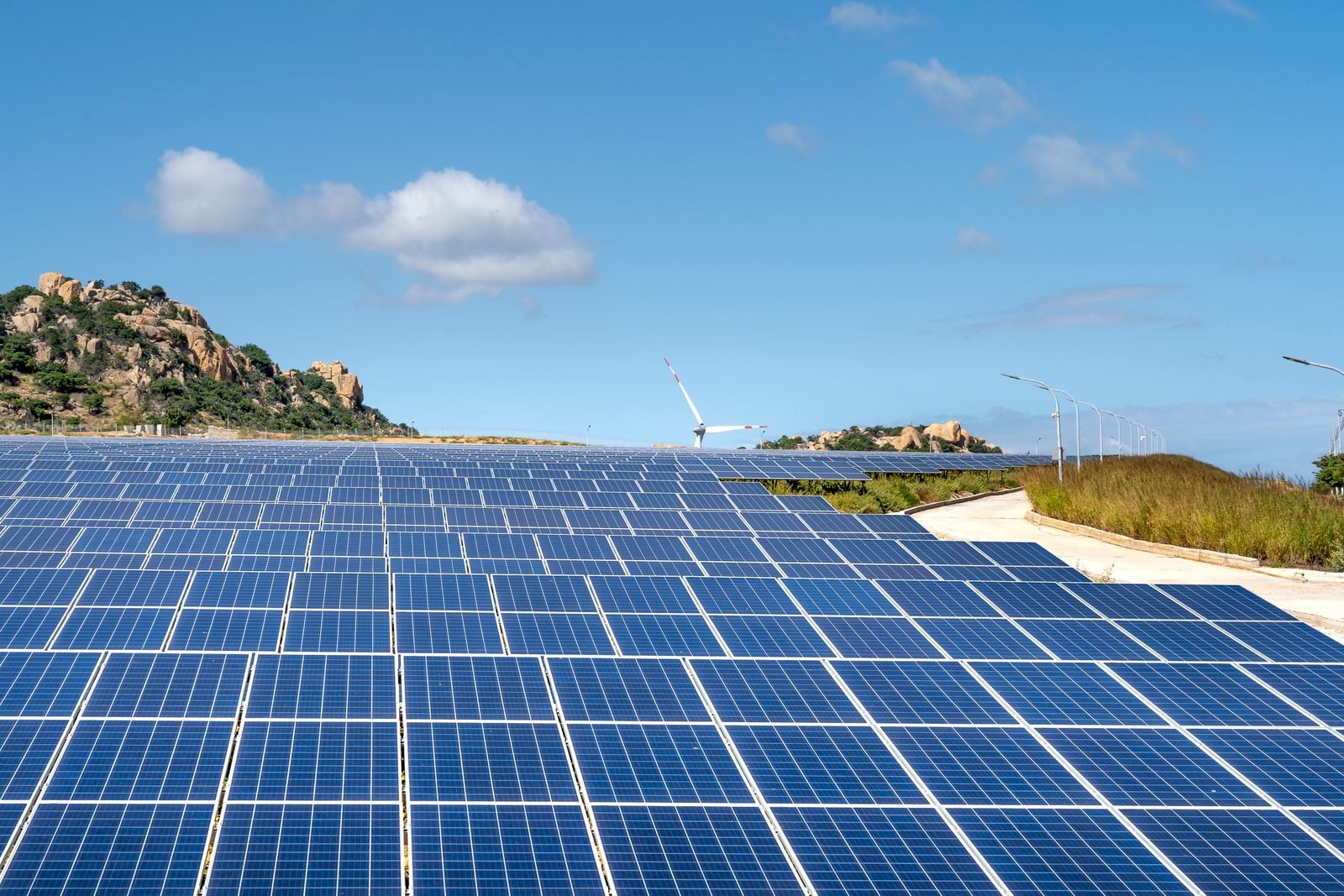
The brief’s proposed fix is narrower than the headline word “AI” suggests. The authors distinguish domain-informed models — algorithms built for a specific application, with transparent training and legible reasoning — from the large language models and general-purpose deep learning systems that dominate public discussion.
Domain-informed models, they argue, already produce highly accurate short and long-term renewable forecasts. AI climate emulators, which approximate the behaviour of a full climate model at a fraction of the compute cost, are progressing quickly. Because their reasoning can be inspected, planners can fold them into existing regulatory processes without turning capacity approval into a black-box exercise.
The recommendations are prescriptive. Regulators should institutionalise adaptive governance frameworks. Energy systems modellers should sit alongside climate scientists in integrated modelling across water, transport and communications networks. Transparent, domain-informed AI should be a mandated standard for capacity planning approval. Opaque deep-learning systems should be classified as severe operational hazards. And AI data centres, the brief says, should be required to operate primarily on verifiable renewable energy.
Professor Kaveh Madani, UNU-INWEH’s director and a co-author, framed the tension directly. “AI is being offered to governments as an answer to the energy transition while quietly becoming one of its largest new burdens, and both of those things are true at once,” he said. “Rejecting these tools would slow decarbonisation. Adopting them without transparency rules or limits on their own energy use would simply exchange one risk for another. The task is not to choose between the two, but to set the conditions under which AI is allowed near critical infrastructure.”
Some cities are already treating the data-centre load as a resource rather than only a burden. Space Daily has covered how Stockholm pipes waste heat from its data centres into the district heating network, warming roughly 30,000 apartments a year from servers that would otherwise vent that energy to the sky. This kind of coupling is exactly what the UNU brief means when it calls for integrated modelling across sectors.
It also captures a limitation the brief is honest about. Domain-informed AI can help planners forecast wind droughts and heat spikes with more skill than a 30-year weather average. It cannot, on its own, decide whether a new hyperscale facility should be built next to a district heating pipe or in a desert with no water. Those are land-use, permitting and political choices.
The 2030 arithmetic
The IEA’s projection that renewable capacity will grow 2.7 times by 2030 is the number that sets the stakes. Roughly five years of investment decisions are being made now that will define the shape of the electricity system for the following two decades. Every one of those decisions rests on a demand forecast. Every one of those forecasts rests on a climate assumption.
If the assumption is that summers will resemble the 1990-2020 average, and the summers actually resemble the 2020-2025 stretch, the resulting grid will be undersized for peak load and oversized for the winters it was hedged against. Both errors cost money. Both errors, at scale, become stranded assets on utility balance sheets and higher bills for the customers who ultimately pay them off.
Water is part of the same calculation. The June 2026 UNU-INWEH report on the carbon, water and land footprints of AI’s energy use projects data-centre water consumption reaching 9.3 trillion litres a year by 2030, a volume the authors compare to the basic annual domestic needs of 1.3 billion people. Most of that is water tied to the electricity data centres draw rather than water poured through their own cooling plant, which is precisely why the September brief insists on integrated modelling across water and energy. You cannot decarbonise a grid by adding renewables that need water in a basin already drying out.
What this brief does not do
The publication is a policy brief, not a demand forecast. It does not quantify how much capacity is currently misallocated. It does not name specific utilities or projects. It does not model, country by country, how large the stranded-asset exposure might be by 2040. Those are the studies that would need to follow.
It also does not resolve the harder political question buried in the recommendations. Requiring AI data centres to operate primarily on verifiable renewable energy is easy to write and difficult to enforce, particularly where hyperscalers negotiate power purchase agreements that let them claim renewable sourcing while drawing physical electrons from whatever the local grid can supply at 3 a.m.
The industry conversation is beginning to catch up. At Climate Week NYC 2026, the engineering consultancy Ramboll is convening a data-centre roundtable at One World Trade Center with the Urban Land Institute and the Consulate General of Denmark to work through exactly these pressures — grids, water, land use, permitting — alongside a session on integrated heat and flood resilience with the City of New York, C40 Cities and UNEP.
The specific number in the brief worth holding onto is 15 to 20 years. That is the design life of the assets being approved now. A substation energised in 2026 on a 2015-era demand forecast, sized against a 1990-2020 weather baseline, is expected to still be in service in 2041 or 2046. The climate it will operate in during its final decade is not the climate the engineers who sized it were told to assume.
The brief’s argument, stripped of its recommendations, is that the interval between when infrastructure gets designed and when it gets retired is now long enough that the baseline assumptions cannot be held stationary across it. Every capacity plan approved on old weather data is a bet that the past will keep predicting the future for another two decades. The evidence for that bet is thinning by the summer.