

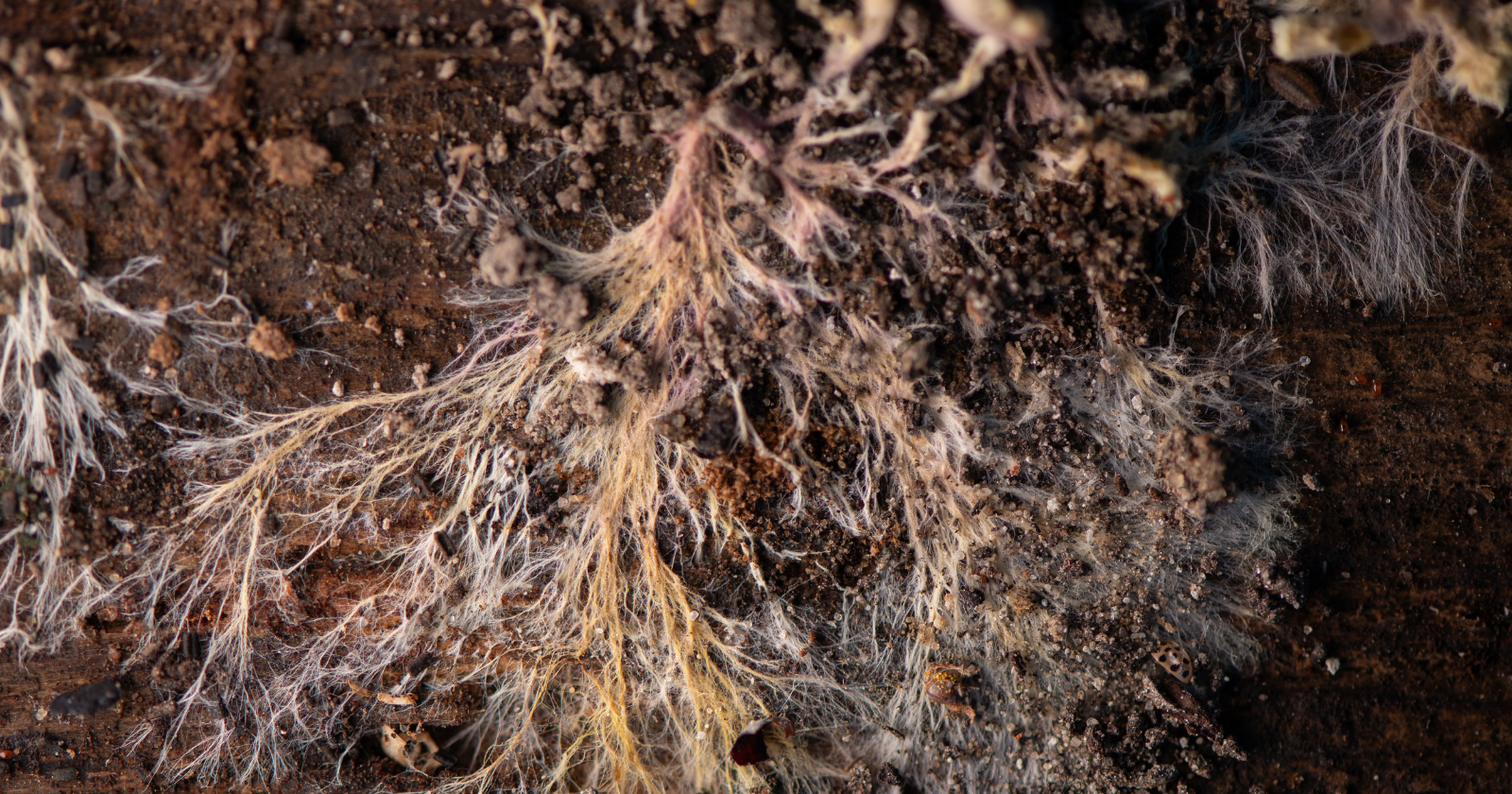
In a teaspoon of healthy soil, there can be up to 10 metres of living fungal thread. Scale that up across every grassland, forest and tundra on Earth and the total length of arbuscular mycorrhizal fungal hyphae in the top 15 centimetres of soil comes to roughly 110 quadrillion kilometres — a figure published in Science on 11 June 2026 by a team led by the Society for the Protection of Underground Networks.Laid end to end, that thread would reach the Sun nearly a billion times over.
It would also stretch a little over a tenth of the way across the Milky Way.
The number sounds like a rhetorical flourish. It is a measurement, drawn from more than 16,000 soil cores and stitched together with machine-learning models trained on environmental data where direct sampling was impossible. The map it produced is the first global picture of a living infrastructure that has been growing beneath plant roots for about 475 million years.
What was actually measured
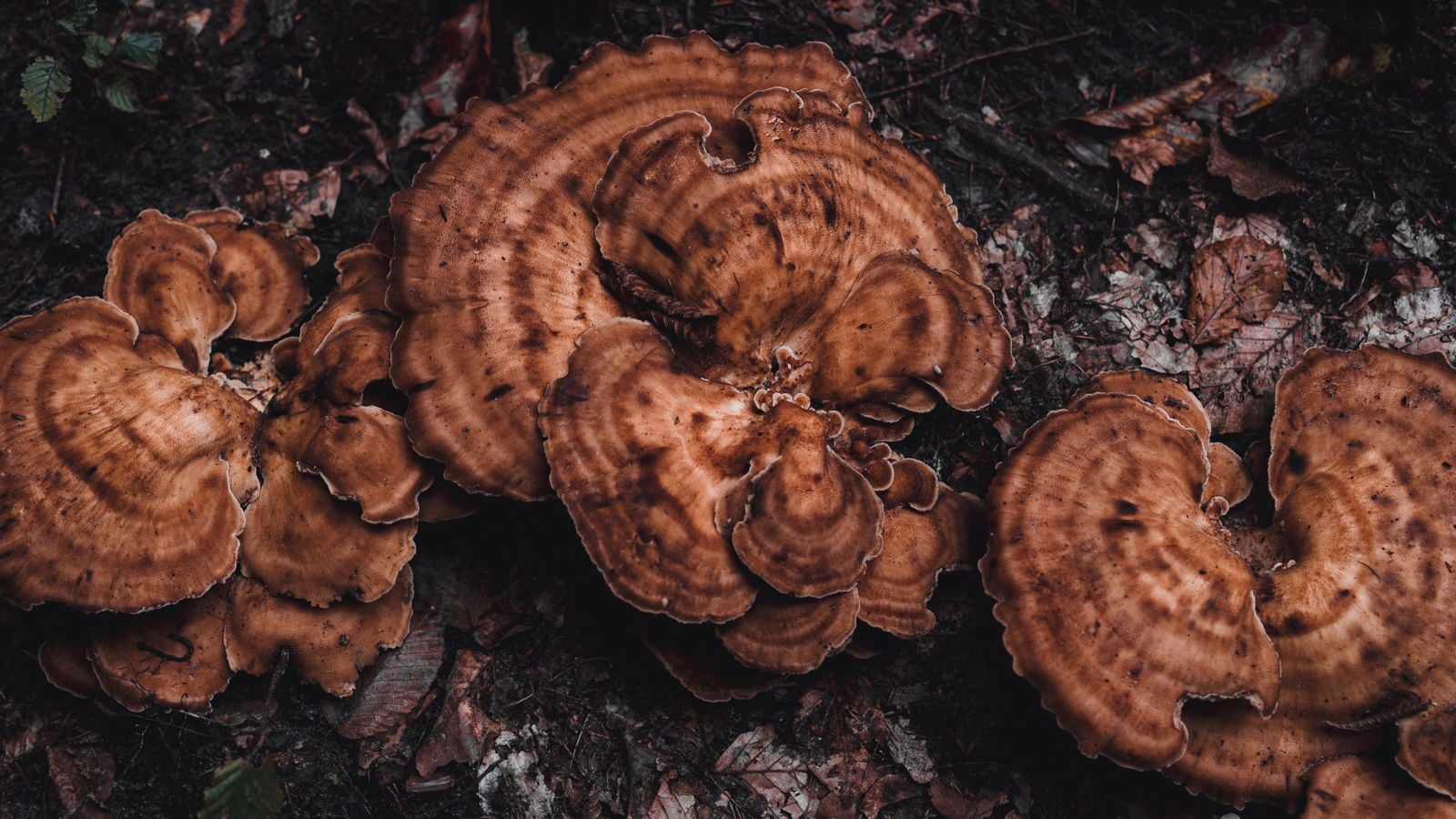
Arbuscular mycorrhizal fungi — AM fungi for short — are not mushrooms. They are networks of tubular cells called hyphae that thread through soil and into plant roots, where they trade water and mineral nutrients for carbon the plant has fixed from the air. The partnership is ancient, and it is not optional for most land plants. Around 70 per cent of the world’s plant species rely on it.
The team, led by SPUN’s Dr Justin Stewart with co-lead author Dr Corentin Bisot of the AMOLF physics institute in Amsterdam, combined soil-core measurements with robotic imaging of more than 300,000 living fungal structures grown in the lab. Where field data was thin, environmental variables — temperature, rainfall, soil chemistry, plant cover — were fed into models that predicted hyphal density. The output is a global density map, released alongside an interactive visualisation built with the data designer Moritz Stefaner.
The 110 quadrillion kilometre figure is a modelled estimate, not a direct census. The authors are clear about that. What they can say with more confidence is where the density peaks, where it collapses, and how much carbon the network is moving.
The scale, at human distances
110 quadrillion is 110 followed by fifteen zeroes. The Sun sits about 150 million kilometres from Earth. Divide one by the other and you get roughly 733 million one-way trips to the Sun — about 366 million there-and-back journeys. It is the one-way count that the announcement accompanying the paper rounded up to a billion.
The Milky Way is about 100,000 light-years across, which works out to roughly 9.5 × 10¹⁷ kilometres. The fungal thread is a little over 10 per cent of that span. A network you could hold a strand of on a fingertip, summed across the planet, reaches an appreciable fraction of a galactic diameter.
None of that is metaphor. It is arithmetic done on the SPUN estimate.
How grasslands hold up the balance sheet
Grasslands do most of the heavy lifting. The study finds they contain roughly 40 per cent of Earth’s AM fungal infrastructure. Across the network as a whole — grassland, forest, tundra and cropland together — the fungi move something like 4 billion tonnes of carbon dioxide equivalent into soils every year, about 11 per cent of annual human-related CO₂ emissions.
The densest hotspots the map identifies are Florida’s Everglades, the Sudd flooded grasslands of South Sudan, and the Tibetan Plateau. Most of them sit outside protected areas. A 2025 SPUN analysis put the figure at 95 per cent of AM fungal biodiversity hotspots being unprotected.
Grasslands are also being converted to cropland at roughly four times the rate at which forests are lost.
Croplands, on average, hold about half the fungal density of the wild ecosystems they replaced. Tilling is the blunt instrument — the physical act of turning soil breaks hyphae apart. Fertilisers and fungicides do subtler damage by disrupting the exchange between plant and fungus. When a plant is fed synthetic phosphorus directly, it has less reason to trade carbon for the fungal version. Study co-author Katie Field, a professor of plant-soil processes at the University of Sheffield, set out the farming implications in The Conversation.
That matters because AM fungi supply more than 80 per cent of the phosphorus a partnered plant takes up, and can extend the effective foraging area of a root system by up to 100 times. Strip the network out and the plant still grows — if you keep pouring fertiliser on it. Stop, and the soil underneath is thinner than it looks.
Dr Toby Kiers, SPUN’s executive director and a senior author on the paper, told The Guardian the study was one of the most exciting of her career, and said the team would present the data to governments at the UN desertification COP in Mongolia in August 2026. Lower-density networks also mean less nitrogen and phosphorus intercepted before it runs into waterways.
The mass of the invisible
The SPUN team estimates the total living AM fungal network contains around 300 megatonnes of carbon — four to six times the mass of every human alive. It is one of the largest living structures on the planet, and almost none of it is visible above ground.
Space Daily has written before about how the largest known single organism on Earth is a fungus — an Armillaria ostoyae in Oregon’s Malheur National Forest that covers close to four square miles and is estimated to be between two and eight thousand years old. That one is a pathogen, killing the trees above it slowly. The AM fungi mapped in the new study are the opposite: mutualists, holding those trees up.
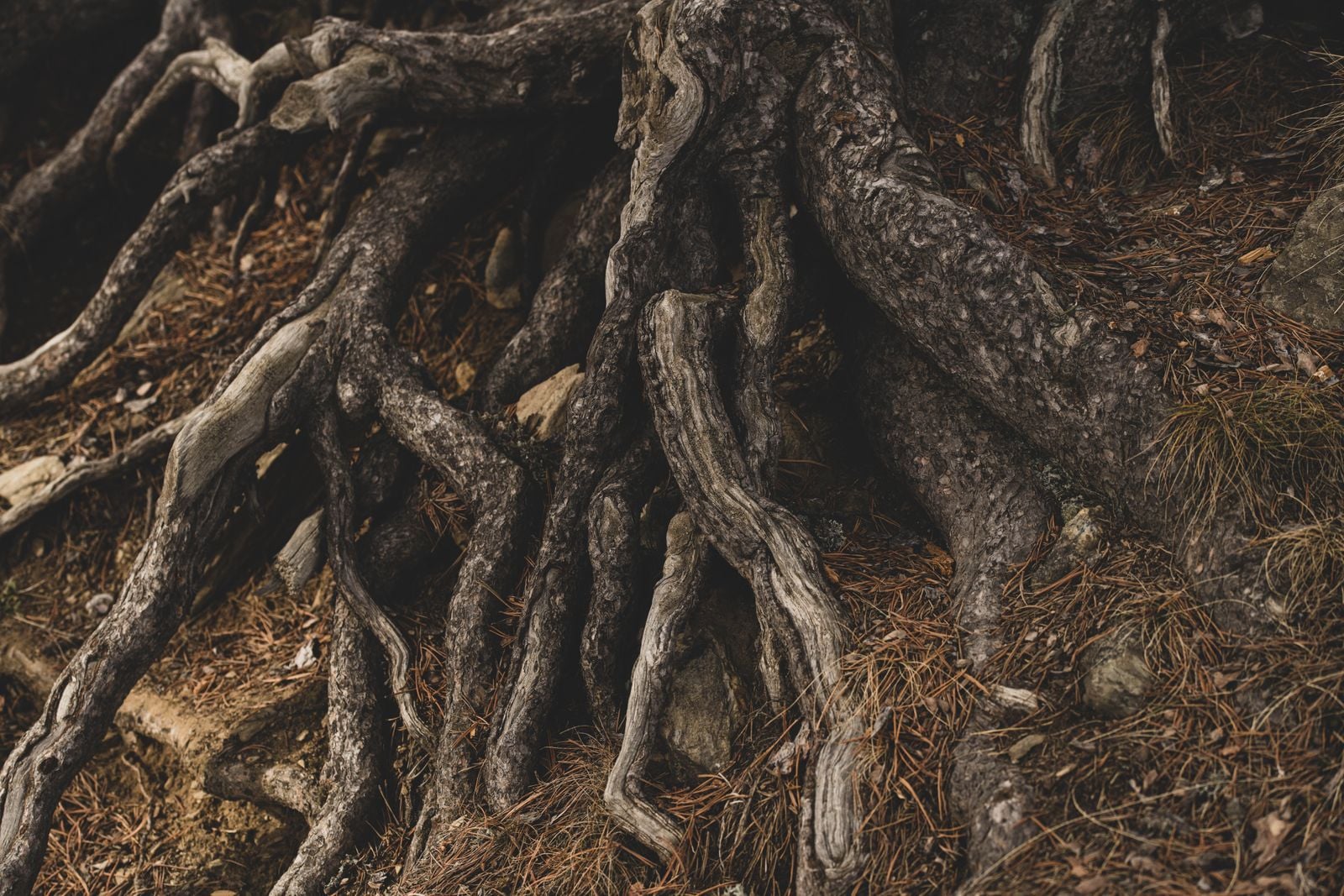
Both are examples of the same broader fact. Most of the biological mass on land, most of the biological length, most of the connective tissue of a terrestrial ecosystem, is underground.
What the map does not show
The study covers arbuscular mycorrhizal fungi specifically. It does not map ectomycorrhizal fungi, which partner with many temperate and boreal trees including pines, oaks and birches, and which form a separate — also enormous — underground network. It does not map saprotrophic fungi, the decomposers. Add those in and the total length of fungal thread beneath the world’s soils is larger still, though nobody has yet published a comparable global estimate.
The 110 quadrillion figure is also a snapshot. Hyphae are ephemeral. Individual threads can turn over on timescales of days to weeks, growing and dying and being rebuilt. The map is more like a satellite image of traffic on a Tuesday afternoon than a census of permanent roads.
And the machine-learning extrapolation carries the usual caveats. Regions with sparse soil-core coverage — much of central Africa, parts of the boreal forest, high-altitude Asia — rely more heavily on model predictions than on measurement. The authors acknowledge this in the paper’s methods.
The circulatory system, and what a teaspoon holds
The SPUN team calls the AM fungal network Earth’s underground circulatory system. The comparison is easier to defend than it sounds. The network moves carbon down from the atmosphere and into stable soil pools. It moves phosphorus and nitrogen laterally between plants that would otherwise compete for them. It buffers plants against drought by extending the reach of roots into pore spaces too small for a root tip to enter.
Coverage of the paper, including Discover Wildlife’s account of the map, described the finding as the first quantitative global picture of that circulation. Before this, most estimates were extrapolated from a handful of sites or inferred from plant biomass. The soil-core dataset gives a direct anchor.
Dr Merlin Sheldrake, a co-author and one of the more publicly visible mycologists working today, said in the study’s press materials that the research is a step towards understanding how this planetary circulatory system operates, and points to ways of working with fungi on problems from food security to climate change.
The unit that lands hardest is still the teaspoon. Ten metres of living thread in a volume you could balance on a fingertip. Scoop up soil from a healthy meadow and you are holding, in that small handful, a length of biological infrastructure comparable to the height of a three-storey building.
Multiply that across every grassland from the Serengeti to the Great Plains, across every temperate forest floor, across the tundra during its brief summer, and the total is what SPUN’s map now shows — a filament long enough to reach the Sun some 733 million times, packed into the top 15 centimetres of the planet’s crust.
The paper’s authors are careful not to overclaim. Hyphae rot. Ploughs cut them. Fertiliser dulls the trade. On the numbers in the study, the network in a wheat field is roughly half of what was there before the field was a field.
The map exists now. So does the benchmark. The next soil core, taken from the same place in ten years, will say whether the thread is still there.