

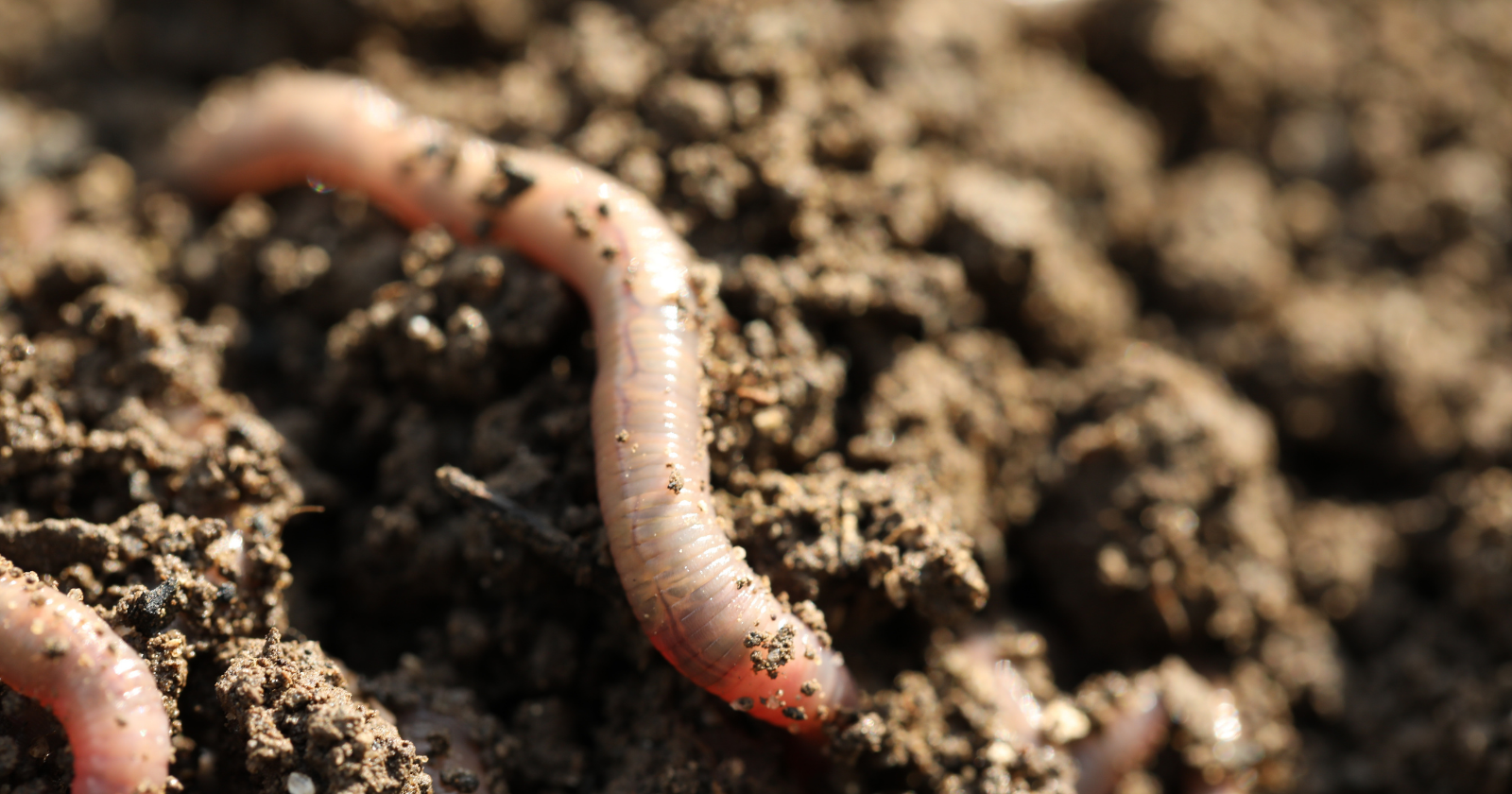
In a lab tank at William & Mary in Virginia, a three-foot ribbon worm named Baseodiscus the Eldest — B, to the people who feed him — has been quietly hunting peanut worms in the mud for more than 20 years. A genetic analysis run in 2024 at the Oregon Institute of Marine Biology confirmed what he is: Baseodiscus punnetti. It could not say how old he is. That figure comes from the captivity record instead — a minimum of 27 years, a best estimate nearer 30 — and it makes him the oldest ribbon worm on record, by more than two decades. The only other nemertean age in the scientific literature belonged to a worm three years old.
B’s life did not begin as an experiment. He arrived in Jon Allen’s care in 2005, when Allen was finishing a doctorate at the University of North Carolina at Chapel Hill and learned that renovations to a science building would leave a tank of invertebrates without a home. He rode north in the back of Allen’s truck to a postdoctoral post at Bowdoin College in Maine, moved south to Randolph-Macon College, and settled at William & Mary in 2009. He has been there ever since, doing very little.
What the tank actually contains
B is a member of phylum Nemertea — the ribbon worms — a group better known for extremes of length than of age. A specimen washed up on a Scottish beach in 1864 measured roughly 180 feet, about twice the length of a blue whale. Space Daily has written about the bootlace worm and its neurotoxic mucus before. B is a more modest cousin: three feet long, coiled in mud at the bottom of a saltwater tank, occasionally eating a peanut worm.
Peanut worms are his preferred prey. They are small, soft-bodied sipunculans that live in sediment, and when B arrived there were roughly thirty of them in the tank alongside two vermilion bat stars. As Defector reported, the bat stars died after about two decades and the peanut worms have largely disappeared. B has outlasted everything he came with.
He is disturbed once a year. Every autumn Allen lifts the anemones and brittle stars out of the tank, sifts through the mud until he finds the worm, and carries him to an invertebrate zoology class.
How the age was pinned down
The problem with ageing a ribbon worm is that ribbon worms have almost nothing hard in them. No bones, no shells, no otoliths, no growth rings. Some nemerteans carry a stylet — a calcified, harpoon-like structure used in prey capture — but B’s species does not. Without internal calcified parts, there is no obvious clock to read.
Which is why, as Allen told Popular Science, accidental studies like this one are effectively the only way to get at the number: you keep an animal alive long enough to find out.
B’s age is a captivity minimum. He arrived in Allen’s tank in 2005 already estimated at seven years or more, having been collected as an adult from the San Juan Islands in the late 1990s, according to ScienceAlert. Twenty years in the tank on top of that gives 27 as a floor, not a ceiling.
The species identification came later. Allen brought B out for a class in 2023, and undergraduate Chloe Goodsell — who had been looking after the anemones and urchins sharing the worm’s tank without knowing the worm was in there — asked how old he was. When no one could answer, she suggested sending a tissue sample to Svetlana Maslakova at the Oregon Institute of Marine Biology, one of the few researchers who works seriously on nemertean genetics. The 2024 analysis identified B as Baseodiscus punnetti, only the second member of his species ever genetically barcoded. The resulting short communication, with Allen, Goodsell and Maslakova among the authors, appeared in the Journal of Experimental Zoology.
Why nobody had noticed
Biologists had suspected nemerteans might be long-lived. Cold-water invertebrates often are. But the previous lab record was around three years, and no one had been sitting on a decades-old animal with paperwork.
Part of the reason, as Maslakova told Popular Science in the same interview, is that ribbon worms are hard to study. They are difficult to track down in the wild, and species are hard to tell apart even once you have one in hand.
So the field simply did not have the observations. B’s tank became, by accident, the longest continuous captive record for the phylum.
The record exists because a doctoral student in 2005 did not want to throw out a tank of invertebrates during a building renovation. B travelled with him for two decades through three institutions, kept as a class demonstration rather than a research subject. The paper only happened because an undergraduate asked a question no one had thought to ask.
The pattern is familiar in biology. Long-lived species tend to be discovered by accident, because the timescales required to notice them exceed the length of most research grants and most academic careers. Bowhead whales were re-aged past 200 years after old harpoon points turned up in living animals. Greenland sharks were dated to several centuries using radiocarbon signatures in the lens of the eye. Rougheye rockfish turned out to live past 200 once someone counted otolith rings properly.
B fits that pattern. His age was not measured — it accumulated, in a tank, while other work was being done. In the William & Mary announcement, Allen put the scale of the correction plainly: the finding raises the phylum’s known lifespan by an order of magnitude.
What this changes for marine ecology
Ribbon worms are widespread benthic predators. They eat other invertebrates in sediments from the intertidal zone to the deep sea. If their lifespans are measured in decades rather than years, their role in seafloor food webs looks quite different from what most textbooks assume.
A predator that lives three years turns over quickly. Its population responds fast to prey abundance, to temperature, to disturbance. A predator that lives 30 years is a slower, more persistent presence — closer to the ecological role played by long-lived fish or bivalves. It integrates conditions over a much longer window. It also recovers more slowly when something goes wrong.
Allen made that point to Popular Science: nemerteans are important members of benthic ecosystems, and a multi-decadal lifespan changes how researchers should think about their place in food webs.
There is a longevity angle too. A living animal with a well-defined age is a useful reference point. Researchers can now look for physiological or molecular markers in Baseodiscus punnetti that track age, and try to reverse-engineer a clock for wild specimens — telomere length, methylation patterns, tissue composition. Goodsell framed the broader relevance to ZME Science in terms of comparative longevity: working out how animals evolve long lifespans feeds into human research on age-related disease.
Ribbon worms had not been part of that conversation before. They are now.

What the study does not show
The paper does not establish a maximum lifespan for the species. B is still alive. The 27-year figure is a floor built from his arrival date plus the seven years he had already lived; the roughly 30-year figure is a best estimate around it.
Nor does it show that B is exceptional. Goodsell told Defector that he is probably just a very normal worm, and that older ones are likely out there in the wild. What the finding establishes is that decades-long lifespans are possible in the group — not that this individual is a freak, and not that all nemerteans live this long.
The phylum contains roughly 1,300 described species across a huge range of body sizes and habitats, from tidepool predators a few centimetres long to the bootlace worms of the North Atlantic. Their lifespans may vary as widely as their lengths.
And the age itself is not derived from a molecular clock. It comes from a captivity record. The genetic analysis established what B is, not how old he is.
The tank, right now
B is still in Allen’s lab at William & Mary, three feet long, in the mud, eating peanut worms. As the university’s summary of the Scientific American coverage notes, the student who eventually got him identified had been tending the anemones and urchins in his tank for months without knowing he was down there. He is that unobtrusive.
If he lives another 20 years, and there is no obvious reason to think he cannot, he will still be in a tank somewhere in Virginia when today’s undergraduates are mid-career. The peanut worms will need restocking. The tank will need cleaning. And the record will keep getting longer, one quiet year at a time.