“The construction of the nuclear reactor on board the satellite envisaged its complete destruction on re-entry of the satellite into the dense layers of the atmosphere.” That is how Canada’s Statement of Claim recorded the position the Soviet ambassador in Ottawa put to an External Affairs official on January 24, 1978, hours after one of his country’s satellites had already come down over Canadian territory. The same paragraph records him asserting that “there should not be any sizeable hazard” and that “in places of impact there could only be insignificant local pollution requiring very limited measures of disactivation.”
The months that followed brought a joint Canadian and American radiological search, mounted after the crash scattered radioactivity over a 124,000-square-kilometre area of Canada’s north. Of the satellite debris the teams turned up, all but two recovered fragments were radioactive, and some fragments they located “proved to be of lethal radioactivity,” in the words of the formal claim Canada later filed. Three years and two months after the crash, Moscow agreed to pay Canada C$3 million to close the file.
A reactor in a spy satellite
Kosmos 954 was launched on September 18, 1977, and Canada’s later legal filings note that the United Nations Secretary-General was formally informed of the launch that November. Health Canada describes it as a Soviet nuclear-powered surveillance satellite. By the Soviet Union’s own subsequent account, given in a diplomatic note that March, it carried a nuclear reactor running on uranium enriched in uranium-235, with an active zone of heat-emitting elements and a beryllium reflector.
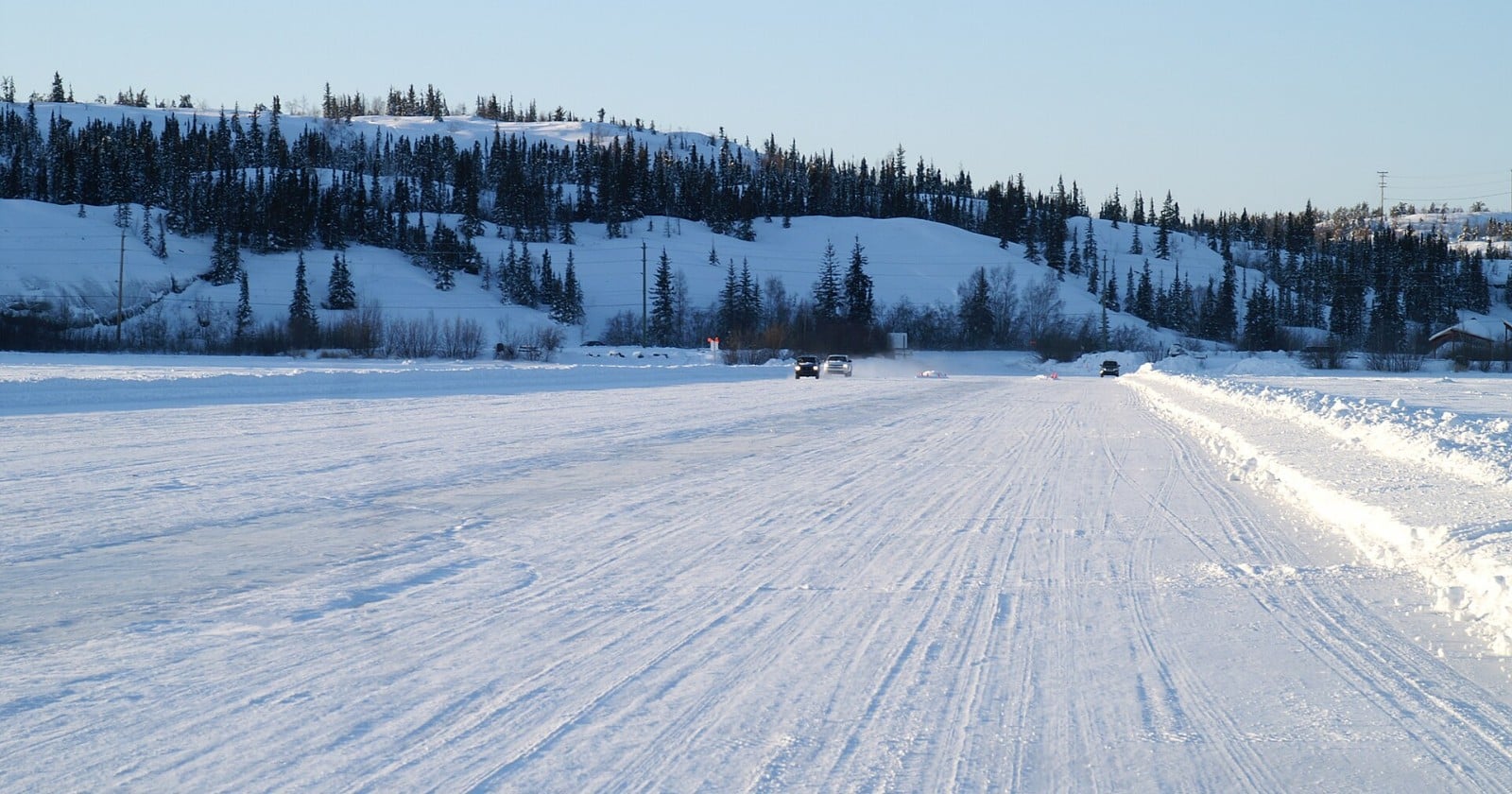
On January 24, 1978, at about 11:53 in the morning Greenwich time, the satellite entered the atmosphere and crossed into Canadian airspace north of the Queen Charlotte Islands, now Haida Gwaii, on the west coast. It broke up as it fell. Debris came down across a swath of the Northwest Territories, Alberta and Saskatchewan, scattered southward from Great Slave Lake.
Canada had received no warning from Moscow. Its later Statement of Claim records that the Soviet government failed to give notice of the possible re-entry, and that Ottawa’s urgent technical questions, put to the ambassador that same day and repeated for weeks afterward, went without timely and complete answers. The ambassador did allow one caveat that first day: if the satellite failed to burn out completely, the possibility of parts falling in the area of the Aleutian Islands “was not excluded.” The first substantive Soviet description of the reactor’s design arrived in a note dated March 21, nearly two months after the crash.
Operation Morning Light
One offer of help arrived almost immediately. Within minutes of the re-entry, by Canada’s own account, the United States offered technical and material assistance, and Canada accepted on the spot. The recovery effort that resulted was named Operation Morning Light.
The operation ran in two phases, the first from January 24 to April 20, 1978, and the second from April 21 to October 15, 1978, through an Arctic winter and most of that year. Crews from the Canadian Armed Forces and the Atomic Energy Control Board, working with the American teams, located, recovered and tested debris and cleaned up affected areas within the region over which the radioactivity had been scattered.
What they found justified the effort. Canadian authorities determined that all but two of the fragments recovered were radioactive, and the Statement of Claim records that “some fragments located proved to be of lethal radioactivity.” One piece carried inscriptions in the Cyrillic alphabet. The recovered material was shipped to the Whiteshell Nuclear Research Establishment at Pinawa, Manitoba, where testing confirmed that highly radioactive debris from the satellite had reached Canadian ground, the scenario the January 24 assurance had discounted.
For all that, the sweep captured only a sliver of what fell. The Atomic Energy Control Board, the nuclear regulator of the day, estimated that roughly 0.1 percent of the satellite’s power source was recovered, a figure Health Canada still cites. Taken at face value, the estimate leaves the other 99.9 percent outside the recovery ledger.
An invoice accurate to the cent
Then Canada added up the cleanup and sent the launching state a bill.
The Statement of Claim itemizes it. Phase I of the operations cost Canadian departments and agencies $12,048,239.11, of which $4,414,348.86 was included in the claim; Phase II cost $1,921,904.55, of which $1,626,825.84 was claimed. The total demand on the Soviet Union came to C$6,041,174.70, limited, per the claim, to costs that were reasonable, proximately caused by the intrusion of the satellite and the deposit of debris, and capable of being calculated with a reasonable degree of certainty.
The legal basis was the 1972 Convention on International Liability for Damage Caused by Space Objects, under which a launching state is absolutely liable for damage its space object causes on the surface of the Earth. Canada invoked it jointly with general principles of international law, arguing among other things that the bare fact of the satellite’s trespass violated Canadian sovereignty. Both countries were parties to the convention. On April 2, 1981, in Moscow, Canada’s ambassador Geoffrey Pearson and Soviet deputy foreign minister N. S. Ryzhov signed a protocol under which the USSR agreed to pay C$3 million “in full and final settlement,” just under half the sum claimed and about a fifth of what the two phases had actually cost Canada.
The limits of the paper trail
The settlement protocol runs to three articles and contains no admission of liability and no Soviet account of what went wrong. Nothing in the record read for this article withdraws the January 1978 design assurance, so that record leaves open whether the reactor’s safety design failed or was oversold.
The 0.1 percent recovery figure is a regulator’s estimate, not a measurement. The fate of the unrecovered material is not specified in the sources this article relies on.
The record is also incomplete about people. The debris field lay across lands of Dene communities, where reporting by the CBC has documented lasting local concern about contamination and health effects. The 1981 protocol did not address those questions, and residents were still raising them publicly more than four decades later. The primary documents this article rests on attribute no health outcome in those communities to the satellite; that gap in the record is reported here as a gap, not filled.
What the crash changed
The episode moved policy. Health Canada records that soon after the crash the United States called for prohibiting satellites carrying radioactive material from orbiting the Earth, and that similar calls followed from Canada and countries in Europe. In November 1978, the United Nations authorized its Committee on the Peaceful Uses of Outer Space to set up a working group on nuclear-powered satellites.
The protocol Pearson and Ryzhov signed in Moscow explains nothing and admits nothing; it names a sum. Three million dollars, against the radioactivity of a broken reactor spread across an area larger than Iceland. What endures is the Statement of Claim released alongside it, itemized to the cent: when something nuclear falls out of the sky, the question of who pays has an answer written down.