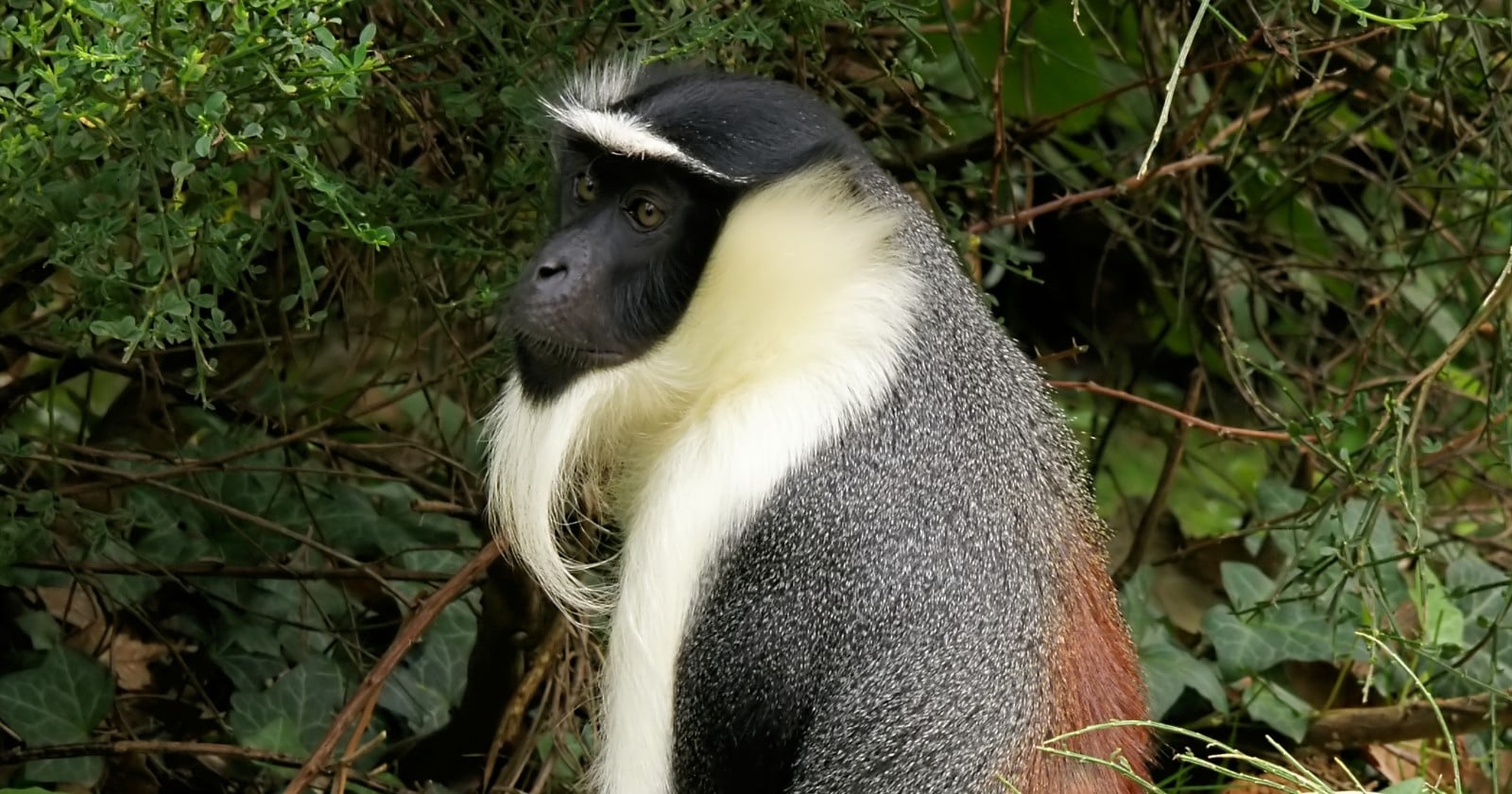
“It’s not every day you take a monkey to vet school,” said Charlotte Bentley, a veterinary officer at Chester Zoo’s Animal Health Centre, describing the day her patient was taken to the University of Liverpool for a scan. “We had to bring everything she might need, from anaesthesia equipment to medications and blankets.”
The patient was Masaya, a 15-year-old roloway monkey with a mass the size of a golf ball in one foot. The scan she travelled for led to an operation that removed the mass and saved all but one of her toes, carried out jointly by the zoo’s vets and surgeons from the University of Liverpool’s Small Animal Teaching Hospital. Months later she gave birth to a daughter. Both facts appear in releases published a day apart by Chester Zoo and the University of Liverpool in March 2026.
The problem kept coming back
Masaya came to Chester Zoo in 2023, and the foot was a problem from around the time she arrived. The zoo describes recurring problems with it in the years that followed, and neither its own release nor Liverpool’s says how many episodes there were or what each one looked like.
The vets worked through the obvious tools. X-rays. Ultrasound. Biopsies. In the zoo’s own words, they “struggled to identify the cause”.
A human patient with an intermittently swollen foot can describe how it feels on a bad morning, say whether it throbs or aches, and point at the spot that hurts. Masaya could offer none of that. Everything her vets learned about the inside of that foot, they had to go looking for.
They arrived at a working theory: a “likely persistent abscess, possibly from an old thorn injury”. Both of those hedges are the zoo’s own, and both are load-bearing. A biopsy that comes back without a clear answer does not become a clear answer because the swelling later responded to surgery.
Neither release states what the mass turned out to be once it was out. There is no post-operative diagnosis in either account, no histopathology result, no confirmation that the abscess theory was right. The surgery produced reported outcomes: the mass is gone, all but one of the toes are still there, and the animal is using the limb. In both accounts the abscess is the conclusion the vets reached, hedged as likely, before they cut the mass out.
A monkey at the vet school
When the swelling worsened in 2025, the decision was made to take Masaya to Liverpool for a CT scan. Rachel Burrow, a vet and lecturer at the University of Liverpool, worked on both the scan and the operation that followed.
Her framing of the stakes was blunt. “This was the last chance to save Masaya’s foot before amputation,” she said. She also noted how far outside her ordinary caseload the animal sat: “Working with primates is completely different from my usual patients, who are typically cats and dogs, and it was a real privilege to care for such a rare animal.”
Neither release says what the scan showed. Bentley records only what happened next: “Following the scan, we decided an operation was the way forward.”
A search that came up empty
The claim both institutions make about the procedure is a claim about a search, not about the world. The releases say the team found no previous examples of the operation in roloway monkeys, and proceeded anyway. Several write-ups have since headlined it as a first-ever surgery.
Those are different assertions. Veterinary procedures on rare zoo animals are not always written up, and an absent published account is not an absent operation.
Both institutions were precise in that sentence and looser elsewhere: both releases reach for the word “pioneering” in their opening lines, which pushes in the direction the headlines later took much further. The careful version is the one in the sentence about precedent, and it is the one that belongs in the record.
What the foot was worth
The surgery itself is not in doubt. The mass came out, all but one toe stayed, and Burrow’s later assessment was that Masaya was “comfortable, active and using the limb well.”
The foot was the point. Zoe Edwards, a primate keeper at the zoo, explained why an amputation would have been more than a cosmetic loss. “If she’d had an amputation, we’d have been left with real questions about whether she could hold her offspring or continue with her normal behaviours.”
Edwards elsewhere calls Masaya “a very experienced mum,” and that is what an amputation would have put in question. A foot is not the part of a monkey a zoo worries about for its own sake.
The number everyone repeats
The daughter born months after the surgery is called Lagertha, after a Viking queen, and the University of Liverpool notes she is Masaya’s third daughter. She was a few weeks old when the zoo announced the birth.
The conservation framing around her rests on a figure both releases attribute to the International Union for Conservation of Nature: fewer than two thousand roloway monkeys living wild across Ghana and Ivory Coast.
The IUCN Red List assessment for Cercopithecus roloway does contain that number, and it carries a hedge the releases do not. Its population description reads that the species “is now extirpated from most of its original range and it is likely that fewer than 2,000 individuals survive in Cote d’Ivoire and Ghana.”
Likely. Both releases report the figure flat: fewer than two thousand roloway monkeys live wild. It is the same hedge the vets kept around the abscess, dropped this time on the population figure, and it happens smoothly enough that nobody involved need have meant anything by it.
The entry records more than the number. The species is listed as Critically Endangered with a decreasing population trend, and the assessment behind those was completed in January 2019. More than seven years have passed since, in forests being cleared and hunted. The summary field for number of mature individuals carries no value at all, so the two thousand sits in the prose rather than in the slot the database keeps for counts.
The same description is blunt about the scale of the loss behind that number. The species, it says, is “now extirpated from most of its original range.” A figure like two thousand describes what is left after that, across two countries, in forest canopy. The assessment’s bibliography runs back to the early 1990s.
Chester Zoo says it is one of only two places in the United Kingdom where roloway monkeys are kept, and that only a few breeding females exist in European zoos. The releases connect the species’ wild rarity to the European Endangered Species Programme, which the releases describe as the breeding project set up to ensure the species’ survival, saying the health of individuals like Masaya is highly significant to it. Edwards made the link explicitly: Masaya matters “not just to her family, but to her whole species.”
And the alternative the surgery was weighed against, as both releases describe it, was amputation: the loss of the foot, and with it an open question about whether a mother could hold her offspring, in one of the few breeding females in European zoos.
A win without an answer
Masaya and Lagertha live with four other monkeys at the zoo. The mass is out, the foot carried her through a pregnancy and a birth, and on the clinical assessment the releases put on the record, from the Liverpool vet who worked on the scan and the operation, she is comfortable, active and using the limb.
What came out of that foot is still not named in either release. Burrow’s framing of the operation was the clock rather than the diagnosis: it was, she said, the last chance before amputation. For a female of a species with only a handful of breeding females left in European zoos, how many more times does a team get to wait and see?