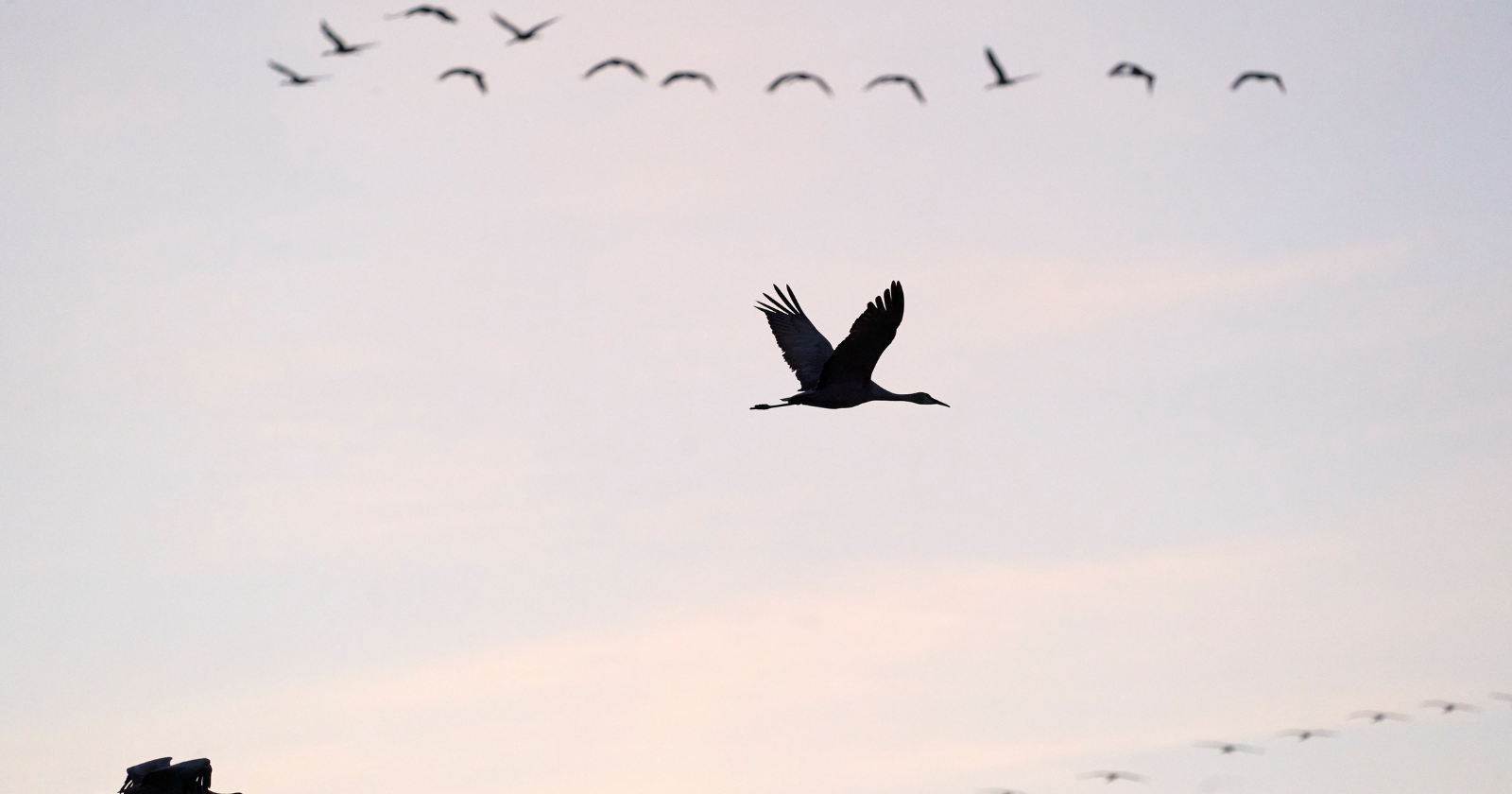
I put six minutes of birdsong through my headphones during the worst week of the year, and something in my chest actually loosened.
Nothing singular had gone wrong. It was the more ordinary kind of bad — too many things landing inside the same seven days, none of them catastrophic on its own, all of them arriving faster than I had the bandwidth to process properly. The kind of week where you’re not in crisis, exactly, you’re just permanently three steps behind your own life, responding to the wrong emergency because the right one hasn’t finished announcing itself yet. I put the birdsong on almost as an afterthought, the way you try a home remedy you don’t especially believe in, mostly because you’ve already tried everything you do believe in and none of it worked either.
An afterthought that turned out to be a documented intervention
Then my shoulders dropped about an inch I hadn’t realized they were holding, and I got curious enough afterward to look up whether that was a real effect or just a nice coincidence with good timing. It’s real, and the six minutes weren’t arbitrary either — which is the detail that turned an idle moment of relief into something worth writing about.
In 2022, researchers from the Max Planck Institute for Human Development and the University Medical Center Hamburg-Eppendorf — Emil Stobbe, Jana Sundermann, Leonie Ascone, and Simone Kühn — ran an online experiment with 295 participants. Each person was randomly assigned exactly six minutes of one of four soundscapes: low-diversity birdsong, high-diversity birdsong, low-diversity traffic noise, or high-diversity traffic noise. Anxiety, depression, and paranoia were measured immediately before and immediately after.
The results, published in Scientific Reports held up under scrutiny: anxiety and paranoia dropped significantly after both birdsong conditions, regardless of how many species were represented in the recording. Depression fell specifically after the high-diversity soundscape — more species, more varied song — while the traffic noise conditions moved in the opposite direction entirely, measurably raising depression scores in six minutes flat. Cognitive performance wasn’t affected either way — the researchers note this may partly reflect the limits of running the test online rather than in a lab, though it leaves open whether nature sounds affect focus at all.
The researchers’ own explanation leans on something called Attention Restoration Theory, which argues that certain natural stimuli — running water, greenery, birdsong — engage attention effortlessly, without demanding the kind of directed focus that everyday urban life constantly requires. Traffic, sirens, and notification pings do the opposite: they demand a small, involuntary flick of attention every time, over and over, which is exhausting in a way that rarely registers as exhausting until you finally sit somewhere quiet and feel your whole body exhale. Birdsong, on this account, isn’t calming because it’s pretty. It’s calming because it’s the rare kind of input that asks nothing of you while you listen to it.
Traffic noise did the opposite job just as efficiently
Six minutes of birdsong lowered anxiety and paranoia. Six minutes of traffic noise raised depression. The nervous system, it turns out, is listening either way.
That detail stayed with me longer than the birdsong result itself — that the effect wasn’t birdsong being uniquely magical, so much as sound in general doing something measurable to the body whether you’re consciously paying attention to it or not, and most modern environments default to the version that quietly makes things worse.
I’d spent that entire week half-aware of traffic outside my window and never once considered it might be actively working against me rather than just being background noise I’d learned to tune out — which, apparently, is exactly the problem.
Tuning it out doesn’t mean it stops registering. It just means you stop noticing the cost while you keep paying it.
It isn’t only about headphones
Separate research out of King’s College London’s Urban Mind project, led by Ryan Hammoud and colleagues, tracked people in real time through a smartphone app and found that simply seeing or hearing birds during an ordinary day was associated with measurable improvements in mental wellbeing lasting for hours afterward — including among participants managing a diagnosed depressive episode at the time.
You can read King’s College London’s own summary of that research here. None of it required a retreat, a change of scenery, or a subscription to anything. It required a bird, or in my case, six minutes of a very good recording of several.
What I actually took from this
Six minutes is a strangely precise, almost clinical number for something that felt entirely unclinical in the moment I needed it. But maybe that precision is the actual finding worth holding onto: recovery doesn’t always require an overhaul, a retreat, or a full audit of everything currently wrong in your life. Sometimes it requires six minutes of something considerably older than any of the problems you brought to it, and the humility to try it even while you don’t quite believe it’ll work.
I should say clearly that I’m not a clinician, and six minutes of birdsong is not a substitute for real support if what you’re carrying is heavier than one bad week. It just happened, that particular week, to be exactly the right size for what I had, which is a strange thing to be grateful to a recording of birds for, and I’m grateful anyway.