

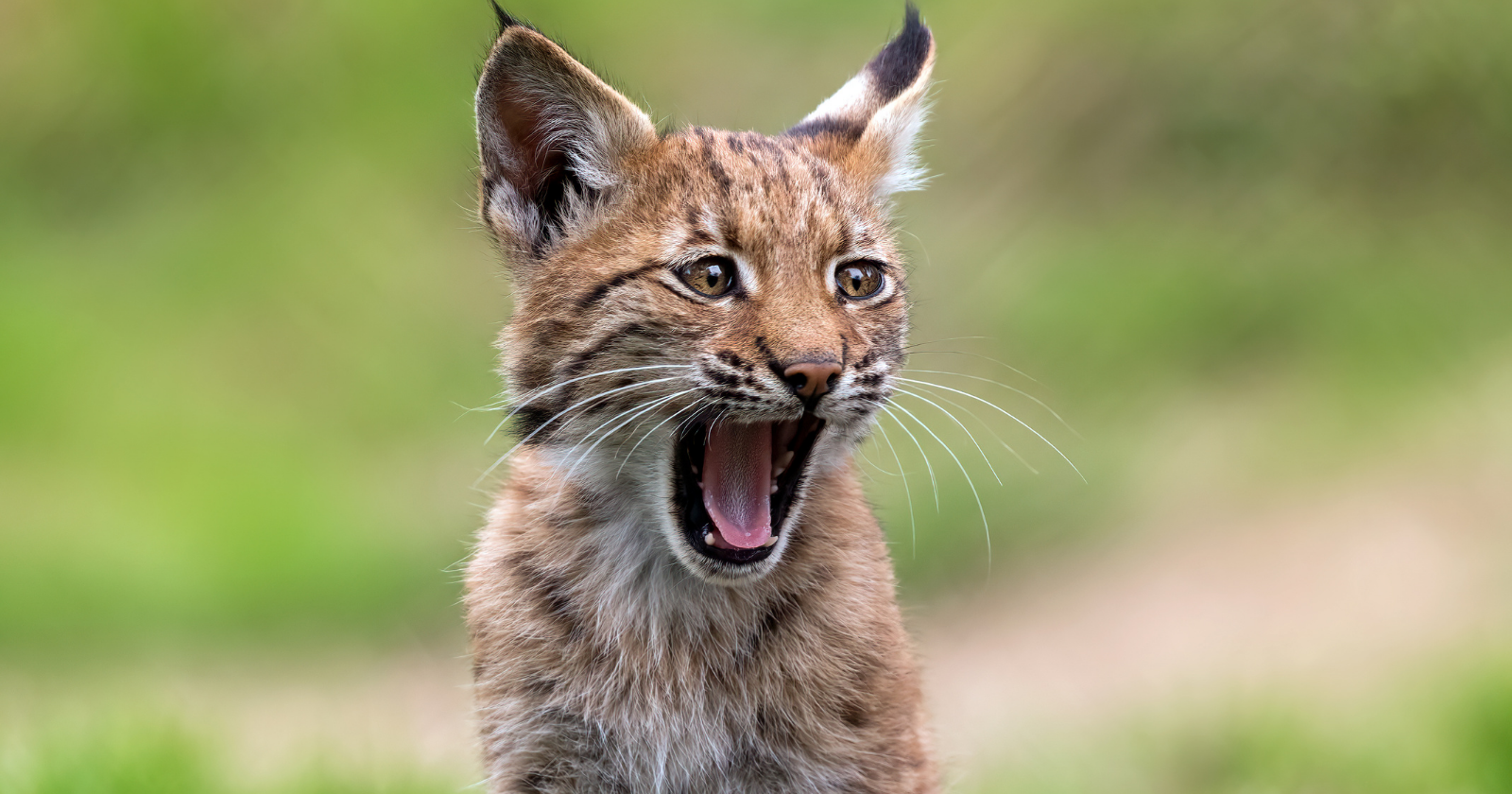
The footage shows an Iberian lynx padding up to a water trough with a freshly killed rabbit in its jaws. Instead of eating straight away, the cat lowers the carcass into the water, holds it under for a stretch, then lifts it out and settles down to feed. Camera traps in the Montes de Toledo mountains of central Spain recorded the sequence eight separate times between 2020 and 2025, involving five different lynx. In every case, the animal doing it was female.
According to the paper describing the observations, published in the journal Ecology and led by José Jiménez of Spain’s National Research Council (IREC), this is the first time prey-soaking of this kind has been filmed in any carnivore. Chimpanzees wash sand off food. Raccoons dunk items at the water’s edge in a well-known captive behaviour. Some birds do something similar. A wild cat carrying a kill to water, submerging it, and pulling it back out to eat had not been documented before, which is why the authors describe it as a new behaviour for the order Carnivora, not merely a new observation of an existing one.
Where the sightings came from
The Montes de Toledo population has been under camera-trap surveillance since 2014, as part of long-running monitoring of the lynx’s survival, numbers and breeding. Artificial water troughs, installed for the cats and other wildlife in the dry Spanish landscape, happened to sit within camera range. That is how the behaviour turned up at all. Nobody set out to study prey-washing, and researchers only noticed the pattern once enough trough footage had accumulated across more than a decade of recording, going back through the archive once the first instances caught their attention.
Eight events is a small sample, drawn from one monitored population in one part of Spain. In our reading of the paper, the authors treat it that way too, framing the finding as a documented behaviour worth reporting rather than a settled explanation of why it happens. That the study rests on one population, watched by one team, over one particular stretch of years is worth carrying into how the finding gets read. It is also, on its own, no basis for assuming every Iberian lynx does this, or that lynx elsewhere on the peninsula behave the same way.
The species itself makes the footage more striking than it might otherwise be. Iberian lynx were, within the past two decades, the world’s most endangered cat species. A 2001 survey put the wild population at just 62 mature individuals, confined to a handful of pockets in southern Spain. Sustained breeding and reintroduction programs since then have pushed numbers past 2,000, and the IUCN reclassified the species from Endangered to Vulnerable in June 2024. That recovery is also what made this discovery possible: a population too small and too sparsely watched could not have produced a decade of camera-trap footage dense enough for a rare behaviour to surface in it at all.
Why soak a dead rabbit
The paper puts forward two main explanations, and does not claim to have settled between them.
The first concerns water. Iberian lynx get much of their fluid intake from prey, and rabbits are the bulk of their diet. The researchers ran a simple test of their own: a rabbit carcass soaked for 30 seconds and left in the shade still held close to four per cent extra of its body weight in water 40 minutes later. For a lactating female raising cubs in a hot, dry mountain range, that margin could matter, particularly if the behaviour helps her cubs get more moisture from the prey she brings back.
The second explanation is about texture. All five lynx recorded soaking prey were females, and several were raising cubs at the time. Soaking a carcass may soften the meat, which would help cubs make the shift from milk to solid food. The paper also raises the possibility that this is a local tradition, passed between related or overlapping females, not a trait fixed across the species, given how tightly clustered the observations are among a handful of individuals in one place.
The researchers checked whether temperature or drought conditions could explain the pattern and found no consistent link. Whatever drives the behaviour, it isn’t simply a response to particularly hot days.
What the pattern might mean
Behaviour this specific, and this consistently tied to breeding females, suggests something learned rather than accidental. Several of the five lynx were raising cubs at the time they were filmed soaking prey, which fits both of the paper’s leading explanations: a mother securing more hydration for herself while nursing, and softened meat easing her cubs off milk. The two ideas are not mutually exclusive, and the paper does not ask readers to pick one over the other.
What the authors do rule out, as far as their data allows, is a simple weather explanation. If prey-soaking were a response to heat or drought, the events would cluster around the hottest, driest stretches of the study period. They don’t. Whatever is driving five different females to carry rabbits to a trough, dunk them and only then eat, it isn’t a straightforward reaction to conditions on a given day.
Whether the behaviour is passed from mother to cub, arrived at independently by different lynx facing a similar problem, or some mix of both is not something eight recorded events can settle. The paper’s own suggestion of a local tradition, confined to related or overlapping females in this one part of the range, is offered as a working hypothesis rather than a conclusion. Longer-term monitoring across more of the species’ territory, now that camera-trap coverage of the lynx has grown alongside the population, would be needed to say whether prey-soaking is a Montes de Toledo habit or something more widespread that simply hadn’t been caught on film before.
A behaviour still being worked out
Food-washing of some kind has turned up before in raccoons and in several primate species, usually described as removing grit or unwanted material from food rather than altering it. What the Montes de Toledo lynx are doing looks different: they submerge a carcass they have already killed and are about to eat, for long enough that the paper’s own water-retention test could measure a meaningful change in its weight. That distinction, between rinsing something clean and deliberately soaking it, is part of why the researchers frame this as new territory for a carnivore rather than a variation on a known trick.
For now, the record stands as an unusual first: a wild cat filmed doing something no carnivore had been filmed doing, for reasons its observers are still working out.