

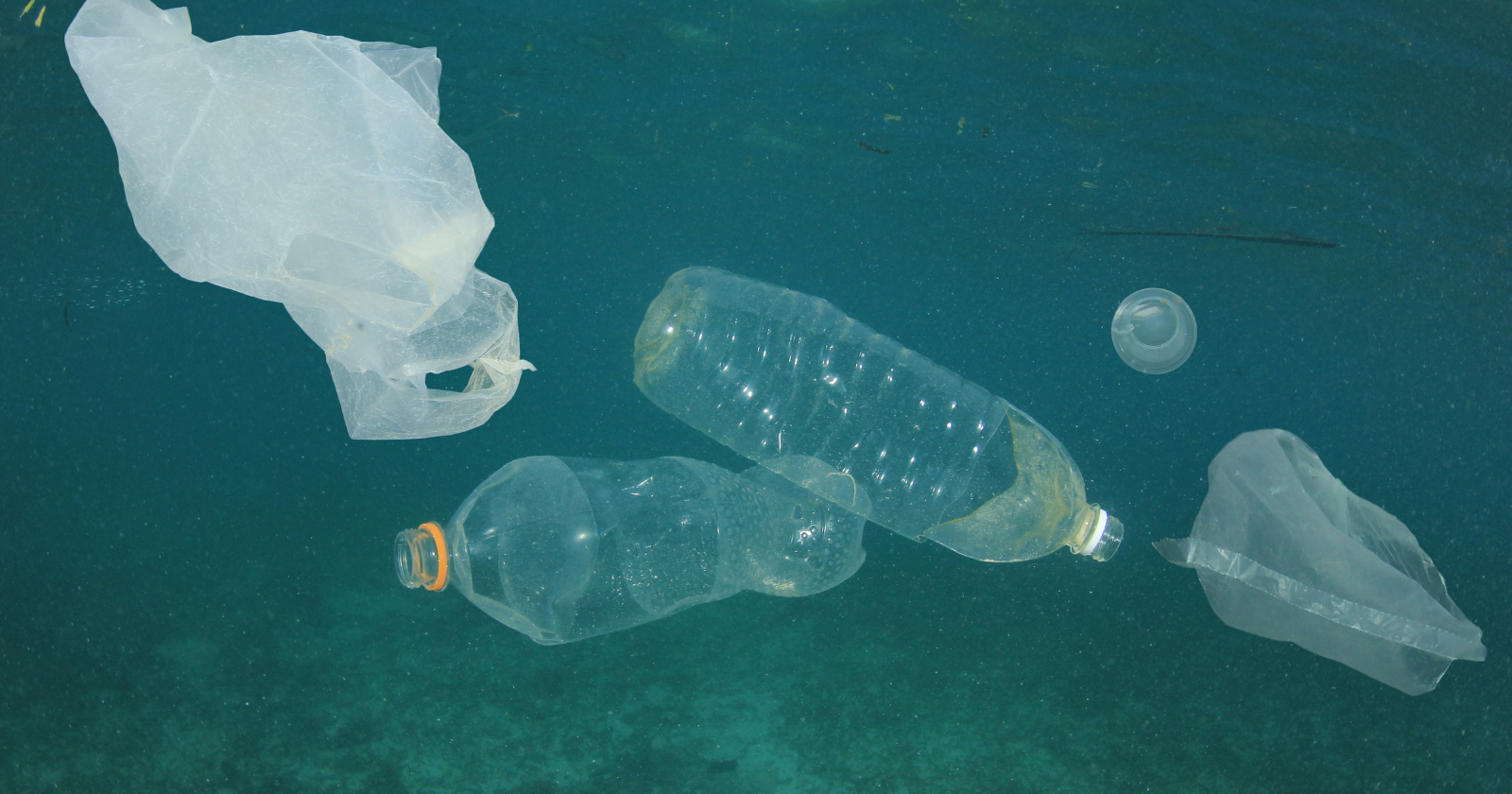
Since 1957, a device called the Continuous Plankton Recorder has been towed behind ordinary merchant ships and ferries crossing the North Atlantic, quietly filtering seawater through a band of silk mesh at about seven metres depth. Its job is to catch plankton, not litter. But every time the mesh jammed or the mechanism fouled, whoever serviced the instrument back on land wrote a note about what had gone wrong. Those maintenance notes, filed for six decades by technicians with no interest in pollution monitoring, turned out to be one of the longest continuous records of ocean plastic anywhere in the world.
A team led by Clare Ostle at the Marine Biological Association in Plymouth, working with colleagues including the Sir Alister Hardy Foundation for Ocean Science, went back through those fault logs and pulled out every mention of entanglement with man-made debris. The results were published in Nature Communications in April 2019, under the title “The rise in ocean plastics evidenced from a 60-year time series.” Between 1957 and 2016 the Recorder completed 16,725 tows across the North Atlantic and adjacent seas, covering more than 6.5 million nautical miles. Roughly a third of those tows had some fault logged, and after manually checking each report for false positives, the researchers confirmed 208 genuine cases of macroplastic entanglement, meaning debris larger than five millimetres.
The first entry, and what followed it
The earliest confirmed case sits right at the start of the record. In 1957, off the east coast of Iceland, a technician noted the Recorder fouled by trawl twine. It is a small, unremarkable entry, filed decades before anyone was using the word microplastic. The second dates to 1965, off the northwest coast of Ireland, where a plastic bag caught in the tow.
For the next two decades, entries of this kind stay rare.
That changes from the 1990s onward. The study found a statistically significant rise in entanglements between the 1950s-60s and the 1970s-80s, and again between those decades and the 1990s and 2000s. From 2000 the rate climbs sharply, described in the paper as roughly an order of magnitude higher than the earlier baseline. The material changes too. Early entries are dominated by fishing gear, twine and net fragments, the kind of debris you would expect from vessels working the same waters as the survey ships. Later records are increasingly dominated by fishing gear, nets, line and rope, concentrated in the North Sea. Plastic bag entanglements, by contrast, have actually declined in the record since 2000, even as overall macroplastic counts keep climbing.
Why an accidental dataset carries weight
Ocean plastic is usually measured by trawling for it directly, by beach surveys, or by modelling how much waste likely entered the sea from rivers and coastlines. Those methods are useful but patchy, and none of them reach back to the 1950s with a consistent method applied at a fixed depth across the same shipping routes for sixty years.
The Recorder’s fault logs are different because nobody designed them to track pollution. The technicians writing them had no reason to inflate or downplay a trend they were not looking for, which is part of why the dataset carries real evidentiary weight. The dataset has real limits, though. It doesn’t reveal the total volume of plastic in the North Atlantic, or separate out how much comes from fishing fleets, shipping, or land-based sources. And because it’s confined to surface waters along commercial shipping lanes, it says nothing about deeper water or coastlines the ships never cross. Within those limits, it shows a long-term upward trend in encounters with floating macroplastic, one that lines up with other evidence from the same decades, including early seabird plastic-ingestion records and rising litter counts recorded at Arctic seafloor observatories.`
Ostle has described the study’s contribution as demonstrating the rise in ocean plastic since the 1990s using a dataset nobody built for the purpose.
What the record is used for now
The Continuous Plankton Recorder survey continues today, run by the Marine Biological Association, and remains one of the main tools for tracking plankton communities across the North Atlantic as ocean conditions shift. Ships-of-opportunity, meaning ordinary commercial vessels rather than dedicated research ships, tow the instrument for free as part of their normal routes, which is how the survey has managed to sustain such geographic coverage for so long without a dedicated fleet. The 2019 plastics paper did not change how the survey operates. Technicians still log faults the same way they always have, for the same reason they always have, which is to keep the instrument working.
Nobody has gone back to redesign the fault log with pollution in mind.
The mechanism itself has barely changed since the 1930s design it descends from. Seawater passes through the towed body and is filtered onto a slowly advancing band of silk mesh, wound mechanically as the ship moves, then preserved for later analysis back on shore. A fouled propeller or a jammed winding mechanism gets written up in the same log used for years, which is why a debris entry from 1957 and one from 2016 can be compared on equal terms.
Researchers studying marine debris have since pointed to the dataset as an example of how existing long-term monitoring programmes, built for one purpose, can be mined for evidence on a different question entirely, provided the original records were kept with enough consistency to bear the scrutiny. Whether other maintenance archives, in fisheries surveys or oceanographic monitoring elsewhere, hold similar buried records is an open question the 2019 paper does not answer, since it examined only the North Atlantic CPR archive.
The Iceland entry from 1957 still reads as the first line of the ledger. Whoever wrote it down was noting a piece of trawl twine caught in a silk mesh, filed away with no expectation that it would matter six decades later.