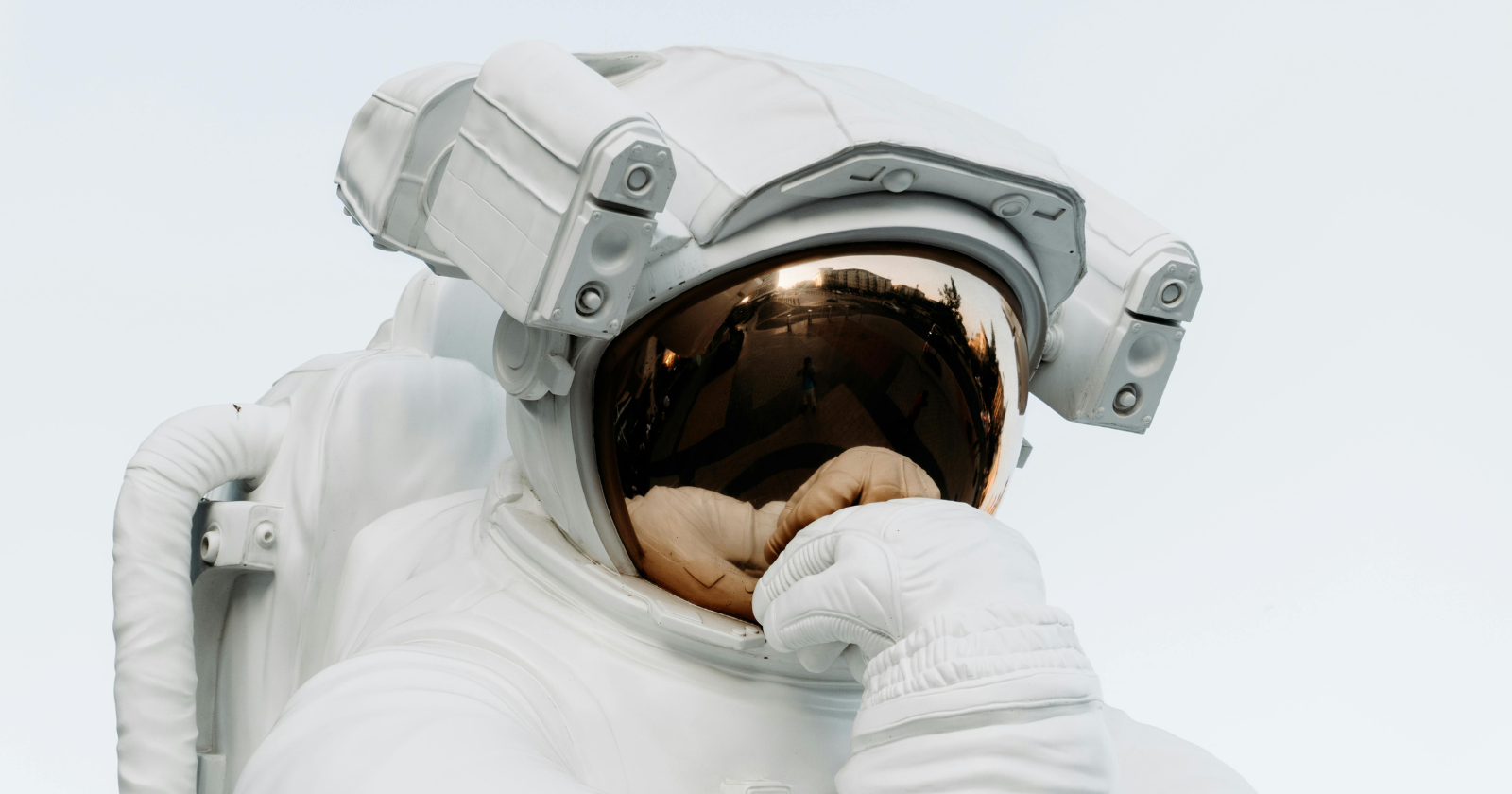
There is a problem the astronaut training pipeline can’t fully train out of a person: nausea. Not the nerves-before-launch kind, but the plain, green-around-the-gills kind you might get in the back seat of a car on a winding road.
The fittest, most rehearsed humans we send off the planet can still arrive in orbit feeling sick. NASA puts the number high. In a 2025 medical brief, it says the broader space adaptation sickness affects 70 to 90 percent of crewmembers, while space motion sickness—the nausea-and-vomiting part—affects about 73 percent during the first days of an initial flight.
A quick note: we’re not clinicians, flight surgeons or space-medicine researchers, and none of this is medical advice. This is reading and reflection on published research, often based on small astronaut groups, so these patterns describe crews in general, not any one person.
The body’s best guess goes wrong
The leading explanation is sensory conflict. Down here on earth, the balance organs in your inner ear constantly report which way is down, and your eyes usually agree with them. In orbit that agreement collapses.
A review in Frontiers in Neural Circuits describes how the change in gravity creates a mismatch between expected and actual signals reaching the brain. The inner ear keeps sending signals shaped by a lifetime under gravity that is suddenly gone.
The brain sorts this out, eventually. The same review notes that poor balance, wobbly gaze control and motion sickness tend to appear during the first three to four days of flight, then fade as the brain recalibrates. Left untreated, symptoms typically resolve over a slow 72 to 96 hours.
Why Earth motion sickness is no guide
You’d assume that whoever gets carsick on the ground will get spacesick in orbit, and whoever has an iron stomach will be fine. That assumption doesn’t hold. A 2025 NASA brief says someone who gets carsick may not develop space adaptation sickness, and vice versa. As predictors, ordinary motion-sickness histories are poor guides.
There’s a further oddity in the history. Space sickness was uncommon in the earliest cramped capsules and became more common once cabins were big enough for crews to float around. Charles Oman, who directed the Man Vehicle Laboratory at MIT, recalled this pattern from the shuttle years. Oman told SPACE.com that “getting up and moving around” was “really a significant stimulus.” That’s one researcher’s account, not a closed case, but it fits the capsule-versus-cabin puzzle neatly.
Even the best pilots aren’t immune
You might expect test pilots to be the exception. They spend careers pulling their inner ears through maneuvers that would flatten the rest of us. But they aren’t exempt.
Jake Garn, a veteran Navy combat pilot with 17,000 flight hours, suffered one of the most notorious cases of space sickness. Whatever gives you grit against Earth motion doesn’t necessarily carry over.
Part of why this stays hard to pin down is that nobody can easily run the experiment where it matters. Oman put the share of astronauts likely to be susceptible at around three-quarters, but also said that, as of 2005, no formal susceptibility test had been run after crews reached orbit. Two decades later, NASA still says predicting who will develop the syndrome is not definitively possible.
What actually helps up there
The practical answers are a mix of drugs and patience. On the drug side, injected promethazine, an antihistamine, has the strongest track record. A NASA study found that 25 percent of crew treated with an injection were sick on flight day two, against 50 percent of untreated crew. Another comparison reported that 14 of 15 people given intramuscular promethazine after symptoms started got relief within 12 hours, and called it an effective inflight treatment. Promethazine can cause drowsiness on Earth, although NASA says sedation has not commonly been seen during the first days of spaceflight.
What I keep coming back to is how ordinary the whole thing is. We build machines that survive launch and reentry, and inside them sits a nervous system tuned over millions of years for one specific pull, in one direction, that gets genuinely confused the moment that pull disappears. Training, flight hours and iron stomachs guarantee no immunity. The body arrives in orbit and spends its first days quietly arguing with the place, until it recalibrates.