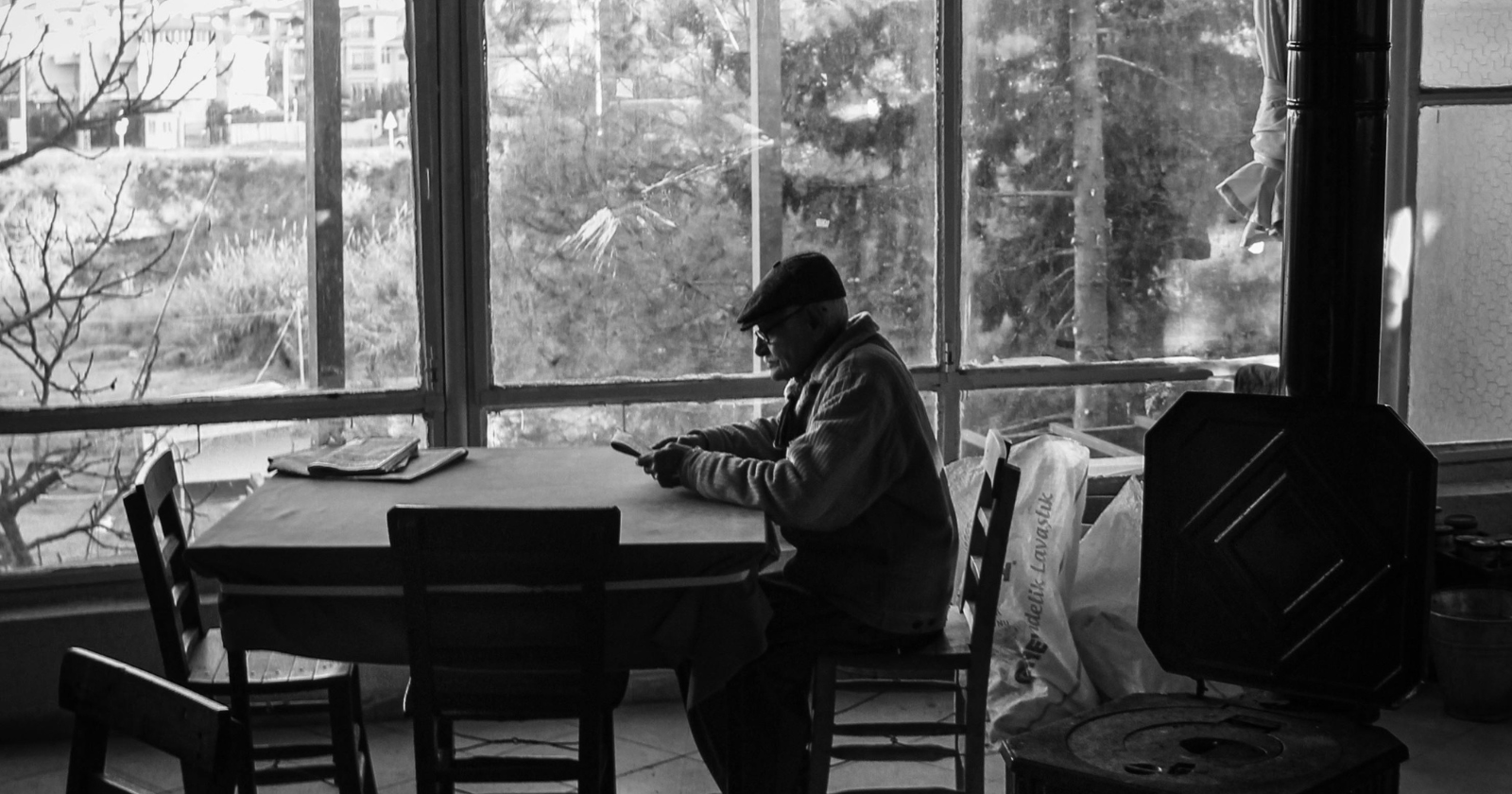
The thing hasn’t happened yet. The phone call you might have to make, the result you’re waiting on, the conversation you keep rehearsing in the shower. None of it has arrived. And still, you’re already paying for it. The dread has moved in, made coffee, taken the good chair by the window.
You’re suffering a thing that is, for now, entirely imaginary.
A quick note before I go on: I’m not a psychologist or a therapist, and this is reading and reflection on a few studies, not advice. The research I mention here comes from particular groups of people, sometimes very small ones, and patterns across a group are not predictions about you.
That loop is old. Much older than any of us, and older than the science I’ll get to in a minute.Michel de Montaigne, the French Renaissance writer named it in a single line in the late 1580s. Montaigne observed that “He who fears he shall suffer, already suffers what he fears.”
Four hundred years on, the line still lands, and I think it lands because nothing about the experience has changed. I went through a Stoicism reading phase during a stretch of failure and a fairly desperate search for meaning, and the thing that struck me reading Marcus Aurelius’s Meditations was the continuity. The same worries, the same self-talk, two thousand years apart. Montaigne, who borrowed a great deal from the Stoics, is one more link in that chain. We have not invented a single new way to dread the future.
The imagined version of a bad thing tends to be worse than the thing itself, and it lasts longer. It runs on a loop while the real event, when it finally comes, has a beginning and an end. Psychologists Timothy Wilson and Daniel Gilbert built a whole research strand around how badly we predict our own feelings, which they call affective forecasting. In their review, they note that people often display an impact bias, “overestimating the intensity and duration of their emotional reactions to such events.” We brace for a blow that, when it comes, we usually absorb and move past faster than we expected. The strength of that bias is contested, so I won’t pretend it’s an iron law. But the direction of it matches what most of us have lived.
And a lot of the feared things simply never show up. A 2019 study at Penn State by Lucas LaFreniere and Michelle Newman tracked people with generalized anxiety disorder as they logged their worries and then checked what actually happened. Across the sample, 91.4 percent of the worry predictions did not come true. This is one small study, 29 people recording worries over 10 days and tracking outcomes for a further 30, so I’d hold the exact figure loosely.
The part that stays with me is what the participants themselves concluded. As reported by Inverse ,LaFreniere has said that “They found that their worries weren’t worth the trouble they caused.” They had paid, in advance and in full, for things that mostly never arrived.
I know this from the inside, not just from papers. When my coffee business was failing, I feared it would fail. And then it did fail. So this is not a story where the dread turned out to be silly and everything was fine. The thing I was afraid of actually happened. What surprised me was that fearing it was worse than living through it. The months of bracing were heavier than the day it was finally over.
Only afterward did I work out what I’d learned, and even saying that makes me want to add the obvious caveat: I would not recommend failing. The lesson is not that failure was secretly good for me. The lesson is narrower and stranger. The fear cost more than the event. I had been paying that bill for a long time before the event ever sent its own, smaller invoice.
This is where I think Montaigne’s line gets misread. It is not telling you to think positive, or to deny that bad things happen, or to talk yourself out of a real concern. He is not running a self-help seminar four centuries early. The line is quieter than that. It points at a cost you’re already paying and asks whether you meant to. The fear is the price, charged now, for something that may never turn up, and even if it does turn up, it may not be as bad as the worry.
If any of this is sitting closer to home than it is interesting, talking to someone trained for it is worth far more than anything I can write here.