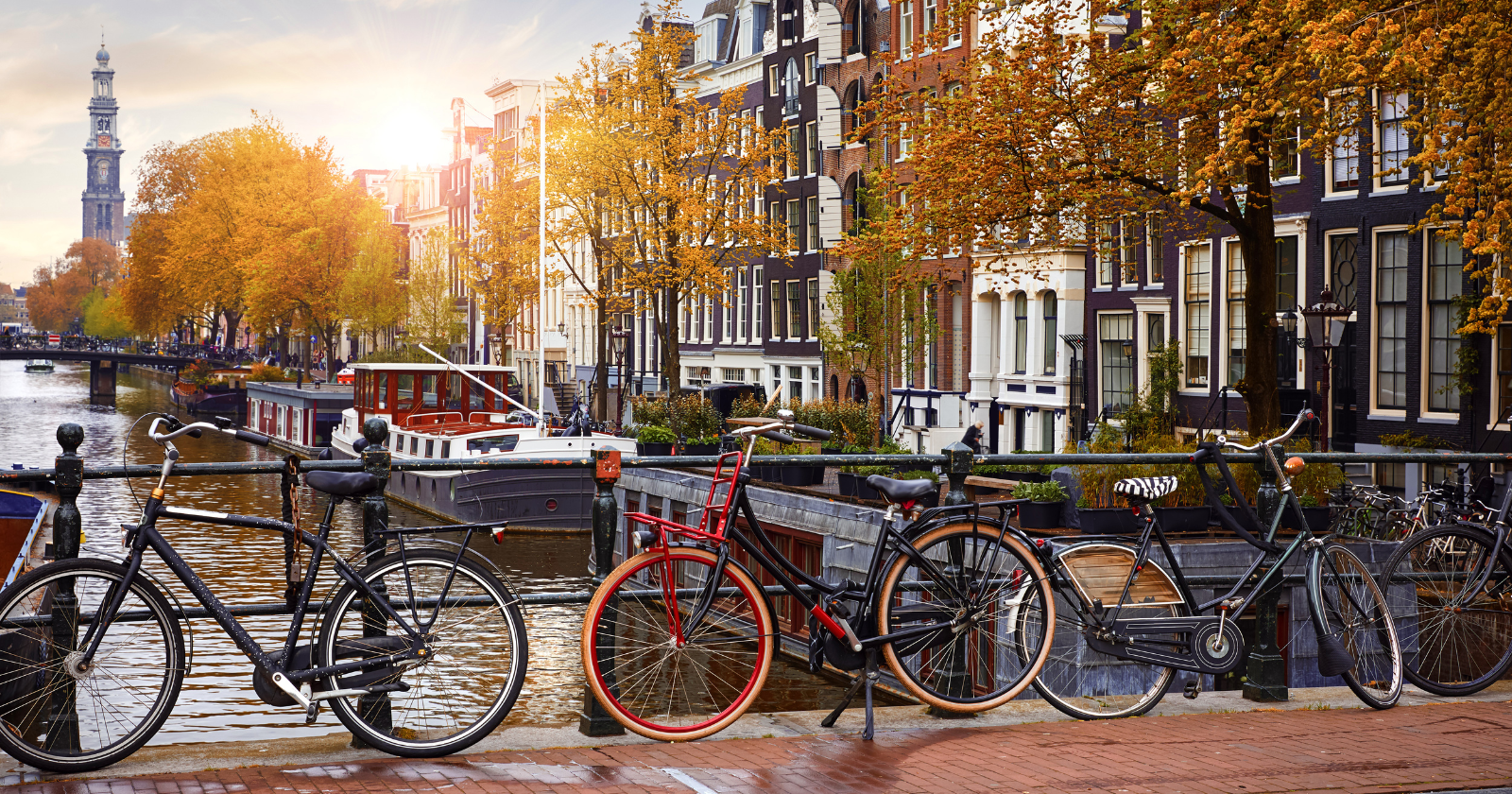
Let’s start with the number most people find hard to believe: there are more bikes in the Netherlands than there are Dutch people, and it isn’t close.
Some sources put the country’s total stock of bikes at an estimated 24.4 million in 2024. Set that against a population of just over 18 million in mid-2026, and you get roughly 1.35 bikes per person.
What I find more interesting than the ratio itself is how much the gap has stretched. The bike count climbed substantially between 2010 and 2024, while population growth has recently slowed sharply. So the question worth asking isn’t just how a country ended up with more bikes than citizens, but why the gap became so wide.
Where 24.4 million bikes come from
The number has grown steadily, from 20 million in 2010 to 24.1 million in 2023 and 24.4 million in 2024. That growth isn’t really about people buying a first bike. It’s about people owning several.
It’s easier to picture one household at a time. In 2015, Amsterdam households averaged 1.91 bicycles. Once you add up a good bike for longer trips, a cheap city bike you don’t mind leaving locked at the station, a kid’s bike or two, and the e-bike a lot of households now own, the totals stop looking strange.
E-bikes are doing a lot of the recent work. In 2025, 795,968 new bikes were bought, and 49% of them were e-bikes. On top of that, bikes come and go on a scale most countries don’t see. In 2023, Dutch residents reported an estimated 928,000 bicycle thefts.
Why the population isn’t keeping pace
The other half of the widening gap is the human side. Dutch population growth has slowed for four straight years. In the first half of 2026 the country added just 23 thousand people, down from about 37 thousand a year earlier.
Natural population growth has turned negative. Since 2022, more people have died than were born, CBS notes, so the population now grows only through net migration. In 2025 there were 165.9 thousand births against 173.3 thousand deaths. The only thing keeping the population growing at all is migration, and immigration fell in the first half of 2026.
So the two lines have moved apart from both ends. The estimated bike count has risen while population growth, held up now entirely by migration, has slowed. The absolute gap has widened almost on its own.
What the ratio actually measures
It’s tempting to file “more bikes than people” under national eccentricity, like a fun fact about clogs. My read is that the number is telling you something more structural than that. A place ends up with 1.34 bikes per person when riding one is the easiest way to make an ordinary trip, not a lifestyle choice you have to plan your day around.
The Dutch government reckons more than a quarter of all trips are made by bike. That doesn’t happen because of temperament. It happens because there are roughly 35,000 km of bicycle tracks, traffic systems designed around cyclists, and secure parking built on a scale that treats the bike as a serious way to get around rather than a hobby.
You can see it in the distances, too. In 2023, Dutch cyclists rode an average of 1,065 km per person, up from 902 km a decade earlier. People aren’t just accumulating bikes; they’re using them more, and the e-bike is stretching how far a normal ride goes.
What I take from the whole tally is that it’s less a quirk of Dutch character than the visible result of decades of deliberate choices about roads, junctions, and parking. Build a country where the bike is the obvious way to get to the shops, and sooner or later you’ll count more bikes than citizens. The Netherlands crossed that line a long time ago, and its infrastructure helps keep the gap wide.