When the fighting in the Korean War stopped in 1953, the hills of the south were badly degraded. Colonial-era exploitation, wartime destruction and heavy demand for fuelwood had stripped huge areas. In the 1950s and early 1960s, national assessments classified more than 4 million hectares, nearly 58% of forest land, as degraded or “bare mountain.”
Inger Andersen, executive director of the U.N. Environment Programme, put it plainly when she visited: “The mountains were deforested during the war like the moon. Now, they are lush.”
So the obvious question is: how does a country go from bare hills to roughly two-thirds forest inside a single lifetime? And why does the wood-volume number matter more than the tree count everyone likes to quote?
What the hills actually looked like in 1953
The clearest way to see how bad it was is a measure called growing stock, simply how much standing wood there is per hectare. In 1953, that number was about 5.7 cubic metres per hectare. The land could still be classified as forest land, but much of it carried very little timber.
Part of the cause was built into daily life. Traditional Korean homes were heated with ondol, an under-floor system that historically relied heavily on biomass fuel, adding pressure to already degraded forests.
Early reforestation efforts struggled: survival rates of planted trees were often below 50% in the 1950s. That failure matters for understanding what eventually changed.
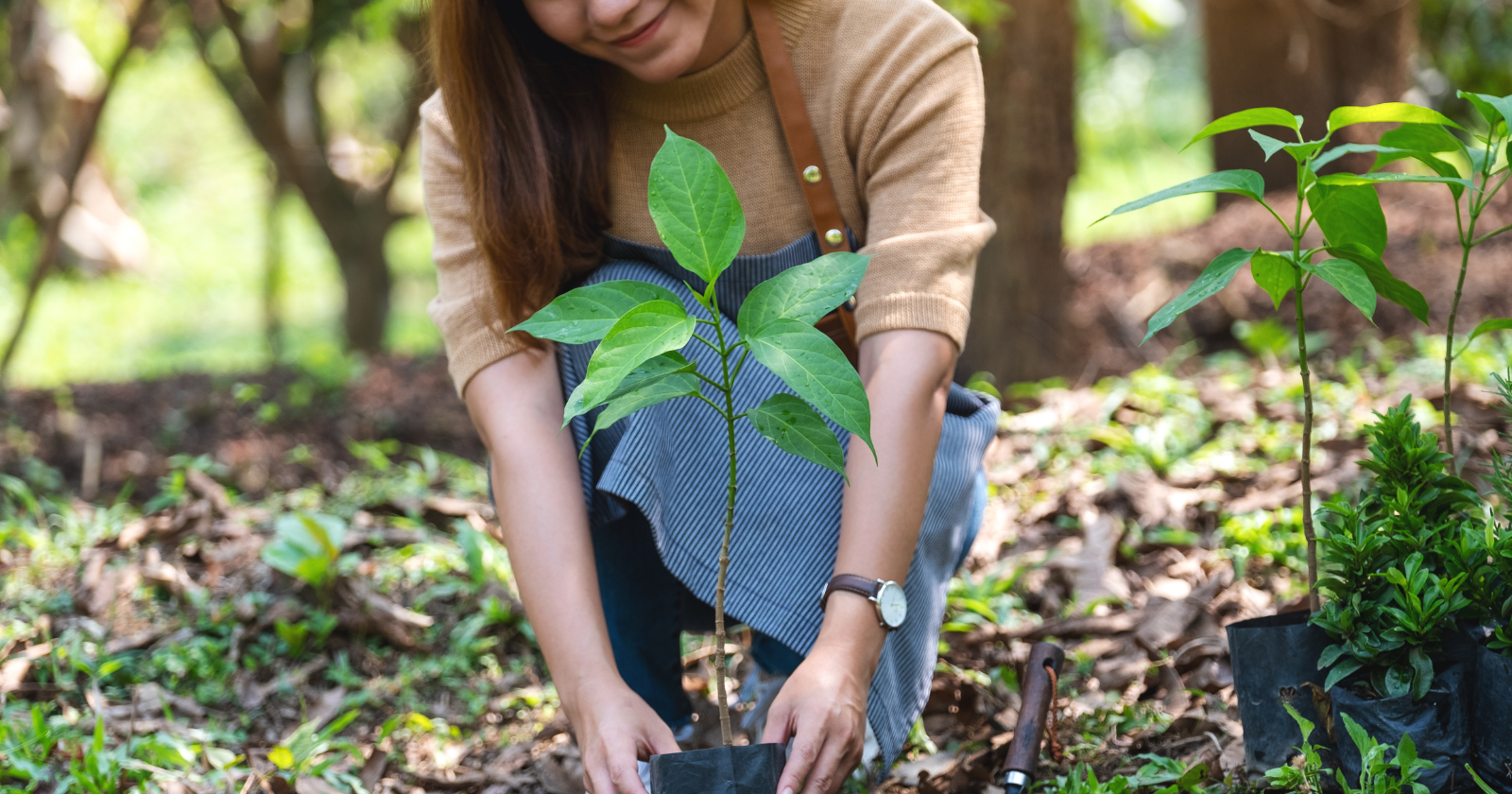
How do you actually plant ten billion trees?
The turnaround accelerated under President Park Chung-hee. The Forest Bureau was reorganized as the Korea Forest Service in 1967, and in 1973 the government launched the First Ten-Year Forest Rehabilitation Plan, closely linked to the Saemaul, or New Village, Movement. Reforestation was pushed down to villages, which supplied labor, protected local forests and produced seedlings.
During the first plan, village nurseries supplied 34.8% of the roughly 2.7 billion seedlings produced nationally. The plan ultimately planted 1.08 million hectares with 2.96 billion trees, reaching 108% of its area target and achieving its goals by 1978, four years ahead of schedule.
Planting alone would not have held if people kept cutting for fuel. Villages established fuelwood plantations, expanding them from around 10,000 hectares in early 1973 to more than 75,000 hectares by 1977. At the same time, coal briquettes increasingly replaced firewood in household heating. Across the wider reforestation drive, more than 10 billion trees were planted from the 1960s to the 1980s.
Tree counts show effort, not recovery. You can plant billions of seedlings and still fail if they do not survive. Growing stock tells you whether trees actually lived, matured and accumulated wood.
By 2020, South Korea’s average growing stock had reached about 165 cubic metres per hectare, more than 29 times the 1953 level. Stocked forest cover was about 35% of national land area in 1955; today forests cover roughly 63% of the country.
A 2013 valuation put the annual benefits from forests, including carbon sequestration, water benefits and avoided soil erosion, at US$92 billion, about 9% of GDP at the time.
Why it worked here when it fails elsewhere
Plenty of countries have run planting drives that later faltered. Andersen’s judgment after visiting Korea was that “It’s hard to find comparisons with other places where you see the same determination and success.”
A 2026 Environmental Management study based on 9,619 archival records found that Korea’s recovery was not a clean straight line. It described the decades before 1973 as a period of trial and error, then showed how research, planning, monitoring and repeated correction turned planted seedlings into lasting forest. Survival rates that were often below 50% in the 1950s rose above 90% by the late 1970s.
That makes the fuel switch, village participation, enforcement, post-planting care and monitoring hard to separate from the planting itself. The lesson is less that one policy worked than that the system kept correcting failures until the trees survived.
What’s left unfinished on those hills
The visible success is real, but the forests now face a different problem. The Korea Forest Service reports that trees aged 31 years or older account for 77.2% of forest area, reflecting the concentrated period in which much of the modern forest was established. Researchers have also warned that climate change and habitat pressures mean continued forest management will be needed to maintain biodiversity.
The native Korean red pine is a sharper warning. A Korea National Park Service study projected that 47.8% of the pine forest area on Mount Seorak could wither under changing environmental conditions, while pine wilt disease, wildfires and climate change are already reducing pine distribution nationally.
Andersen’s takeaway was hopeful: “The message is that you can bring nature back.” South Korea’s hills make that hard to argue with. The next challenge is making sure the forests rebuilt so quickly can remain resilient as the climate around them changes.