

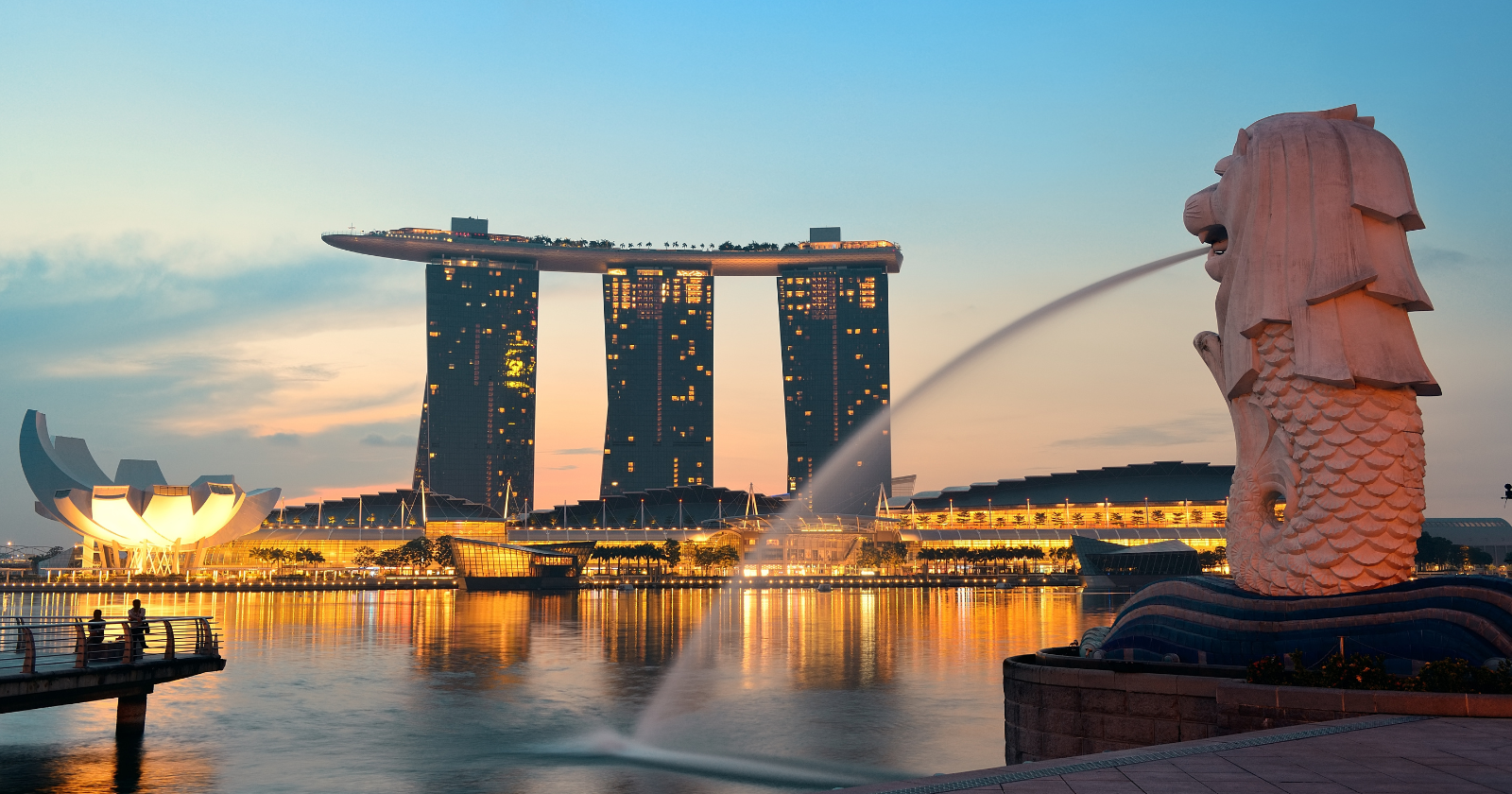
Over roughly two decades, one published estimate put Singapore’s sand imports at 517 million tonnes. That made it, for years, the biggest sand importer on the planet.
Singapore now covers 744.3 square kilometres, up from 581.5 square kilometres in 1965, an increase of about 28%, mostly through land reclamation. Then, one after another, neighbours who supplied the sand shut or narrowed the tap.
The short version: a wealthy island expanded itself partly with sand dredged elsewhere, supplier countries imposed restrictions as environmental and political concerns mounted, and the argument over whether those restrictions really ended the trade is still going on in 2026.
A country built partly out of other countries’ seabeds
Land reclamation is exactly what it sounds like. You need huge volumes of fill, often including sand, and place it into shallow water until you have new ground. Singapore has done this at national scale.
Reuters reported in 2019 that Singapore had increased its land area by about a quarter since independence, mostly using sand to reclaim coastal areas. Official figures now put the increase since 1965 closer to 28%.
For a state with almost no spare land, the logic is hard to argue with. More land means more housing, more industry, more port. The catch is where the sand comes from. It doesn’t appear from nowhere. It gets dredged from rivers, coasts and seabeds, and for years much of Singapore’s imported supply came from nearby countries.
Why the sand ran out
The clearest environmental record sits in Indonesia. According to a University of Queensland post, unchecked sea-sand exports destroyed 26 sand islands in Riau Province, while mining in Banten eroded shorelines and damaged coral reefs. Before the trade was banned, more than 50 million tonnes of sand a year were being shipped to Singapore.
Sand is not the endless resource it feels like. The world uses around 50 billion tonnes of sand and gravel a year, and the UN Environment Programme argues it should be treated as a strategic resource rather than free dirt. As UNEP’s Pascal Peduzzi put it, “Our sand resources are not infinite, and we need to use them wisely.” Extraction from rivers and coasts can drive erosion, damage ecosystems and undermine fisheries.
The dominoes, and the accusation underneath
The restrictions came in waves.
Cambodia made its ban on coastal sand exports permanent in 2017. Malaysia later imposed another ban on sea-sand exports on October 3, 2018, a decision that was publicly reported in July 2019.
Environmental damage was central, but politics sat underneath too. Cambodia became a particularly stark example because the numbers did not match. In 2017, Cambodia said Singapore had imported about 16 million tonnes of Cambodian sand since 2007, while U.N. trade data showed more than 72 million tonnes over the same period.
Even the ban itself was contested. Meng Heng, a Mother Nature campaigner, told reporters: “There has been such a ban in recent years, but they (companies) still operated and exported.” That was an allegation, not an independently confirmed finding, but it captured the mistrust surrounding the trade.
What Singapore did once the tap closed
Singapore didn’t stop reclaiming land. It adapted.
As suppliers tightened exports, it diversified sources and invested in methods that require less sand. The most visible is the Dutch-style polder at Pulau Tekong, where land is enclosed by dikes and drained rather than built up entirely with fill. Singapore’s government says the method reduces the volume of sand needed compared with traditional reclamation.
The story loops back on itself from there. Indonesia moved to lift its long-standing ban in 2023, and in 2024 adopted trade rules allowing sea-sand exports once domestic needs are met and other conditions are satisfied.
Then last month, Mother Nature Cambodia alleged that Cambodian sea sand had resumed flowing to Singapore. The group published footage of dredging in Koh Kong and tracked cargo vessels it said were bound for Singapore. UN Comtrade data cited by Mongabay also show Cambodia exported 128 million tonnes of sand worth $755 million between 2017 and 2025, but those exports were recorded as going to several Asian destinations, not simply Singapore.
How I’d read the whole thing
What strikes me about this story is that both sides of it are understandable, and that’s exactly what makes it hard. Singapore’s need is real. A tiny state that runs out of room has a genuine planning problem, and building outward is a rational answer.
The trouble is that extra land can carry costs somewhere else. The Riau islands are the bluntest example. When your growth is measured in the same units as your neighbour’s erosion, “rational for us” and “acceptable for everyone” stop lining up.
My read is that the bans were never really the end of anything. Indonesia reopening exports and the 2026 allegations out of Cambodia point the same way: the demand did not disappear. A ban can stop a legal flow, but it does not dissolve the pressure behind it. Until the appetite for new land changes, or lower-sand reclamation methods scale further, the argument over where Singapore’s fill comes from is likely to continue.
