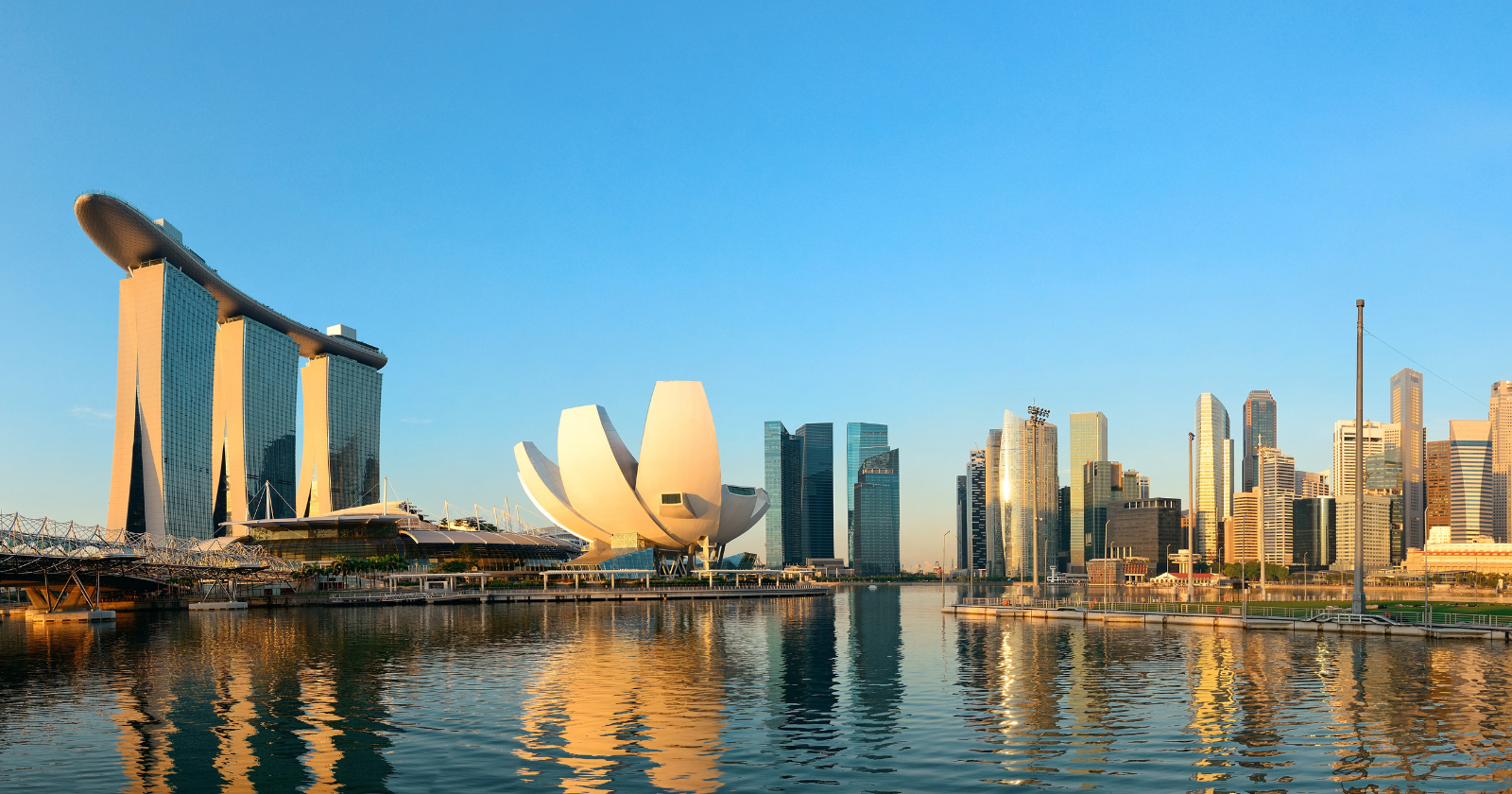
Sitting on a crowded island with no natural freshwater sources of your own is an uncomfortable position for a country to be in.
There are no large rivers or natural lakes, and limited land to catch and store rain. Drinking water depends, in large part, on a pipe from a neighbouring country and a treaty with an end date.
Singapore has lived with this problem for its whole modern history, and the way it answered it is worth a close look, because many other cities are heading toward the same corner.
A city-state with no natural freshwater sources
Singapore’s national water agency says the island has no natural freshwater sources of its own and limited land for collecting rain. That is why it has leaned heavily on imported water and, increasingly, engineering. This is not a temporary shortfall. It is built into the geography, and every water policy the country has pursued has been shaped by it.
Singapore currently uses about 440 million gallons a day. Under the 1962 agreement with Malaysia, it continues to draw 250 million gallons of raw water per day from the Johor River, paying 3 sen per thousand gallons. Johor, in return, is entitled to buy treated water from Singapore.
The deal that made survival possible, and its expiry date
There were originally two water agreements. The older one, signed in 1961, expired on 31 August 2011, when Singapore handed the associated waterworks back to Johor. That left one deal standing. As Singapore’s Ministry of Foreign Affairs states, “The second Water Agreement was signed in 1962 and will expire in 2061.”
Whatever arrangement follows, a careful government would not want its water security resting on one ageing treaty. Singapore has therefore built a diversified supply around its Four National Taps: local catchment water, imported water, NEWater and desalinated seawater.
What NEWater actually is
NEWater is the name Singapore’s Public Utilities Board (PUB) gave its high-grade reclaimed water but it is not treated wastewater poured straight into a glass.
Used water is first treated at a reclamation plant, then purified through microfiltration or ultrafiltration, reverse osmosis and ultraviolet disinfection. Reverse osmosis forces water through a semi-permeable membrane that allows water molecules through while leaving contaminants such as viruses, bacteria, heavy metals and pesticides behind. Ultraviolet light provides a final disinfection step.
The result is used mainly by industry, especially wafer-fabrication plants that need water purer than normal drinking water. PUB says tests and audits found NEWater to be consistently safe and well within World Health Organization and US Environmental Protection Agency drinking-water requirements. During dry periods, some NEWater is blended into reservoirs and then treated again at conventional waterworks before reaching consumers.
The obstacle is not only technical. Public acceptance matters because the source triggers a strong emotional response even after the contaminants have been removed. Singapore addressed that problem through testing, public education and indirect potable reuse rather than sending reclaimed water directly from a NEWater plant to household taps.
Forty per cent now, fifty-five by 2060
NEWater is one of Singapore’s Four National Taps, alongside local catchment water, imported water and desalinated seawater. PUB has stated that NEWater capacity can meet up to 40 per cent of the country’s water needs, with a long-term target of up to 55 per cent by 2060.
The challenge has grown since that target was set. PUB now says total demand could almost double by 2065, with non-domestic users accounting for about 60 per cent. Singapore is therefore expanding its reclamation system, including new capacity at Changi and a planned Tuas NEWater Factory with capacity of 75 million gallons per day.
Why this matters beyond Singapore
Singapore is a special case: small, wealthy, tightly governed and able to build major infrastructure quickly. But the pressure it’s engineering its way around is not unique.
Recent UN figures say 2.1 billion people still lack safely managed drinking water. And a UN water report projected that the urban population facing water scarcity could rise from 930 million in 2016 to 1.7–2.4 billion by 2050.
Researchers treat Singapore as a case study for that reason. A 2015 review comparing Singapore with Windhoek in Namibia argued that successful reuse depends on more than treatment technology: it also requires institutions, public trust and water-management policies that fit local conditions.
The useful lesson is not that every city can copy Singapore wholesale. It is that Singapore has spent more than two decades showing that used water can be cleaned and returned to supply at national scale. For a city staring at shrinking reservoirs, the value is not a policy to import unchanged. It is the knowledge that the loop can be closed at all.