
There are plenty of ways to turn earth into a building material. Some involve firing clay in a kiln. Others stabilize soil with cement. A group of researchers tried something very different: mixing clay with sheep’s wool and alginate, a natural polymer extracted from seaweed, then allowing the material to harden without firing.
It sounds like an unlikely recipe for making earth stronger. But in their tests, it worked.
The comparison comes from a 2010 study by Carmen Galán-Marín and Carlos Rivera-Gómez, working across the Universities of Seville and Strathclyde. One paper, not a settled field, so treat what follows as an interesting lab result rather than a finished building product. We are not engineers or materials scientists, so we’re relaying what the researchers reported, and what it does and doesn’t yet prove.
What the kiln costs
Most of the world’s brick gets its strength from heat. Fired clay bricks are baked in kilns at roughly 800 to 1100 degrees Celsius, and that heat has to come from somewhere. One estimate from EPFL researchers put worldwide fired clay-brick production at around 1.1 gigatonnes of CO2 equivalent a year.
The other common route skips the kiln but uses cement to hold packed earth together, and cement carries its own bill. Making cement accounts for about 8 percent of the world’s CO2 emissions. So the very thing you’d add to make earth strong is itself one of the heaviest carbon sources in construction.
One life-cycle comparison found that swapping sun-dried bricks in for fired ones could save up to 5,907 kg of CO2 equivalent per 1,000 bricks. That’s the gap an unfired block is trying to close.
Wool and seaweed, no kiln
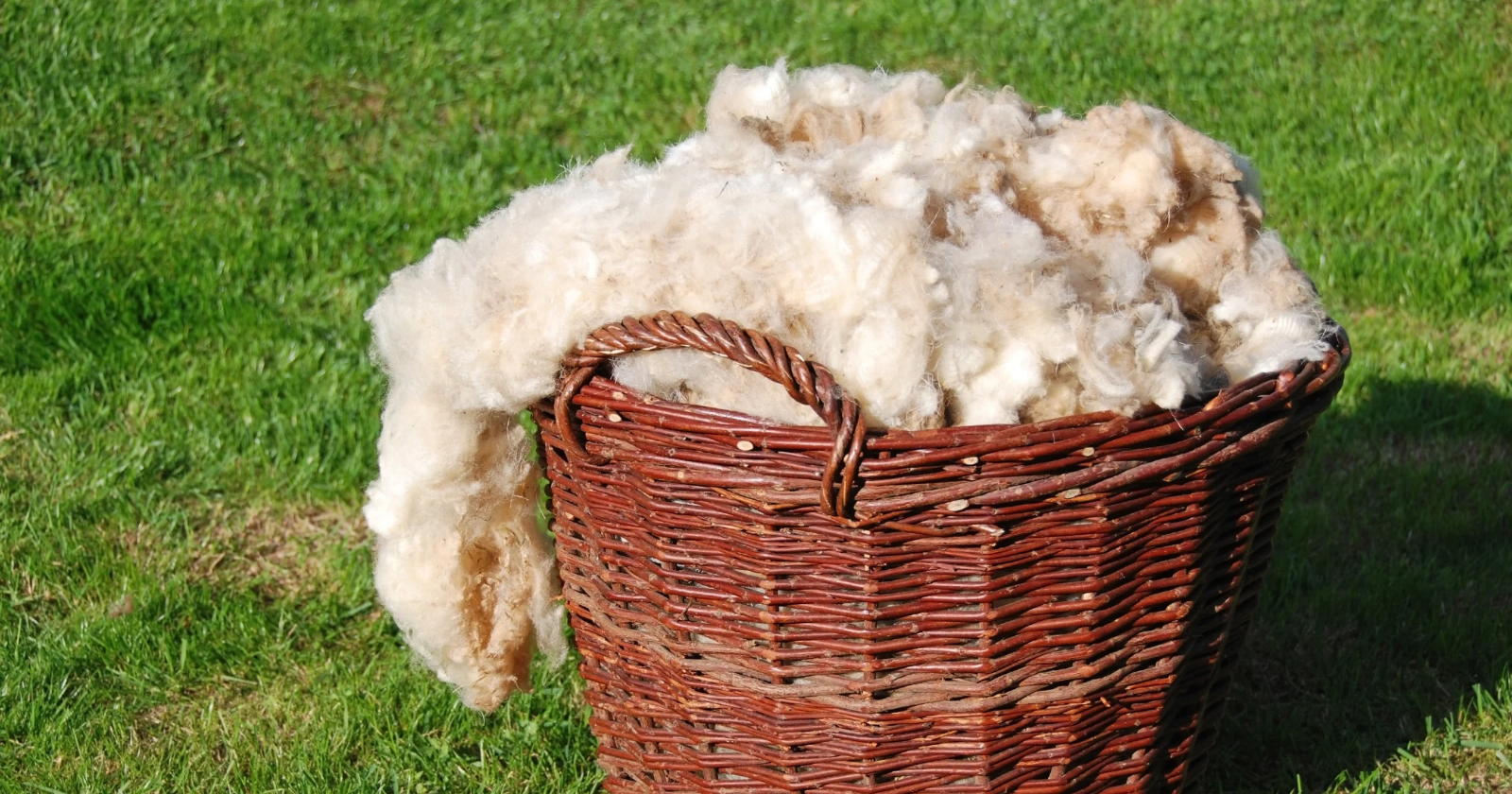
Galán-Marín and Rivera-Gómez took clay soil from a Scottish brick maker and mixed in two things you wouldn’t expect to find in a load-bearing material. One was sheep’s wool from Scotland’s textile industry, which produces more than it can use. The other was alginate, a natural gel drawn from the cell walls of brown seaweed. The blocks were left to air-dry, not fired.
The split of jobs is simple enough. The alginate does what cement or lime usually does: it acts as the glue that holds the earth together. The wool does the reinforcing, threading through the clay the way steel threads through concrete. The researchers said their aim was “to produce bricks reinforced with wool and to obtain a composite that was more sustainable, non-toxic, using abundant local materials, and that would mechanically improve the bricks’ strength”.
What the numbers showed
Adding wool fibre to the clay raised its strength under load by 37 percent compared with the same air-dried blocks without it. A real jump for a material that never sees a flame.
A later paper on seaweed binders pointed the same way, finding the best alginate, from a seaweed called Laminaria Hyperborea, raised strength to more than double the untreated sample.
The gains weren’t only about strength on a test rig. The study reported that adding the fibres “improve the strength of compressed bricks, reduce the formation of fissures and deformities as a result of contraction, reduce drying time and increase the bricks’ resistance to flexion”. Cracking during drying is a real problem for unfired earth, and the fibre seems to hold the block together while it sets.
Why two waste-ish materials rival cement
The interesting question is why leftover wool and a seaweed gel would match, or beat, the cement you’d normally add.
Part of the answer is that the two materials fix different problems. Earth blocks fail in two ways: they crush under load, and they crack as they dry and shrink. The alginate handles the first by gluing the clay particles into a denser mass. The fibre handles the second by bridging the tiny cracks that would otherwise open as the water leaves.
Both inputs are, in a sense, surplus. The wool comes from an industry with more fleece than buyers, the clay from an existing brickworks. The authors call the result “a more sustainable and healthy alternative to conventional building materials such as baked earth bricks and concrete blocks”, though that’s their description of what the material could be, not a full life-cycle verdict to take as settled.
A strong lab result, an unfinished wall
Being clear about how far there still is to go matters here.
Doubling the strength of unfired earth is a solid result, but a good number on lab samples is not the same as a wall a building code will approve. Load-bearing construction has to answer for moisture, weathering, durability over decades, insect and mould resistance when you’re using an organic fibre, and consistency across thousands of blocks made outside a lab. None of that was the question this study set out to answer.
What the work does show is a direction. Two materials that are close to waste, combined without a kiln, made blocks clearly stronger than the plain unfired earth they started from. Later research on seaweed binders narrowed down which alginate works best and noted there’s a sweet-spot amount, beyond which adding more binder stops helping, the kind of detail you’d want pinned down before scaling up.
The old way is proven and carbon-heavy. This way is low-energy and promising and, for now, still a lab result. Whether it becomes a material you’d trust to hold up a roof is an open question, but it’s the kind worth watching.