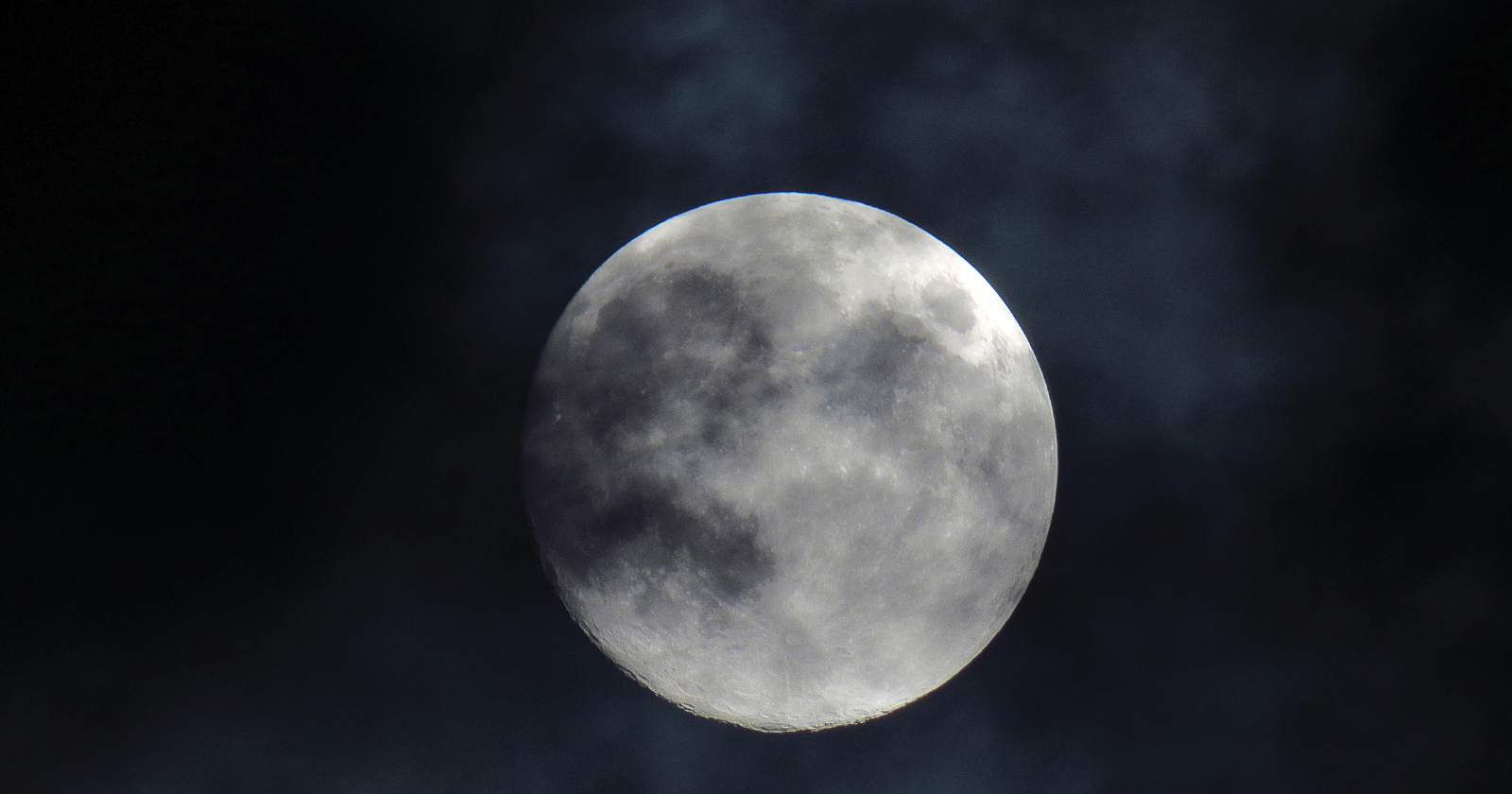
As the command module Columbia slipped behind the Moon on the afternoon of July 20, 1969 and lost radio contact with the world, Mission Control said over the open air: “Not since Adam has any human known such solitude as Mike Collins is experiencing during this 47 minutes of each lunar revolution.”
It was beautifully written, poetic even. It traveled around the world. It also slightly missed the man it was describing.
Collins himself pushed back on that description again and again. He did not contest the facts. He was, by any honest measure, the most physically separated human being who had ever existed. For roughly forty-seven minutes of each two-hour orbit, the body of the Moon itself sat between him and every other living person — three billion on one side, two crewmates on the lunar surface, and him alone on the other. He acknowledged the distance. He simply did not feel the way the language said he was meant to.
“I was not lonely,” he told an Explorer’s Club audience in New York. “I had a happy little home in the command module. Behind the moon it was very peaceful — no one in Mission Control is yakkin’ at me and wanting me to do this, that, and the other. So I was very happy, it was a happy home.” He had things to keep him occupied — checklists and system checks. But the deeper point sits in a sentence from his memoir Carrying the Fire, in which he described his solitude as something he felt “not as fear or loneliness — but as awareness, anticipation, satisfaction, confidence, almost exaltation.”
That is a striking line. He is not saying he was not alone. He uses the word “alone” generously in the same book — “I am alone now, truly alone, and absolutely isolated from any known life.” He says it more starkly than anyone else has needed to. What he is probably saying is that the English word “lonely” had been pasted on top of the wrong picture. Isolated, yes. Lonely, no.
I have come to think about this distinction more than feels reasonable for someone who has never been to space.
Perhaps, the cleanest version of it in my own life is a round of golf on a quiet evening at home in Ireland. The course is mostly empty by then, the light is going, the ground is wet under your shoes. I will walk a nine-hole loop with my clubs and nobody for company and find, by the time I am putting on the last green, that I am about as content as I get. I do not feel lonely. I feel like I have been left alone with something I happen to like, in a place I happen to know, with no one expecting anything from me for the next ninety minutes. The fact that there is no one to talk to is not a deprivation. It is part of what makes the thing work.
If you watched me walk that loop on a camera, you would describe me as alone. You would not be wrong. But “lonely” would not be the right label, and if you used it anyway, I would push back on it the way Collins did, more gently and from much closer to Earth. The word matters. It carries an assumption about what the experience is doing to you. The assumption is often wrong.
I think this is what Collins kept correcting all those years. The press, with the best of intentions, had folded isolation and loneliness into one word and handed it to him as a description. He kept handing it back. As I see it, isolated is a fact about your position relative to other people. Lonely is a feeling about what their absence is doing to you. The two often line up. They do not have to.
The shape of my own working week makes this obvious. Most days I work alone — at home for the morning, in a café for part of the afternoon, in a second café once the first has had enough of me. I am, by any neutral description, an isolated person for at least ten or eleven hours of an ordinary weekday. The room contains me and a coffee cup. The Slack messages, when they arrive, arrive in writing. I would not describe any of that as lonely. The opposite, often — I am, in those hours, doing the thing I want to be doing, in the company of my own attention. Lonely, when it visits me, has tended to visit in different places: rooms with people in them I had nothing to say to, periods where I was building a life I had not really chosen. The crowded versions of loneliness have always been the heavier ones, in my experience. The alone versions have mostly been fine.
I am not making the larger claim that solitude is good and company is bad. There are people for whom being alone is closer to torture than to peace, and the language of “the loneliest man in history” might have been the right description for any number of human situations that have nothing to do with Columbia or the Moon.
I am not a psychologist, and if any of this is hitting closer to home than it is interesting right now, a conversation with someone you trust — or with a professional — is worth more than any essay on the subject. The correction Collins kept making is a smaller one. He was not saying his alone was everyone’s alone. He was saying his alone was not what the word “lonely” was claiming it was.