

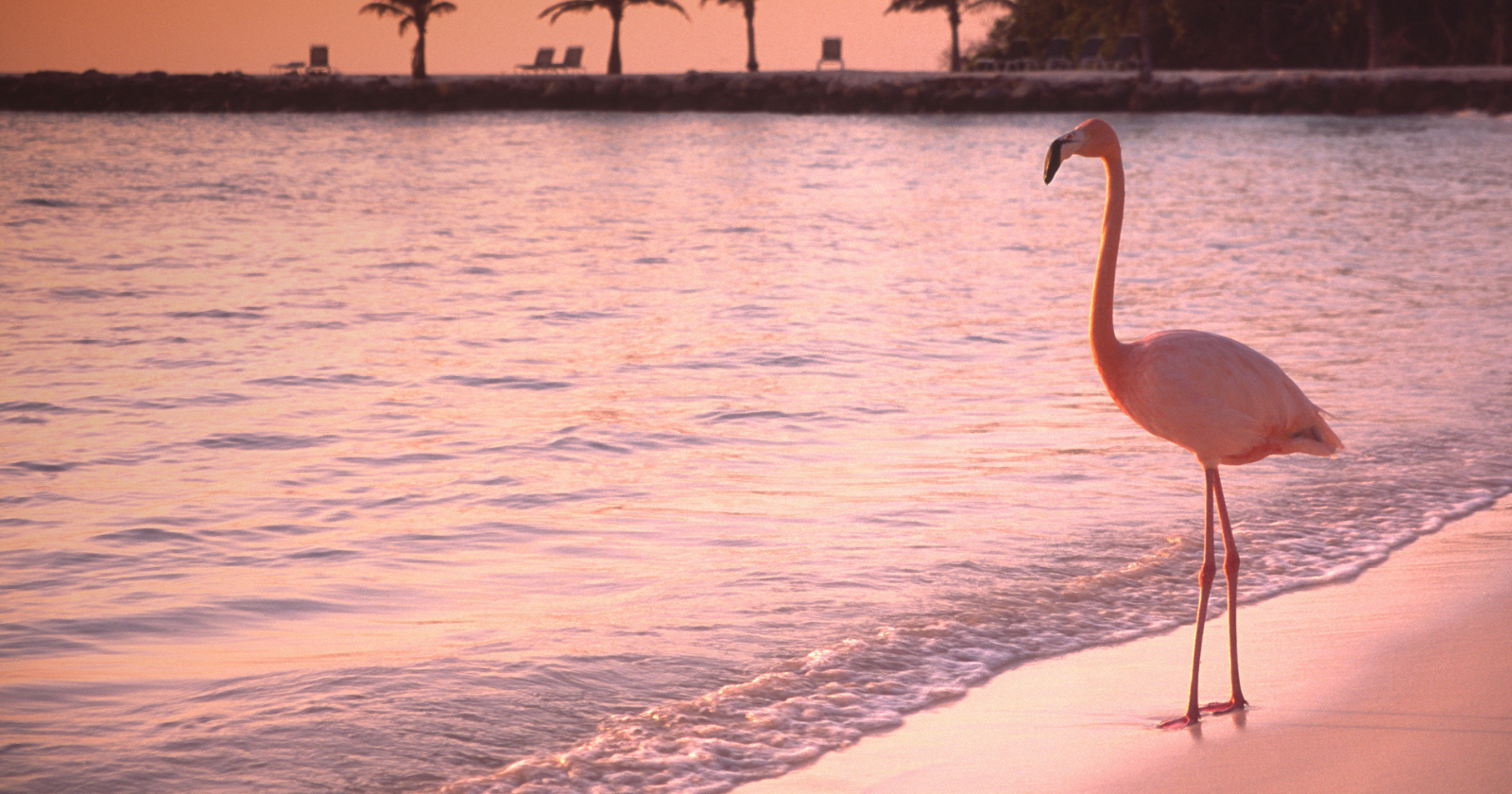
The bird most people would name first if asked to picture something pink is not pink when it hatches. A flamingo chick comes out of the egg in dull grey or white down, and it stays that way for a long time.
The famous rosy colour is not part of the bird when it arrives. It is built, slowly, out of what the bird eats.
The grey beginning
According to most accounts of flamingo development, a young bird needs roughly two to three years of the right diet before it carries the full adult flush.
That grey phase is not a flaw waiting to be corrected. As the British Ornithologists’ Union notes, the melanin behind that early colour strengthens the feathers and provides photoprotection and thermoregulation. The dull plumage is doing a job of its own before the pink ever arrives.
Where the colour comes from
The pink is borrowed. Flamingos, like many other birds, cannot manufacture the pigments that make them rosy, so they have to eat them. Their food, algae and small crustaceans, carries pigments called carotenoids. The bird’s liver metabolises the raw pigment, converts much of the beta-carotene into canthaxanthin, and deposits the result into newly growing feathers, skin, bill and legs.
This is why all six flamingo species end up rosy despite living in very different places. Because carotenoids cannot be synthesised by animals and must come entirely from the diet, the shade on the outside is essentially a record of what went in.
Some species go further and apply colour directly. Greater flamingos studied in Spain were found to spread pigmented secretions from the uropygial gland near the tail onto their neck, breast and back feathers, a cosmetic touch-up before breeding. As reported in Smithsonian, the more often a bird does this the pinker it gets, and the colour fades within days if it stops reapplying.
Colour as a signal worth reading
If the colour comes entirely from food, then the colour says something about the eating. Paul Rose, a behavioural ecologist at the University of Exeter, argues the pink is likely an honest signal rather than mere decoration. Rose told National Geographic, “It’s an honest signal. That pink color tells other birds that it’s healthy and fit.”
The logic is straightforward. A bird that feeds well takes in more carotenoids and shows more colour, so a brighter flush generally points to an efficient feeder. Rose put it plainly: “A healthy flamingo — which is demonstrated by its colorful feathers — is an efficient feeder.” This is a reliable proxy, not an infallible one.
That signal appears to matter in the daily scrum of flamingo life. In an observational study of captive lesser flamingos at WWT Slimbridge, Rose and colleagues scored birds on a colour scale. The brightest birds were more aggressive. The authors are careful to note only correlation, not causation, so the link between hue and behaviour is a pattern worth taking seriously rather than a settled mechanism. On colour’s social role, Rose observed that “Color plays an important role” in their social relationships.
What captivity reveals
The clearest evidence that the colour is diet rather than identity comes from birds that lose access to the right food. In captivity, where the natural carotenoid-rich prey of a salt lake is absent, flamingos fade toward pale pink or white unless their keepers intervene. Zoos now supplement the diet with formulated pellets to maintain the colour, a workaround that only exists because the colour was never built into the bird.
The pink is not a costume the flamingo was born wearing. It is information, laid down feather by feather over years, a running record of how well the bird has fed and where. Look closely at a flamingo’s colour and you are reading its meals.