

In the mid-1800s, an island in the middle of the Chesapeake Bay measured more than 1,100 acres. By the early 1990s, the same place had shrunk to about four acres of scattered, sinking remnants.
Then people started putting it back, one barge of mud at a time.
That mud is the interesting part. Ships heading into the Port of Baltimore need deep channels, and those channels silt up and have to be dug out. The usual question is where to dump what comes out. The answer here was to use it to rebuild a vanished island. The final target is roughly 1,715 acres, more than the island held when it was last fully above water.
How an island disappears
Poplar Island sits off Talbot County, on Maryland’s Eastern Shore, west of Tilghman Island.
The forces that took it apart are unglamorous and relentless: waves chewing at the edges, the land itself slowly sinking, and a rising bay. This is not unique to one place. By the project’s own reckoning, the mid-Chesapeake region has lost more than 10,500 acres of remote island habitat over roughly the last 150 years.
The U.S. Fish and Wildlife Service puts it in blunter terms: more than 500 Chesapeake Bay islands were lost before the end of the twentieth century, with Poplar itself slipping away at more than 13 feet a year. Poplar’s last permanent residents had left by the 1920s. What remained by the 1990s was barely an island at all.
Rebuilding with dredged mud
The rebuild is formally the Paul S. Sarbanes Ecosystem Restoration Project, run by the U.S. Army Corps of Engineers Baltimore District alongside the Maryland Port Administration. Construction began in 1998, and the first dredged material went down in 2001. When the work finishes, the island is designed to hold about 68 million cubic yards of sediment, split between tidal wetlands, dry upland, and an open lagoon.
Turning channel muck into working marsh is not automatic, and it is the part scientists have watched most closely. Researchers at the University of Maryland Center for Environmental Science have monitored the island since 2003, shortly after its first marsh cell was planted and developed, tracking vegetation, elevation and changes in the dredged sediment as it gradually became more like marsh soil. This is an engineered landscape, measured as it goes, not a wilderness left to sort itself out.
Lorie Staver, a researcher at the University of Maryland’s Horn Point Laboratory who has worked on Poplar Island since that early monitoring began, frames the logic simply: “By restoring island habitat that has been lost, we can help preserve populations of birds in the state of Maryland and at the same time provide a placement site for dredged material.”
The birds showed up fast
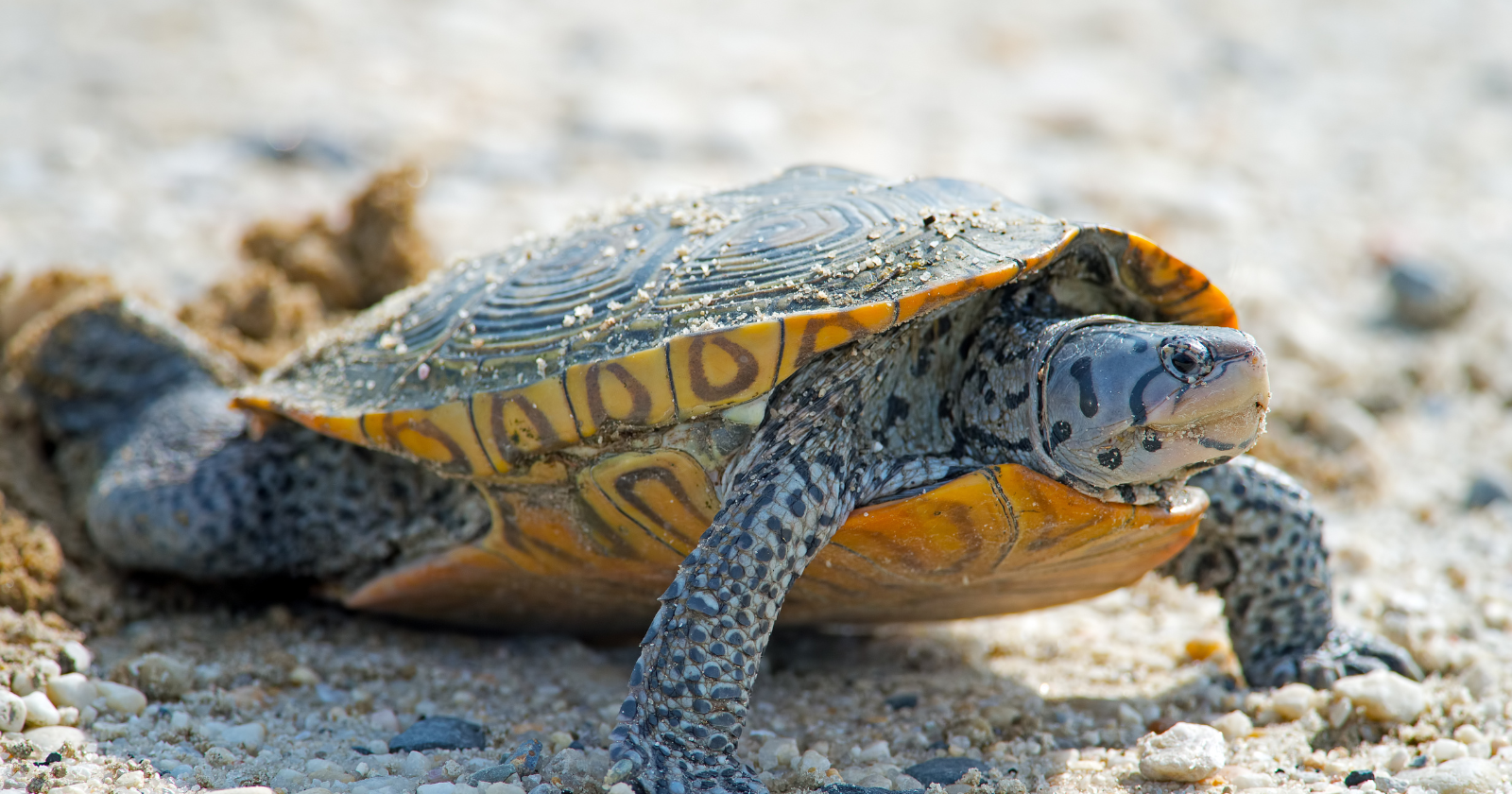
The wildlife did not wait around. Surveys through 2023 have logged more than 250 bird species using the island, 38 of them nesting there. About 1,400 diamondback terrapins hatch on the island each year, according to the same summary.
Staver’s own line about the early years captures the speed of it: “You know the saying, ‘If you build it, they will come.'” The wildlife, by her account, arrived quickly once the habitat was back.
Location does much of the work. Poplar sits along the Atlantic Flyway, the migratory route that funnels birds up and down the East Coast, and a Corps biologist has described an average of 15,000 birds a day passing through. Rebuild habitat directly under that route, and arrivals follow quickly.
The part that complicates the good news
The assessments from people close to the work are warm but they are worth reading alongside the harder questions the project raises, because the good news is not the whole picture.
The money is real: total cost is projected at $1.4 billion by the time work wraps up. The longer-term question is whether an island built to a fixed height can keep pace with a rising bay.
Our read: Poplar Island is neither a tidy triumph nor a cautionary tale. It is a real-world test of whether the byproduct of one job, keeping a shipping channel deep, can become the raw material of another, bringing back lost habitat. On the evidence of the bird counts, the answer so far leans yes. On the question of how long the island outlasts the bay that took its predecessor, the data is still coming in.