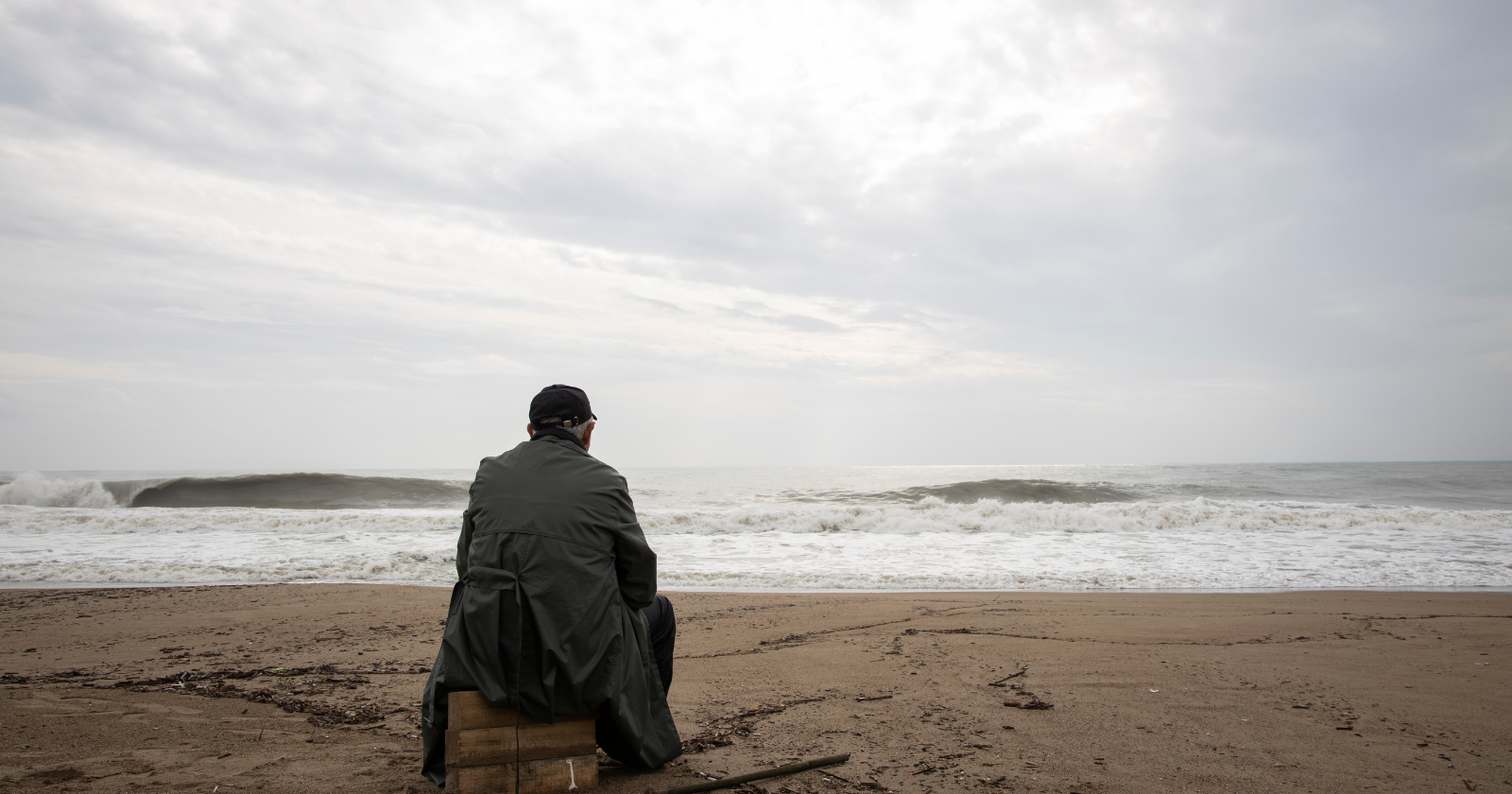
The version of me from ten years ago would not have believed how much I now want a quiet, ordinary life. He was mid-pivot, living in Vietnam, almost allergic to stability. If you’d told him his future self would catch himself daydreaming about routine and predictability, he would have laughed.
The funny part isn’t that I changed. People change. The funny part is that I’m almost certainly doing it again. Whatever I want now — what feels settled, what I’m calling “the real me” — most of it probably isn’t going to hold.
In a 2013 paper, psychologists Jordi Quoidbach, Daniel Gilbert, and Timothy Wilson reported studies across more than 19,000 people aged 18 to 68. Across the adult ages they could analyze, people readily admitted how much they had changed in the previous decade, while predicting they would change much less in the next one. But the same people predicted they’d barely change in the next one. As the researchers put it: “people expect to change little in the future, despite knowing that they have changed a lot in the past.”
This wasn’t a small effect. Even younger participants, whose lives were likely to change a great deal, underestimated how much they would change; and although the effect weakened with age in some studies, it was still present among people aged 50 and over. Young folk and grandparents both seem to think they’ve just become the final, settled version of themselves.
In one of their studies they asked people what they’d pay to see their current favorite band perform in ten years. A different group was asked what they’d pay today to see their decade-ago favorite. The first group offered 61% more. We assume the version of us in ten years will still love what we love now, so we cheerfully spend on his behalf. He’d probably refund half of it.
Gilbert later summed it up in a TED talk with the most quietly devastating sentence I’ve come across on this: “Human beings are works in progress that mistakenly think they’re finished.” Whatever you are right now — your taste, your friends, your politics, your sense of what you want — is a station, not a destination. You probably already know this about your past self. The trick of the illusion is that you don’t extend the courtesy to your future one.
The part that catches me is the values question. When I ask myself what I assume will still be the same about me in 2036, the honest answer is what I care about. The kind of work I do, where I live, the shape of the week — fine, those could all move. But values feel locked in. Which is the exact thing the research says I shouldn’t feel locked in about. Values change too.
We make most of our biggest commitments — careers, leases, relationships, mortgages, tattoos, ideologies — on the unspoken assumption that we’ve finally arrived at the version of ourselves we’ll stay. Every time you sign something for the long haul, you are signing on behalf of a person you have not met yet, who may want different things and probably will. That isn’t a reason not to sign. It’s a reason to sign with a little more humility than the moment seems to call for.
The version of me from ten years ago isn’t the one writing this. The version writing this won’t be the one reading it back in another ten. If that sounds bleak, it isn’t. It means whatever isn’t working in your life right now is a phase, and whatever is working is too. The person you’ll be in 2036 isn’t waiting to be discovered. He’s being built every day by the choices the current you is making for him. Try to leave him in good shape.