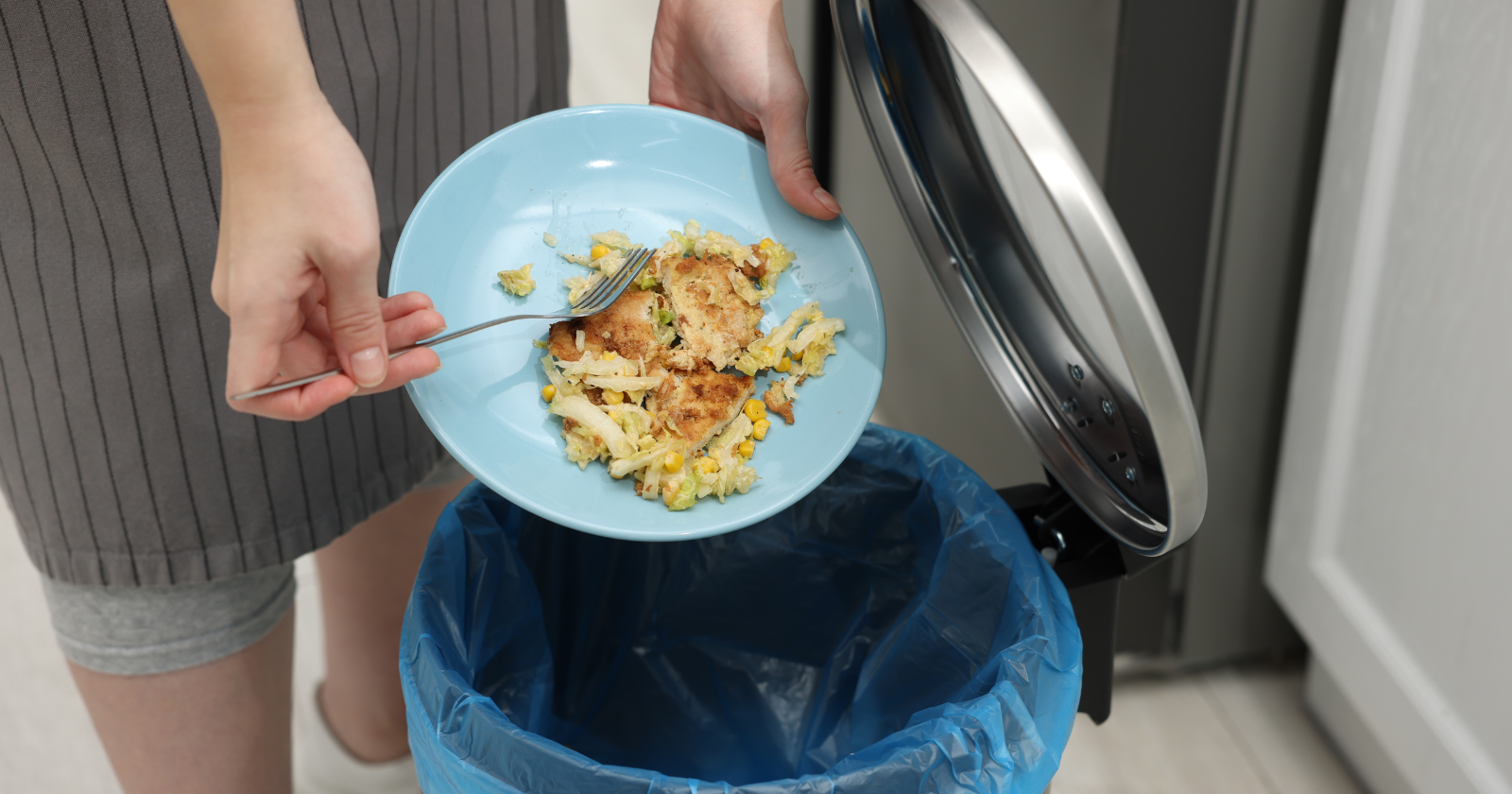
In the United States, of the roughly 66 million tons of wasted food that came out of stores, restaurants, and homes in 2019, the EPA estimates about 60 per cent was buried in landfill. In fact, food is the single most common material sent to US landfills, accounting for about 24 per cent of landfilled municipal solid waste.
South Korea sits at the opposite end. A 2024 Korean government account, citing the Ministry of Environment, says the country recycles about 98 per cent of its food waste. A generation ago that number was almost zero. The World Economic Forum says Korea’s rate climbed from 2 per cent in 1995 to 95 per cent by 2019. Technology helped, but the central change was what throwing food away costs you.
How South Korea got there
The change started with a practical problem: landfills were filling up. Korea introduced a nationwide pay-as-you-throw system for ordinary rubbish in 1995, banned the disposal of unprocessed food waste in landfills in 2005, and required food scraps to be separated and charged through a volume-based system. From 2013, households generally paid through one of three routes: designated bags, chips or stickers attached to collection containers, or RFID bins that charge by weight.
That sequence matters. A landfill ban tells you where the waste cannot go. A fee tells every household what its own kitchen scraps cost. An academic review of South Korea’s food-waste policies notes that food makes up about 30 per cent of the country’s waste and that more than 90 per cent is separately collected and recycled. What makes Korea unusual is not simply paying for rubbish. It is the combination of mandatory separation, dedicated processing and direct household charges.
The card system
In many apartment complexes, residents carry a personal RFID card. They tap it against a shared automated bin, the lid opens, they tip in their food scraps, and the bin weighs what they put in and logs it to their account. The charge is then added to the household’s monthly maintenance bill. By 2025, Seoul operated 27,289 RFID units, serving more than four-fifths of apartment residents.
The card is not the only payment route. Households can also buy designated food-waste bags or use prepaid chips and stickers, so the card is one part of the system rather than the whole system. As an image, though, it captures the logic cleanly: the bin is a cash register, and food waste is what is being rung up.
The cost to a family is small. For a household of four, bags and food-waste fees have been estimated at about six dollars a month, and bag charges were reported to cover roughly 60 per cent of the scheme’s operating cost. Nobody is being bankrupted here. The point is not the size of the bill. It is that the bill exists at all.
What a price does
Once every gram has a price, people start behaving in ways a flat garbage fee never prompts. The clearest example is water. Food waste is about 80 per cent moisture, so households drain and squeeze scraps before dropping them in. Water removed at the sink is weight they do not pay to throw away.
The newer figures are substantial. South Korea recycled 96.8 per cent of 4.81 million tonnes of food waste in 2023. In Seoul, food waste fell 23.9 per cent over the decade after citywide implementation began in 2013, while studies of individual apartment complexes found still larger drops after residents could see and pay for the exact weight they discarded.
What Korea does with the recovered waste closes the loop. National figures reported in 2025 show that about 42 per cent becomes animal feed, 33 per cent compost and 16 per cent biogas. The scraps Americans bury become feed, fertilizer and fuel on the other side of the Pacific.
Why the US cannot just copy-paste it
The urge to lift the Korean system wholesale runs into some hard facts. The United States has cheaper landfill space, and its living arrangements are different: apartment-heavy Korean cities make shared bins practical in a way that many neighbourhoods of detached houses do not. Korea also built its system through nationwide rules and dedicated processing infrastructure, while American waste policy is split across thousands of local governments.
Paying for what you throw away is not foreign to the US, though. More than 7,000 US communities already run some version of pay-as-you-throw.
What almost none of them have is Korea’s specific mix: mandatory food-waste separation, direct charges, automated weighing and a national network able to turn the collected scraps into useful products. The pieces exist. The assembly does not.
My read of the swipe-card is this: it looks like a gadget, and the temptation is to treat the gadget as the clever bit. It is not. The card reader is simply a reliable way to attach a price to one household’s scraps and send it a bill. What moved Korea from 2 per cent to near-total recycling was a policy system built over decades: charging for waste, banning food from landfill, separating it at source and creating somewhere useful for it to go. The card makes that system visible every time the lid opens.