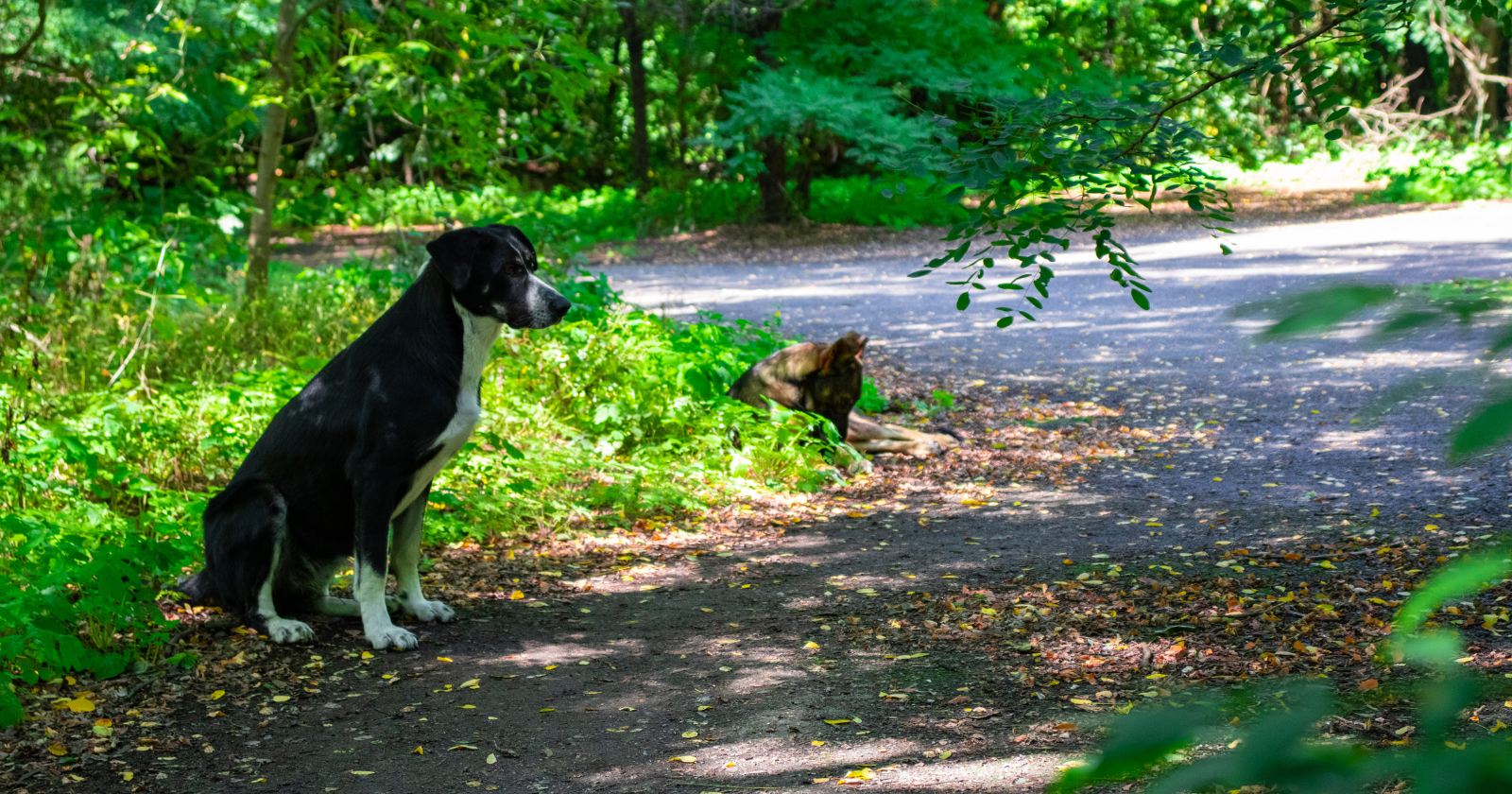
Two groups of dogs, living about 16 kilometres apart in the same ruined landscape, are genetically distinct from each other. Distinct enough that scientists can separate the power-plant dogs from those in Chornobyl City by their DNA.
The landscape is the Chornobyl exclusion zone, site of the 1986 nuclear disaster. So the obvious question writes itself. Did the radiation do this?
The tidy answer would be yes. The evidence so far says otherwise.
A quick note before we go further: we are not geneticists, radiobiologists, or clinicians, and nothing here is health advice. Findings about a few hundred animals don’t map neatly onto conclusions about radiation risk, and the researchers themselves are careful about what their data can and can’t say.
The finding that started it: 302 dogs, three sites
The starting point is a 2023 study in Science Advances. A team including Elaine Ostrander, Gabriella Spatola and Timothy Mousseau studied the DNA of 302 free-roaming dogs sampled at the power plant, Chornobyl City around 15 kilometres away, and Slavutych roughly 45 kilometres out. The population is thought to be made up at least partly of descendants of pets left behind during the 1986 evacuation.
The team found that the dogs at the power plant were genetically distinct from the dogs in the city.
When you hear “distinct dog populations at a nuclear disaster site,” your mind goes straight to mutation. These dogs have lived for generations in an environment contaminated by radioactive material and, through cleanup and abandoned industrial sites, heavy metals, pesticides, asbestos and other pollutants. The obvious hypothesis is that mutagenic exposure helped drive the genetic split.
What the follow-up study actually found
Researchers from the same broader group went looking directly for mutation. A 2024 study in PLOS ONE, led by NC State’s Megan Dillon with Matthew Breen as corresponding author, tested whether increased mutation could explain the differentiation. As Breen put it, “We are trying to determine if low-level exposure over many years to environmental toxins such as radiation, lead, etcetera, could explain some of those differences.”
They examined several scales: whole chromosomes, short repeating stretches of DNA, and the proportion of recently derived alleles in each population. Breen described it as using the zoom function on a phone camera, moving from a wide view down to finer genetic detail.
They didn’t find the expected signal. The study found no evidence that an increased mutation rate or greater mutation accumulation was driving the difference between the power-plant and city dogs. Nor did the small chromosomal analysis find gross abnormalities. Breen noted that the populations are more than 30 generations removed from the dogs present in 1986, but mutations that gave those original dogs a survival advantage would likely still be detectable. The team found no such evidence.
Keep the wording in mind. The study found no evidence that increased mutation is driving the genetic differentiation. That is not the same as proving that no radiation-caused mutations ever occurred.
So what is doing the splitting?
The definitive cause remains unresolved. The researchers say population history, limited gene flow and selection all remain relevant possibilities. Earlier work found that the two populations breed predominantly within their own groups despite their proximity, while the new study found the Chornobyl City dogs genetically more similar to free-breeding dogs from Russia and Poland than the power-plant dogs are.
Dillon offered one hypothesis for how the difference might have begun. “It’s possible that the dogs that survived long enough to breed already had genetic traits that increased their ability to survive,” she said. “So perhaps there was extreme selective pressure at the start, and then the dogs at the power plant just remained separate from the city population.” Note the “possible” and the “perhaps.”
Why the null result is the more interesting story
My read is that this is a better piece of science for having failed to confirm the exciting hypothesis. The dramatic version, that radiation forged new dog lineages in real time, would have made every headline.
Instead the researchers tested mutation directly and reported that the evidence isn’t there.
What remains is a real genetic split without a definitive cause. Selection may have contributed, and the populations have remained unusually distinct despite living only 16 kilometres apart, but an elevated mutation rate does not appear to explain the difference.