The idea was simple and a little mad
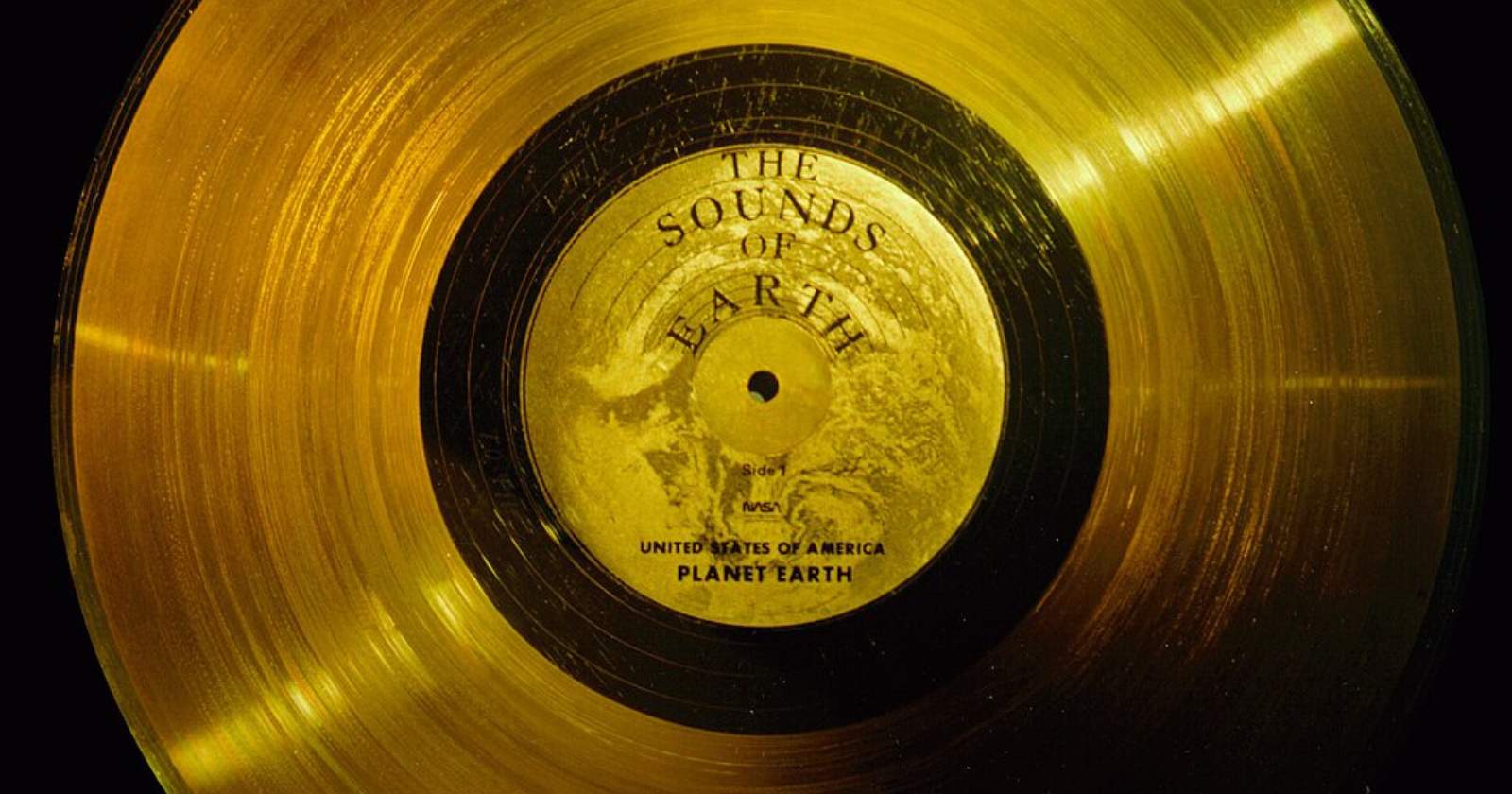
In 1977, NASA attached a gold-plated copper record to each of the two Voyager spacecraft before they left Earth. A message in a bottle thrown into the dark, in case anything out there ever found it. Voyager 1 launched on September 5, 1977, and it has been moving away from us ever since.
What many don’t know about that record, all these years later, is that one of the human voices on it belongs to a child who had no real idea what he was doing.
A child’s voice on a record built for eternity
The record was a group effort. Carl Sagan was appointed to head the committee that decided what went on it. His wife at the time, the artist and writer Linda Salzman Sagan, took on the job of organizing the spoken greetings. Those greetings run to 55 languages.
The English greeting was recorded by the couple’s six-year-old son, Nick, and it is short enough to carry in your head: “Hello from the children of planet Earth.”
Why Nick, and how the line became his own
He was not picked out of a crowd. As Nick Sagan later recalled, his parents thought it would be nice to have a child represent one of the greetings.
There was no prepared line. “My dad plopped me down in front of a mic in a room at Cornell University, where he taught, and asked me what I would want a visiting extraterrestrial to know,” he said. In another interview he put it more bluntly: “Literally it was my parents putting me in front of a microphone and saying, ‘What would you say to extraterrestrials?'”
A child’s voice in interstellar space
Whatever the child understood at the time, the physics didn’t care. Voyager 1 crossed into interstellar space in August 2012 and became the most distant human-made object in existence. Nick’s greeting went with it, alongside every other voice and sound on the Golden Record.
The distances stop meaning much after a while. In roughly 40,000 years, Voyager 1 will pass within about 1.6 light-years of Gliese 445, a star in the constellation Camelopardalis, aimed at no one in particular. The record isn’t really a letter to a known recipient. It’s closer to a keepsake left where it might someday be found, or might not.
Nick has been honest about the weight of that. “I had no sense of the magnitude of it at the time,” he said, which is exactly what you’d expect. Six-year-olds do not weigh interstellar distances. The magnitude arrived later.
The line he has carried since
Nick Sagan grew up to write science fiction, including for Star Trek: Voyager and his own Idlewild trilogy. He spent an adult career imagining futures while a sentence from his childhood kept moving outward without him. “It’s been a challenge for the rest of my life to live up to that honor. It’s always there in my subconscious,” he said.
There’s a stranger feeling underneath that one. “There’s a possibility that a piece of me will exist long after I’m gone and the Earth ceases to exist. It’s a kind of immortality,” he said. Nobody knows whether the records will ever be found, but his childhood voice is already travelling through a region of space no human-made object had reached before Voyager.
The part I keep returning to is this. Every adult who worked on that record will be gone long before the recording is, and so will most of what we’ve built. What’s left drifting out there is a child’s voice, saying hello on behalf of the children of Earth. A grown-up might have tried to sum us up. The kid just said hi.