

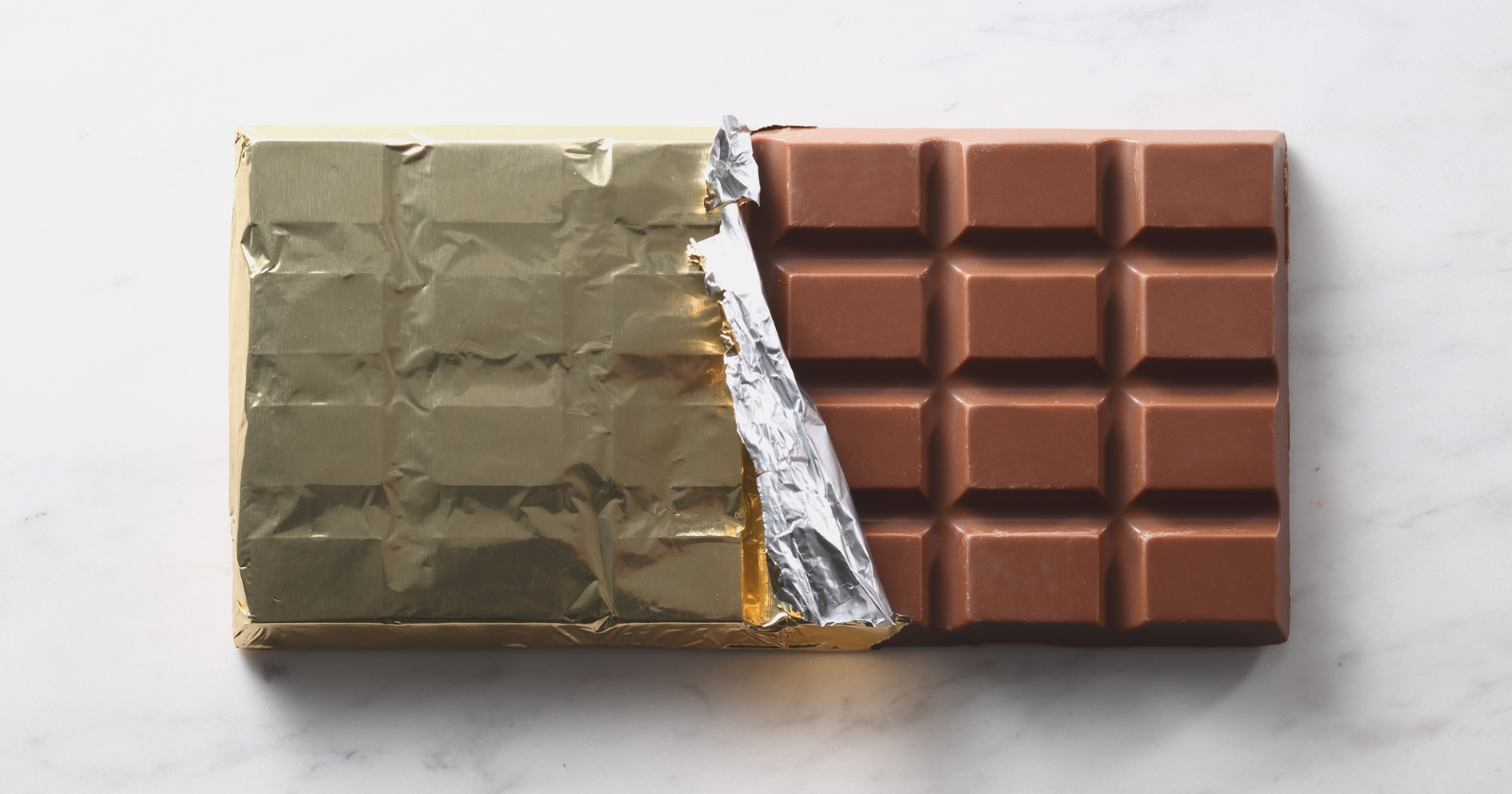
A single 100-gram bar of chocolate, the kind you snap off a block, takes about 1,700 litres of water to exist. Not the water in the recipe. The water it took to grow.
“It takes an astonishing 450 gallons (1700 liters) of water to make a typical 3.5-ounce (100-gram) chocolate bar,” as water expert and writer Sandra Postel put it in 2015.
That figure isn’t an exact measurement, and it pays to say so early. It’s a global average, and the real number for any given bar depends on where the cocoa was grown and how it was processed. That’s why these figures are described as a worldwide average.
Treat 1,700 as a signpost, not a precise reading.
Why the factory barely counts
The instinct is to picture a chocolate plant guzzling water, all steam and washing and cooling. It doesn’t work that way. “Most of those gallons are consumed by the cocoa plants in the field,” Postel wrote. The melting and moulding at the end of the chain are trivial next to the years a cacao tree spends drinking rain.
The bar you hold is really a record of a lot of rainfall, soaked up over long growing seasons by trees in the tropics, then concentrated into a few dark squares. The processing you can see accounts for almost nothing. The water you can’t see is almost all of it.
Green water, blue water, and why the difference matters
Water footprints get split into three types, and that split is what makes chocolate’s number less alarming than it first sounds.
Blue water is what we usually worry about: rivers, lakes, and underground stores pumped up for irrigation. Green water is rain sitting in the soil, taken up by plants as they grow. Grey water is roughly what it takes to dilute the pollution farming leaves behind.
Across all crops worldwide, researchers Mesfin Mekonnen and Arjen Hoekstra found the global footprint splits 78% green, 12% blue and 10% grey. Cocoa sits at the extreme green end of that. A study of young rainfed cacao farms found that because none were irrigated, between 96.3% and 99.8% of the total water footprint was green water.
In plain terms: the 1,700 litres is overwhelmingly rain that fell on a hillside and got used by a tree, not water siphoned from a stressed river.
Green water often gets waved away as “free.” It fell anyway; the tree just caught it. But rain is only free where it is reliable, and that is exactly where the story turns.
Where cocoa grows, and why it can least afford a dry year
Cocoa isn’t spread evenly around the tropics. It clusters.
“In Ghana and Côte d’Ivoire which account for 60% of the world’s cocoa production,” the International Water Management Institute noted in 2024, unusually high temperatures and rainfall tied to El Niño had devastated crops the year before.
The wider West and Central African belt grows more than 70% of the world’s cocoa. More than half the rain behind a chocolate bar eaten in the West falls in a narrow strip of Africa. Postel put it plainly: “more than half of the water consumed to produce chocolates eaten in the United States comes from rain falling in West Africa.”
Almost all of it is rainfed, and that is the vulnerability. As Zero Carbon Analytics put it, “This rain-fed system makes crops highly dependent on reliable rainfall – a critical vulnerability given the crop’s low drought tolerance.” There’s no irrigation to fall back on. When the rain wobbles, the crop wobbles with it. The IWMI is careful to note that recent declines come from several long-term pressures at once, including disease, illegal mining, and land-use change, not weather alone.
And the weather is heading the wrong way. Climate Central’s analysis of cacao regions in the top four producers found climate change has added about 40 extra days a year above 32°C in Côte d’Ivoire and Ghana over the past decade. A Wageningen study projects that with continued warming, Ivory Coast could lose up to 50% of the land currently suitable for growing.
An estimated two million farmers grow most of that crop on small plots, which means the people absorbing the shock are the ones with the least room to absorb it. Those are model projections, not forecasts, but the direction is consistent across studies.
How to read a number like 1,700 without giving up chocolate
So what do you actually do with a figure like this? Not much guilt, we’d argue. The 1,700-litre number isn’t a verdict on you for eating a bar, and it isn’t a factory scandal. Most of that water is rain that would have fallen on West African soil whether or not anyone ate the chocolate.
What the number is good for is showing you where the fragility sits. The pressure point in a chocolate bar is not the manufacturer. It’s a rainfed hillside in a region getting hotter and drier, farmed by people with no irrigation and little margin. Read that way, a water footprint stops being a scold and becomes a map, one that points to the supply chain’s weakest link on the farm, not in the factory, and to the thing quietly at risk: the reliability of rain in a few African countries is what most of the world’s chocolate leans on.
Our read is that these numbers are lenses, not scoreboards. The next time you see one attached to a food, the question worth asking isn’t “should I feel bad about this” but “where does this water actually come from, and can that place spare it?” For chocolate, the answer to the second half is increasingly no.