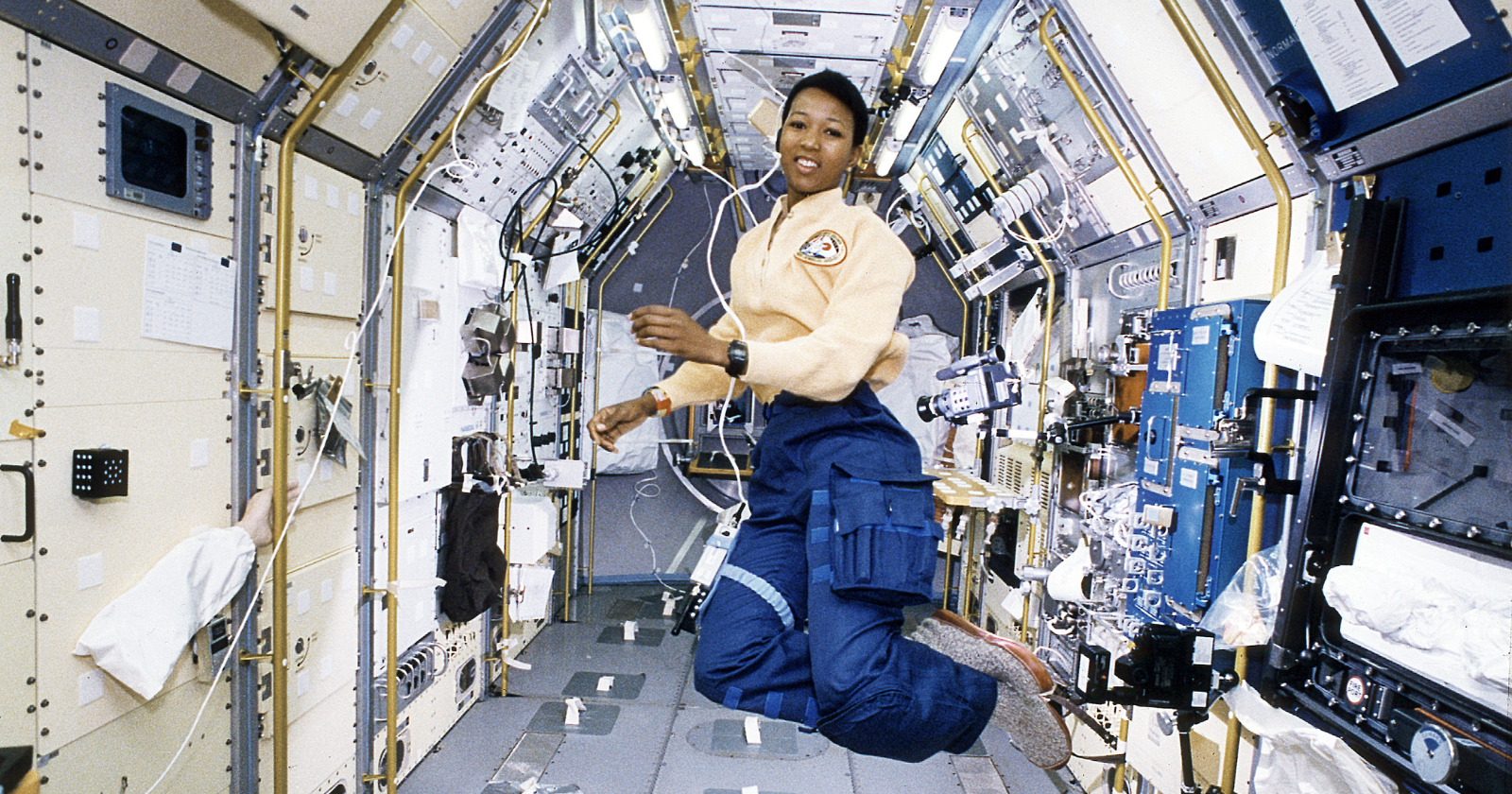
Here’s the thing about weightlessness that most people never think about until it’s over. It’s not the year in space that hurts. It’s the coming back.
When NASA astronaut Frank Rubio returned to Earth in September 2023 after 371 days aboard the International Space Station, he could not walk unassisted off the Soyuz capsule. He described the return as harder than the launch, and harder than the year in orbit. The soles of his feet burned. His lower back ached deep enough that it lingered for weeks. His inner ear insisted the floor was tilting when it was not.
He was not being dramatic. He was describing the physiological standard for anyone who spends a long time in microgravity and then comes back. What most retellings of this story get wrong, though, is why it happens.
The story you’ve heard, and why it’s not quite right
The popular version goes something like this. In microgravity, the spine stops being compressed by body weight. The soft gel-filled discs between each vertebra swell up. The astronaut gains a few centimetres of height. And when they land, the swollen discs get squeezed back down and it hurts.
That story is not wrong exactly. It’s just not the actual problem.
According to a NASA Human Research Program evidence report published in March 2025 by Dr Jean Sibonga at NASA Johnson Space Center, titled “Concern of Intervertebral Disc Damage Upon and Immediately After Re-exposure to Gravity”, careful MRI studies of returning ISS astronauts have shown that the intervertebral discs themselves are barely changed. The disc heights are not significantly different at any time point pre-flight, immediately post-flight, or six weeks after landing. The discs are not the damaged tissue.
The damaged tissue is the muscle.
If you want to see what the full picture of that looks like across the whole body, this video walks through what space does to the human face, the eyes, the bones, and the spine, and why the same forces are quietly shaping your body right now.
Click here to watch the video.
What actually breaks down in a year of weightlessness
Deep in your lower back, running along either side of the spine, there is a set of small muscles most people have never heard of. The main one is called multifidus. It doesn’t do the big obvious work of lifting or bending. What it does is keep your spine stable. Every time you shift weight, catch your balance, twist to look at something, or take a step, multifidus and its neighbours make thousands of tiny adjustments to hold the vertebrae in position so the discs don’t have to absorb forces they were never designed to handle.
In microgravity, those muscles aren’t doing that job. There’s nothing to stabilise. And over the course of months in space, they waste away. The Chang et al. study of ISS astronauts, referenced heavily in the NASA report, found that the functional cross-sectional area of the paraspinal muscles dropped from 86 per cent of the total muscle area down to 72 per cent by the time the astronauts landed. Six weeks later, they had recovered only 68 per cent of what they had lost. They were still significantly weaker than before they went up.
The result, according to a 2018 peer-reviewed review by David Green and Jonathan Scott of the European Space Agency’s Space Medicine Office and King’s College London, is a spine coming back to Earth with a load-bearing structure that has been quietly disassembled from the inside. The discs are fine. The vertebrae are fine. But the stabilising system that normally protects them is running at about 80 per cent capacity, and taking weeks to rebuild.
The consequence is that returning astronauts have a rate of herniated intervertebral disc, in the months after landing, that is approximately 4.3 times higher than the general population. The disc itself did not fail in space. It failed on Earth, after landing, in the specific weeks when the muscles that were meant to be protecting it were still atrophied.
Why the return is so much worse than the flight
The other thing that turns out to matter, according to a 2021 longitudinal study by Jeffrey Lotz’s team at UCSF, tracking twelve NASA astronauts before and after approximately six months in space, is what happens to spinal stiffness itself. In space, without gravity to work against, the lumbar spine loses about 11 per cent of its natural forward curve. That curve exists for a reason. It’s what keeps the vertebrae stacked so the discs at the base of the spine, where the highest loads normally travel, aren’t asked to absorb sudden lateral forces they can’t handle.
When an astronaut comes back and their spine no longer has that curve, when their multifidus is still atrophied, and when they take their first real step under a full Earth gravity load, the discs at the lower lumbar level are the specific structures that are most exposed. That is why the herniations, when they happen, tend to happen in the months after landing rather than in flight.
The pain that Rubio and other returning astronauts describe is not the sensation of a spine being crushed back to its former size. It is the sensation of a load-bearing column being asked to do a job for which it is temporarily under-equipped.
The rest of the body is doing the same thing
The spine is the part of the return that hurts most obviously. But it is not the only system that has been quietly rearranged during the year of weightlessness, and the picture in the rest of the body is broadly similar.
The bones are losing density at approximately 1 to 2 per cent per month during the mission, primarily in the weight-bearing areas of the hips, legs and lower spine. According to NASA’s own longitudinal data, some of that loss is still measurable two years after landing. The eyes have been reshaped by fluid that pooled toward the head in weightlessness and pressed on the back of the eyeball and the optic nerve, a condition NASA has formally designated Spaceflight-Associated Neuro-ocular Syndrome. The heart, no longer working against gravity to push blood upward, has become smaller and weaker at the specific tasks required for standing upright, which is why returning astronauts frequently faint in the first days after landing. The immune system has, for reasons that are still being untangled, been reactivating dormant viruses the astronaut had been carrying since childhood, including several strains of herpes.
All of this is happening at once. All of it starts the moment the parachute opens over the Kazakh steppe or the SpaceX capsule splashes into the sea. And all of it begins to reverse from the moment the returning astronaut’s body starts, once again, to feel its own weight.
What the return is really testing
Human spaceflight has, since its beginning, been described in the language of exploration. New frontiers, new endurance records, new milestones. The story has always centred on the going.
What the medical evidence from long-duration missions has been showing for the past decade is that the going is, in many ways, the easy part. It is the coming back that reveals what the human body actually is when the specific set of forces that shaped it over three million years of evolution is briefly withdrawn.
The bones are held together by loading. The heart is kept strong by fighting gravity. The eyes hold their shape because of subtle pressure balances that assume an upright column of blood. And the spine, contrary to almost every popular explanation, is not primarily a stack of cushioned bones. It is a set of very small stabilising muscles doing extraordinarily precise work, thousands of times a minute, to keep everything else safe.
Take those forces away for a year, and the discs stay fine, but the muscles that were quietly protecting them do not. The astronaut lands. The muscles are not ready. And the specific injury that follows is not really an injury of space. It is an injury of gravity, arriving all at once, into a body that briefly forgot how to hold itself up.
The people currently planning the trip to Mars know all of this. Their crews will be in microgravity for something closer to three years, transitioning through partial gravity on the Martian surface, then microgravity again for the return, then full Earth gravity at the end. What that specific sequence will do to a human spine has not been tested. What is known is only that the injuries scale with the duration of the flight and the size of the gravitational change at the end.
The body, on the accumulated evidence of six decades of human spaceflight, does not have a way of politely refusing what it is being asked to do. It simply does the thing, adapts to the environment as best it can, and pays the specific bill it is handed when the environment changes back.
The bill, when it comes, tends to arrive in the lower back first.