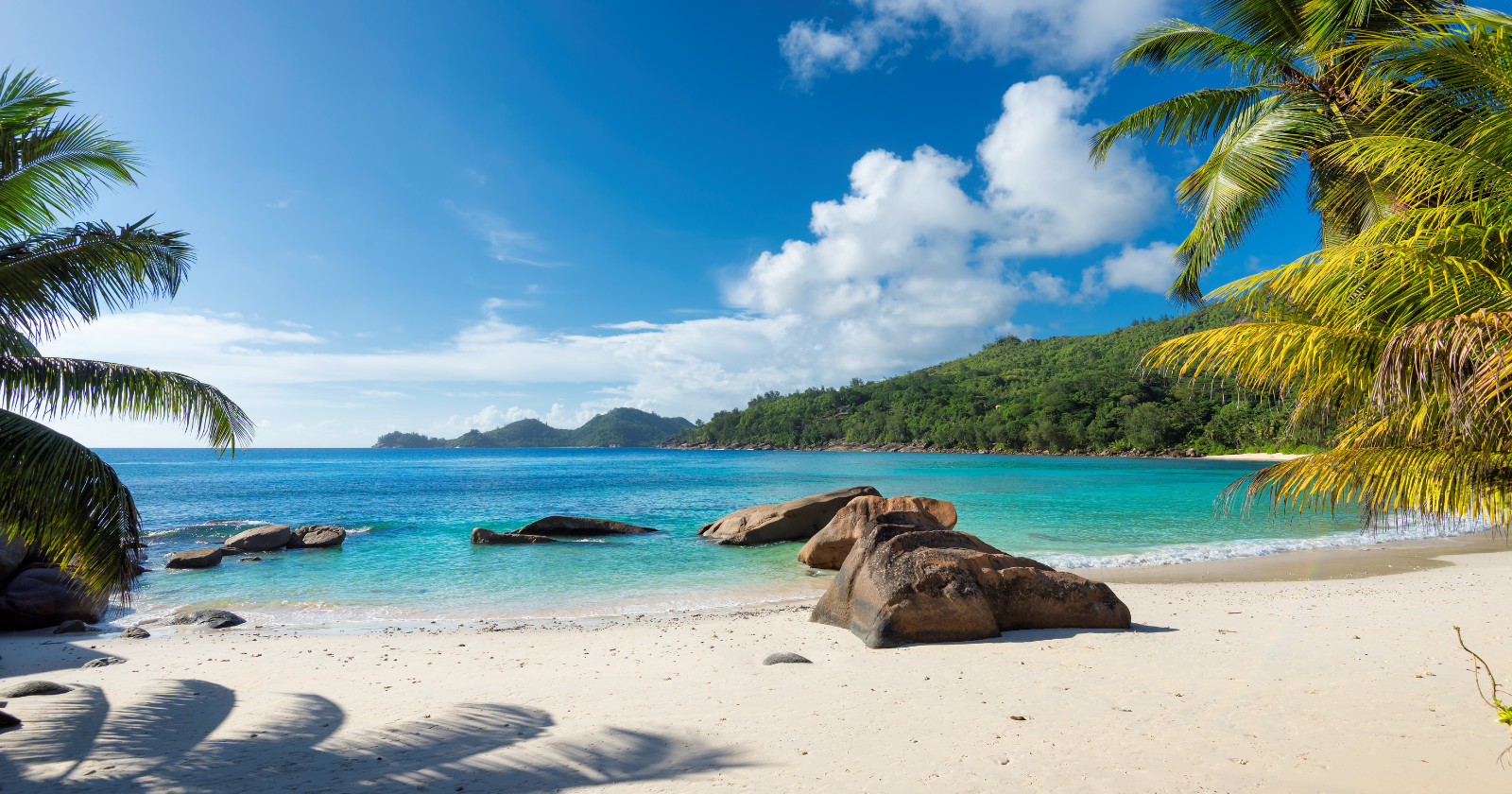
It’s the kind of story that sounds like a joke about the Caribbean until you look at the paperwork. Which is real. Filed in court. Involving multiple government ministries, the Jamaican Constabulary, the Prime Minister’s office, and a series of civil suits still pending years later. What happened at Coral Spring Beach in the Trelawny parish of northern Jamaica, sometime between May and July 2008, was one of the more logistically absurd crimes of the modern century. And nobody, on the surviving legal record, was ever convicted for any part of it.
The beach in question wasn’t huge. About four hundred metres of coastline on the north shore of the island, a short drive west of Falmouth. It was undeveloped, part of a private property being prepared for a planned $110 million luxury resort called Coral Spring. The developers, a company called Felicitas Ltd, had bought the land, cleared the initial site, and were working through the permits. What made the beach valuable, and what would eventually make it a target, was the sand itself. Powdery, white, made of the specific mix of ground coral and marine carbonate that Caribbean tourists have been paying to lie on for the past sixty years, and that increasingly cannot be produced anywhere else on demand.
What actually happened
The theft was discovered on Sunday, 20 July 2008. Locals arriving at the site that morning found something that took a minute to properly register. The beach was gone. Not eroded. Not damaged by a storm. Physically removed. What had been powder-white sand a few days earlier was now bare limestone rock and exposed root systems where the strand had previously covered them. The mangroves and saltpans just inland from the beach, which had been protected by the buffer of sand between them and the sea, were suddenly exposed.
According to contemporaneous reporting by South Africa’s Mail & Guardian in October 2008, drawing on a BBC interview with Deputy Commissioner Mark Shields of the Jamaica Constabulary Force who was running the investigation, an estimated 500 dump truck loads of sand had been removed from the beach over what was probably a period of several nights. Jamaica’s Mines Commissioner later estimated the total volume at approximately 706,000 cubic feet, which is enough sand to fill about ten Olympic-sized swimming pools. The black market value, on the going Caribbean rate for construction-grade white sand at the time, was estimated at approximately one million US dollars.
Related: The world is running out of sand, and it isn’t just down to theft. Watch our video on it below:
The logistical footprint required to move that much sand undetected is not trivial. Five hundred truck movements. Coordinated loading and unloading. Access roads. Storage or immediate delivery locations. Drivers who would keep quiet. Shields, in his own public commentary on the case, described the investigation as unusually complex because so many different links in the chain would have had to hold. The trucks themselves. The organisers coordinating them. The receivers taking delivery of the sand. And, on his suspicion, some element of collusion inside the local police stations that would ordinarily have flagged the activity.
The theft made international headlines within weeks. It was featured that year in Ripley’s Believe It or Not! comics. Prime Minister Bruce Golding took a personal interest and appointed a state minister, Daryl Vaz, as the government’s point person on the case. Felicitas commissioned an environmental study on the ecological impact to the exposed saltpans, mangroves, and dry limestone forest immediately inland. And the developer’s lawyers, working with private investigators, began trying to trace where the sand had gone.
The investigation, the helicopter, and the reason nobody was ever charged
The prevailing theory, from very early in the case, was that the sand had gone to competing resorts on the north shore. Caribbean hotels are, on the underlying economics of the tourism business, only as valuable as their beaches. A resort with a good beach commands premium rates. A resort without one struggles to fill rooms at any price. And genuine white Caribbean sand is not something you can order from a catalogue. It has to come from somewhere. Which, in a region where beaches are legally protected and permits for sand extraction take years to obtain, creates a genuinely lucrative black market for anyone willing to source it faster.
The Felicitas legal team, working under the theory that the sand had been used to build or expand competitor beaches, needed to identify which beaches had grown. According to reporting by NPR’s Planet Money in a 2018 podcast episode on the case, which drew on interviews with Michael Hylton, one of the Felicitas lawyers, the team eventually chartered a helicopter and put a sand scientist and a justice of the peace on board. The scientist’s job was to identify beaches that appeared to have gained volume in the months following the theft. The justice of the peace was there to notarise anything the scientist found, so that the evidence couldn’t later be challenged as tampered.
The helicopter did find beaches that had grown. Sand samples were collected. The chemical fingerprints of white Caribbean sand vary enough between locations that a properly trained analyst can, on the underlying geology, tell one beach’s sand from another’s. The Felicitas team believed they’d identified the recipients. And they filed civil suits against several hotels.
Which is where the criminal case ran into a wall. According to reporting by the Jamaica Gleaner in February 2011, when the criminal proceedings finally came to court, five men had been arrested and charged with simple larceny and conspiracy to steal the sand. They were alleged to have used a firm called Bedrock Building and Aggregates Ltd, which was hired by some hotels to source sand for beach expansion, and which in turn had contracted with people who removed the sand from the Coral Spring site. The five accused appeared before the Falmouth Resident Magistrate’s Court on 8 February 2011. The Senior Deputy Director of Public Prosecutions, Diahann Gordon-Harrison, told the court that the Crown could not proceed.
The reason was that the key witness, one of the directors of Felicitas, had told prosecutors he’d received threats that he would be killed if he came forward to give evidence. Gordon-Harrison and Crown Counsel Loxley Ricketts had, on her account to the court, held extensive discussions with the witness and his lawyer to try to persuade him to testify. He refused. Without his testimony, the prosecution had no case. Charges were dropped against all five men. The civil suits Felicitas had filed against the hotels remained pending, but they were not going to produce criminal accountability. Nobody would ever be convicted for any part of the theft.
The sand itself, on the primary source record of the case, has never been formally recovered. Some of it, on the Felicitas team’s own analysis, is probably still there, spread out under the sun loungers of resorts along the north coast of the island, indistinguishable at this point from any other Caribbean sand except by the chemical signature of where it originally came from. The beach where it used to be has partially recovered, mostly through natural deposition, but has never returned to what it was before someone decided it was worth stealing. And the case remains, on the police record, formally unsolved.
The wider context sitting behind the whole story is that sand is now one of the most extracted materials on the planet, second only to water. The global illegal sand trade runs into the hundreds of billions of dollars annually. In parts of India and Southeast Asia, sand mafias have killed journalists, activists, and police officers for interfering with their operations. Entire islands in Indonesia have been erased by illegal extraction to feed Singapore’s land reclamation programme. What happened at Coral Spring in 2008 was one of the earliest visible signs, in a region most tourists still associate with cocktails and swimming pools, that ordinary sand had quietly become a commodity valuable enough for people to steal beaches in the middle of the night, and to kill for the chance to keep the theft from being prosecuted.