
For most of the past sixty years, the search for life beyond Earth has been a search for places like Earth. The first attempts focused on Mars, the closest planet in the Sun’s habitable zone and the only other body in the solar system where surface liquid water is thought to have existed in the geological past. The expansion to other star systems, beginning with the detection of the first exoplanet around a Sun-like star in 1995, focused on identifying rocky planets approximately the size and temperature of Earth orbiting stars approximately the brightness and stability of the Sun. The framework was implicit. The conditions under which life exists on Earth are the conditions to look for elsewhere.
The framework was also, on the available evidence, substantially incomplete.
In August 2021, an astronomer at the University of Cambridge named Nikku Madhusudhan and two collaborators, Anjali Piette and Savvas Constantinou, published a paper that proposed a substantially different framework for thinking about habitable planets. The paper described a new class of potentially habitable world, characterised by a global liquid water ocean covered by a hydrogen-rich atmosphere, that could exist across a far broader range of stellar conditions than Earth-like life would tolerate, that could be substantially larger than Earth, and whose atmospheres could be characterised by current telescopes with far greater precision than the atmospheres of Earth-sized rocky planets.
The team called these worlds Hycean planets. The name is a portmanteau of hydrogen and ocean.
What a Hycean world is
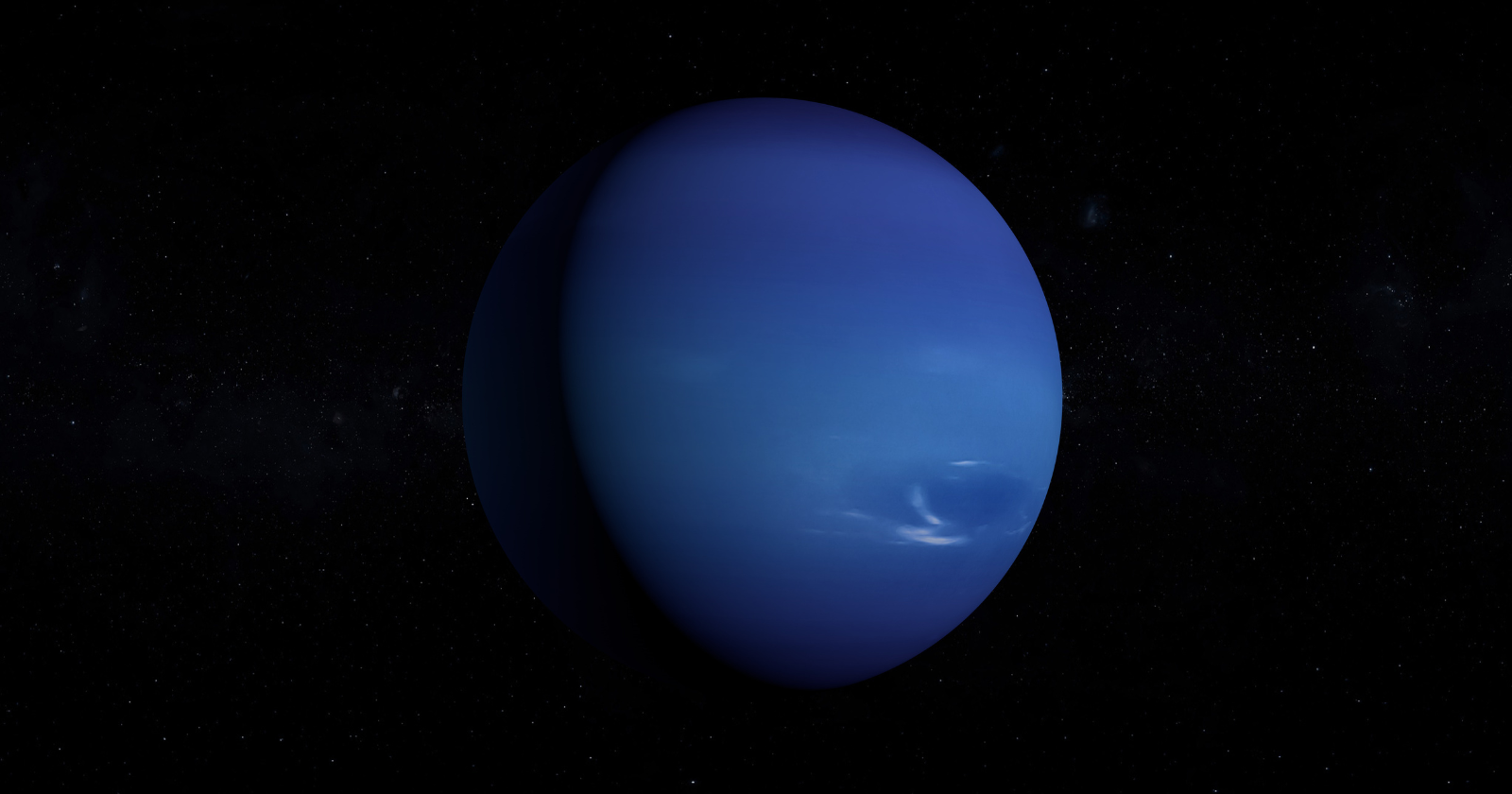
A Hycean world, on the framework Madhusudhan and his colleagues laid out, has a mass between approximately one and ten times the mass of Earth and a radius between approximately 1.1 and 2.6 times the radius of Earth. Its atmosphere is dominated by hydrogen and helium, similar in composition to the atmospheres of Neptune and Uranus, but with a substantially thinner hydrogen layer. Beneath that hydrogen atmosphere lies a global ocean of liquid water, deeper than any ocean on Earth, that covers the entire surface of the planet without any continents or landmasses.
The thickness of the hydrogen atmosphere is the critical parameter. If the hydrogen layer is too thin, the planet’s surface conditions resemble those of a rocky super-Earth. If the hydrogen layer is too thick, the atmospheric pressure at the ocean surface becomes too extreme for liquid water to persist, and the planet becomes a mini-Neptune. The Hycean range is the narrow band between these two extremes, where hydrogen is abundant enough to provide substantial greenhouse warming but thin enough that the ocean beneath remains liquid.
Within that range, several distinct subtypes are possible. A standard Hycean planet has an ocean surface temperature broadly comparable to Earth’s. A dark Hycean planet is tidally locked to its star, with the day side too hot for habitability but the night side cool enough to support liquid water. A cold Hycean planet receives less stellar radiation than would be required to keep an Earth-like planet warm, but the hydrogen greenhouse effect maintains liquid water on the surface anyway. Each subtype expands the conditions under which a planet can be considered potentially habitable.
Why this matters for the search for life
The Hycean framework has two specific consequences that the popular framing of habitable-planet searches has not given proportional attention to.
The first is that Hycean worlds substantially expand what counts as a habitable planet. The terrestrial habitable zone around a star, defined by the range of orbital distances at which an Earth-like planet could sustain liquid water on its surface, is relatively narrow. The Hycean habitable zone extends substantially further inward and outward from the star, because hydrogen’s greenhouse warming allows liquid water to persist at lower stellar irradiation and the deep ocean’s thermal mass buffers temperature variations that would destabilise an Earth-like atmosphere. For dim red dwarf stars, which make up approximately three-quarters of all the stars in the Milky Way, the Hycean habitable zone is wide enough that an entire population of habitable planets may exist around stars that the standard Earth-analogue search would have written off as inhospitable.
The second consequence is that Hycean worlds are substantially easier to study with current telescopes than Earth-sized rocky planets are. When a planet passes in front of its star from our line of sight, a small fraction of the star’s light passes through the planet’s atmosphere on its way to Earth. The atmospheric molecules absorb specific wavelengths of that starlight, leaving a chemical fingerprint that telescopes can detect. The taller the atmosphere, the deeper the absorption features, and the easier the chemistry of the atmosphere is to determine. Hydrogen atmospheres are substantially taller than nitrogen-oxygen atmospheres because hydrogen molecules are far lighter, so the atmosphere extends much further upward before gravity pulls it back down.
The atmospheric scale height of a Hycean world is approximately five to seven times larger than that of an Earth-sized rocky planet at comparable temperatures. The James Webb Space Telescope can, on the Madhusudhan team’s prediction, detect potential biosignature molecules at parts-per-million concentrations in the atmospheres of Hycean worlds within the lifetime of the observatory. Detecting comparable signatures in Earth-sized rocky exoplanet atmospheres would require either substantially longer observation times or larger telescopes than currently exist.
The candidate Hycean worlds
The first and most extensively studied candidate is K2-18b, located approximately 124 light-years from Earth in the constellation Leo. The planet has a mass of approximately 8.6 Earth masses and a radius of approximately 2.6 Earth radii, orbiting a red dwarf star at a distance where the stellar radiation reaching the planet is approximately equal to the solar radiation reaching Earth. JWST observations of K2-18b in 2023 detected methane and carbon dioxide in a hydrogen-rich atmosphere. Subsequent observations produced a tentative claim of detecting dimethyl sulphide, a molecule that on Earth is produced almost exclusively by marine phytoplankton, although the detection has been contested.
A second candidate is LHS 1140b, located approximately 49 light-years from Earth. A 2024 paper by Damiano and colleagues concluded that the planet may be a potentially habitable water world and one of the most promising habitable-zone candidates currently known.
Other candidates include TOI-270d, TOI-1452b, and a small number of additional sub-Neptune planets whose masses and radii place them within the Hycean range. None has been definitively confirmed as a Hycean world, and the debate about the actual nature of any individual candidate is still ongoing.
The honest scientific dispute
The Hycean framework has been substantially contested since the 2021 proposal, and the dispute is worth describing honestly.
The strongest objection is that the candidate Hycean worlds may actually be mini-Neptunes with no habitable surface, on a 2024 analysis by Wogan and colleagues, with hydrogen atmospheres so thick that any underlying water layer is in a supercritical state rather than a liquid one. The Madhusudhan team has responded with subsequent papers defending the Hycean interpretation. The dispute is genuinely unresolved.
A second objection is that the dimethyl sulphide detection at K2-18b, popularly framed in April 2025 as the strongest evidence yet of life beyond Earth, has been substantially weakened by follow-up analyses. A 2025 paper by Seager and colleagues concluded that the detection does not meet the standards of evidence that an extraordinary claim of life beyond Earth would require. Dimethyl sulphide has also been detected in non-living cometary matter, which complicates its interpretation as an unambiguous biosignature.
A third objection concerns the long-term stability of Hycean conditions. Hydrogen is the lightest element in the universe, and it escapes from planetary atmospheres faster than heavier elements do. Whether a Hycean atmosphere can persist over the billion-year timescales required for life to develop and become detectable is a question the available evidence has not yet resolved.
What it means for the search for life
The search for life beyond Earth has, for most of its history, been a search for places like Earth, and that framework may have been substantially incomplete. The Madhusudhan proposal does not displace the search for Earth analogues. It expands it.
The practical implications for current observation programmes are substantial. JWST observations of candidate Hycean worlds can produce biosignature-quality atmospheric data within the operational lifetime of the telescope. Comparable observations of Earth-sized rocky exoplanets would require either next-generation telescopes that have not yet been built or observation times that current programmes cannot accommodate. If the Hycean framework is correct, the most likely place to detect signs of life beyond Earth in the next decade is in the atmosphere of a planet that looks nothing like Earth.
The available evidence on individual candidate Hycean worlds is genuinely contested, and the popular framing of any specific detection as evidence of life beyond Earth should be treated with appropriate caution. The K2-18b dimethyl sulphide claim is the clearest current example. The detection itself is contested. The interpretation as a biosignature is contested. The classification of the planet as Hycean is contested. None of these disputes invalidates the broader Hycean framework, but they do illustrate that the current state of the evidence is more provisional than the popular framing has often acknowledged.
There may be a substantial population of habitable planets in the galaxy that no one had thought to look for until 2021, that current telescopes can already begin to characterise, and that may be the most likely places to find evidence of life beyond Earth in the coming decade.
The Earth analogues are still out there.
The Hycean worlds may have been the answer all along.