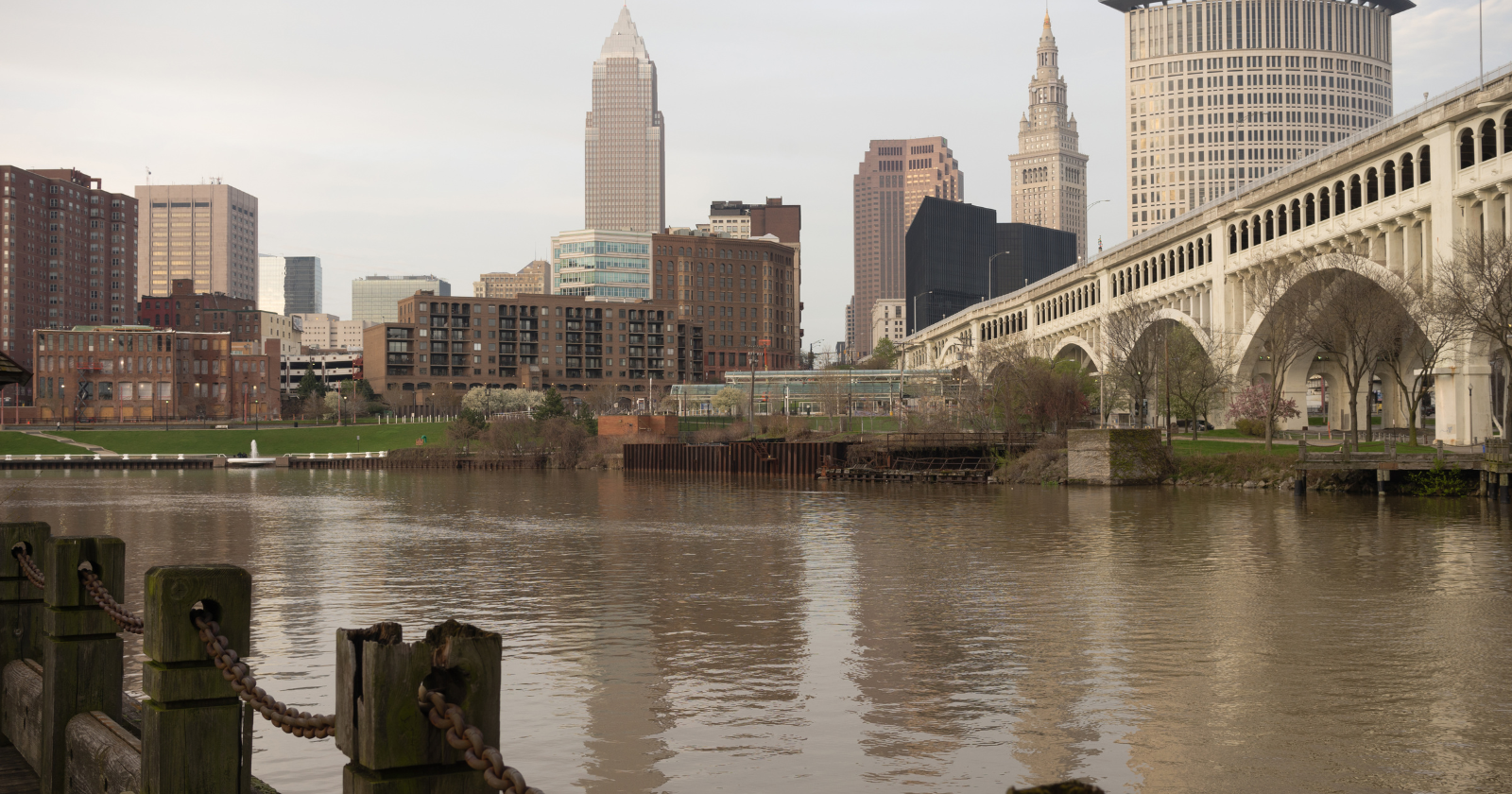
Here’s the thing about the Cuyahoga River fire that most people never quite grasp. If you had asked a Clevelander in 1969 what they made of the fire, the honest answer would have been: what fire? The river had been catching fire for a hundred years. Nobody bothered to write it down half the time. The blaze on 22 June 1969 lasted somewhere between twenty and thirty minutes, damaged a couple of railroad bridges, cost around fifty thousand dollars, and would ordinarily have been the sort of local industrial nuisance that appeared on page eleven of the Cleveland Press and disappeared by the following Tuesday.
By 1972, that same fire had become a symbol of the case for stronger federal water-pollution law. Which is genuinely strange, because nothing about the fire itself was extraordinary. What changed was who noticed, when they noticed, and what they did about it.
The fire itself
The physical event was almost anticlimactic. The river ran through Cleveland’s industrial flats, past Republic Steel and the sewage outflows, in a state that the Federal Water Pollution Control Administration described at the time as having no visible signs of life, not even the leeches and sludge worms that ordinarily thrive on wastes. Debris had piled up against the railroad bridges. Oil coated the water. A flare tossed from a passing train, or possibly a spark from the tracks, dropped onto the surface. The oil ignited. The debris caught. The fire burned briefly and went out.
This was, roughly, the thirteenth time this had happened. The Cuyahoga had been catching fire since at least 1868. The 1952 fire, seventeen years earlier, had done thirty times the damage the 1969 one did. Nobody outside Cleveland had cared much about any of them.
If river stories are your thing, the video below is the opposite problem. The Cuyahoga had to catch fire before anyone protected it — the Vjosa in Albania is the last big wild river left in Europe, and the film covers the fight to get it protected before anything happened to it. Give it a watch.
The mayor who turned it into a symbol
What made 1969 different was Carl Stokes. According to the National Park Service’s history of Stokes and the fire, he had become the first African American mayor of a major US city just two years earlier, and he was already using that national platform to draw attention to what he called the urban environment. The fire happened on a Sunday. On Monday morning, Stokes led the Cleveland press on a pollution tour of the river. He walked reporters to the damaged bridge. He took them to the industrial sites dumping into the river. He showed them the sewers.
The pollution tour is the moment the story turned. Stokes was not framing the fire as a Cleveland problem or an accident. He was framing it as evidence that the entire system was broken and that federal action was needed. He argued, correctly, that Cleveland had no power over the upstream suburbs, no control over state pollution permits, and no ability to fix a river that started outside the city limits.
The reporter who made it national
The tour was covered by Betty Klaric, one of the first full-time environmental reporters in the United States. Klaric wrote for the Cleveland Press and had been working the Save Lake Erie Now beat for years. Her reporting on the fire and the tour was picked up nationally. On 1 August 1969, Time magazine ran a feature in a brand-new section called The Environment, describing the Cuyahoga as a river that oozes rather than flows and in which a person does not drown but decays. No known photograph shows the brief 1969 fire; Time illustrated its report with dramatic images of the much larger 1952 blaze, a distinction documented by the Ohio History Connection. The article and those older images did more to make the 1969 fire famous than every prior burning combined.
By December 1970, National Geographic ran a fold-out image of the oily Cuyahoga in an issue dedicated to what it called the ecological crisis. The Cuyahoga was no longer a local embarrassment. It was the picture attached to a national argument.
What was already in motion
Now, if you dig into the timeline, you find something worth knowing. According to the NPS’s official history of the fire, the machinery of American environmental reform was already moving before the June 1969 blaze. The federal Water Pollution Control Act of 1965 was law. Cleveland voters had passed a hundred-million-dollar bond issue in 1968 to build sewers and water treatment plants. A massive Santa Barbara oil spill earlier in 1969 had received more press attention than the Cuyahoga fire did at the moment it happened. The Environmental Protection Agency was months from being established. Earth Day was in the diary for April 1970.
Yet Santa Barbara faded, and the Cuyahoga became world-famous. It ended up in every environmental history textbook. It named beers and hot sauces. The Clean Water Act followed in 1972, along with the founding of the Ohio EPA and the Northeast Ohio Regional Sewer District.
What the fire actually did
Look, the honest version is that the fire itself was not the primary cause of American water pollution law. Too many things were already moving for any single event to have been the trigger. What the fire did was give the whole rising environmental movement a picture to point at. A river on fire in an industrial American city. That was the image. That was the shorthand people would remember even after they had forgotten the details.
Twelve fires before this one had happened without a mayor who understood the press, without a reporter who had been building the pollution story for years, and without a national magazine ready to launch a new Environment section that needed a defining image. The thirteenth fire had all three. Everything else was already in motion. It just needed something to point at.