

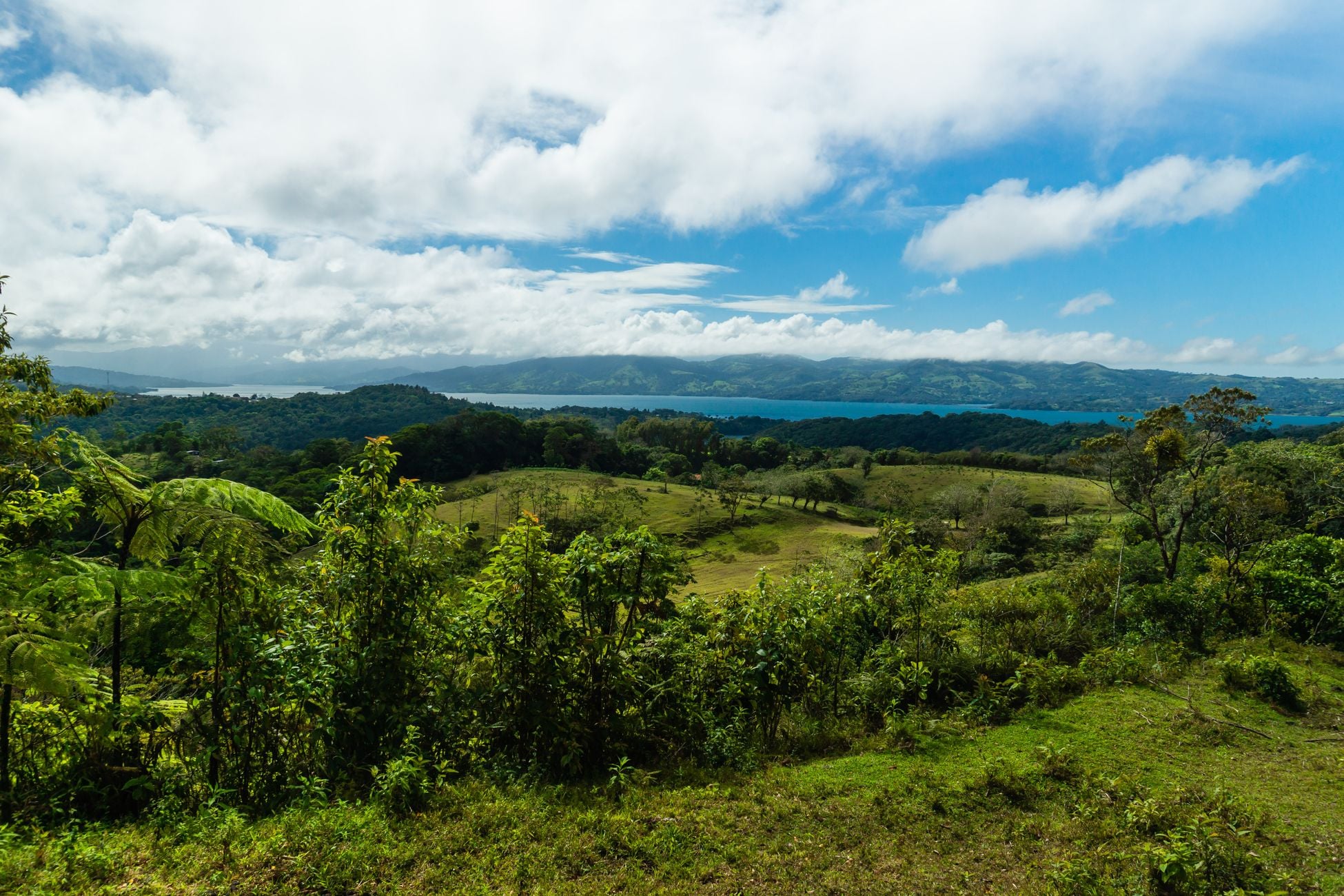
In 1987, Costa Rica’s forest cover had collapsed to roughly 21% of the national territory, and the instrument that quietly reversed it over the next three decades was not a treaty or a foreign aid package but a small line item on the national fuel tax. The country’s forestry law of 1996 created a program called Pago por Servicios Ambientales — Payments for Environmental Services — administered by a state agency called FONAFIFO. It pays private landowners to keep their trees standing. More than 18,000 families and cooperatives have signed contracts under it, and forest cover has climbed back past 50%.
The mechanism is almost embarrassingly simple. A rancher who would otherwise clear a hillside for pasture gets a cheque, wired annually, for leaving the hillside forested. The cheque is funded by drivers filling up at gas stations in San José.
The number that started it all
Costa Rican forest cover in 1940 stood at around 75%. By the mid-1980s it was closer to 21%, according to figures compiled by the country’s environment ministry and cited in a Mongabay commentary on payments for ecosystem services. Beef exports to the United States, encouraged by cheap credit and expanding roads, had turned cloud forest into cattle pasture at a rate of roughly 50,000 hectares per year through the 1970s and early 1980s.
Then the credit dried up. Global beef prices fell. And in 1996, a coalition of foresters, economists at the University of Costa Rica, and legislators pushed through Forestry Law 7575, which did something unusual for a Latin American environmental statute of that era. It stopped trying to punish deforestation and started paying for the opposite.

How the contract works
A landowner enrolls a parcel with FONAFIFO. The parcel is inspected, mapped, and classified — protection of existing forest, reforestation, agroforestry, or regeneration of degraded land. The contract typically runs five to ten years. Payments in recent cycles have ranged around US$64 per hectare per year for forest protection and higher rates for active reforestation, with additional premiums for parcels inside biological corridors or watersheds that supply drinking water to cities.
The money arrives by bank transfer. In exchange, the owner agrees not to cut, not to convert, not to burn, and to allow verification visits. Break the contract and you repay, with interest.
Roughly 1.3 million hectares have been enrolled cumulatively since 1997. In any given year, the active area under contract sits around 300,000 hectares — an area larger than the state of Rhode Island, held in forest by a paperwork mechanism.
Where the money comes from
This is the part that makes economists lean forward. The core funding stream is a 3.5% share of the tax on hydrocarbon fuels sold within Costa Rica — gasoline and diesel. The logic is that fossil fuel combustion is the driver of the climate problem that forests help mitigate, so the polluters pay the protectors. The tax is collected at the pump and routed through the national treasury to FONAFIFO.
Supplementary funding has come from a World Bank loan in the early 2000s, from Germany’s development bank KfW, from a water tariff paid by hydroelectric utilities and bottling companies that depend on forested watersheds, and from carbon credit sales on international markets. But the fuel tax remains the spine.
It works because it is not discretionary. It does not depend on the political mood of a given administration. Every litre of gasoline sold in Turrialba or Liberia sends a few colones toward a farmer somewhere else in the country keeping trees on a slope.
Who signs up, and why
The 18,000-plus contracts are not evenly distributed. Small and medium landholders — families with 10 to 100 hectares — make up the majority by number, while a smaller group of large ranch owners account for a disproportionate share of enrolled area. Indigenous territories, particularly in the Talamanca region, have collective contracts covering tens of thousands of hectares.
The motivations mix. Some landowners enrolled because the payments exceeded what they could earn from marginal cattle pasture on steep, degraded land. Others were already conservation-minded and treated the payment as validation. The distinction tends to show over time: owners who valued the forest for its own sake are the ones who stay in the program even when payments lag, while those in it purely for the money are the first to drop out when cattle prices rise.
There is also a slower, social effect. A rancher who signs becomes, on paper and often in his own account of himself, a forest steward rather than a cattleman. The neighbours notice, and a handful of visible contracts in a canton can make the next ones easier to sell.
The forest cover curve
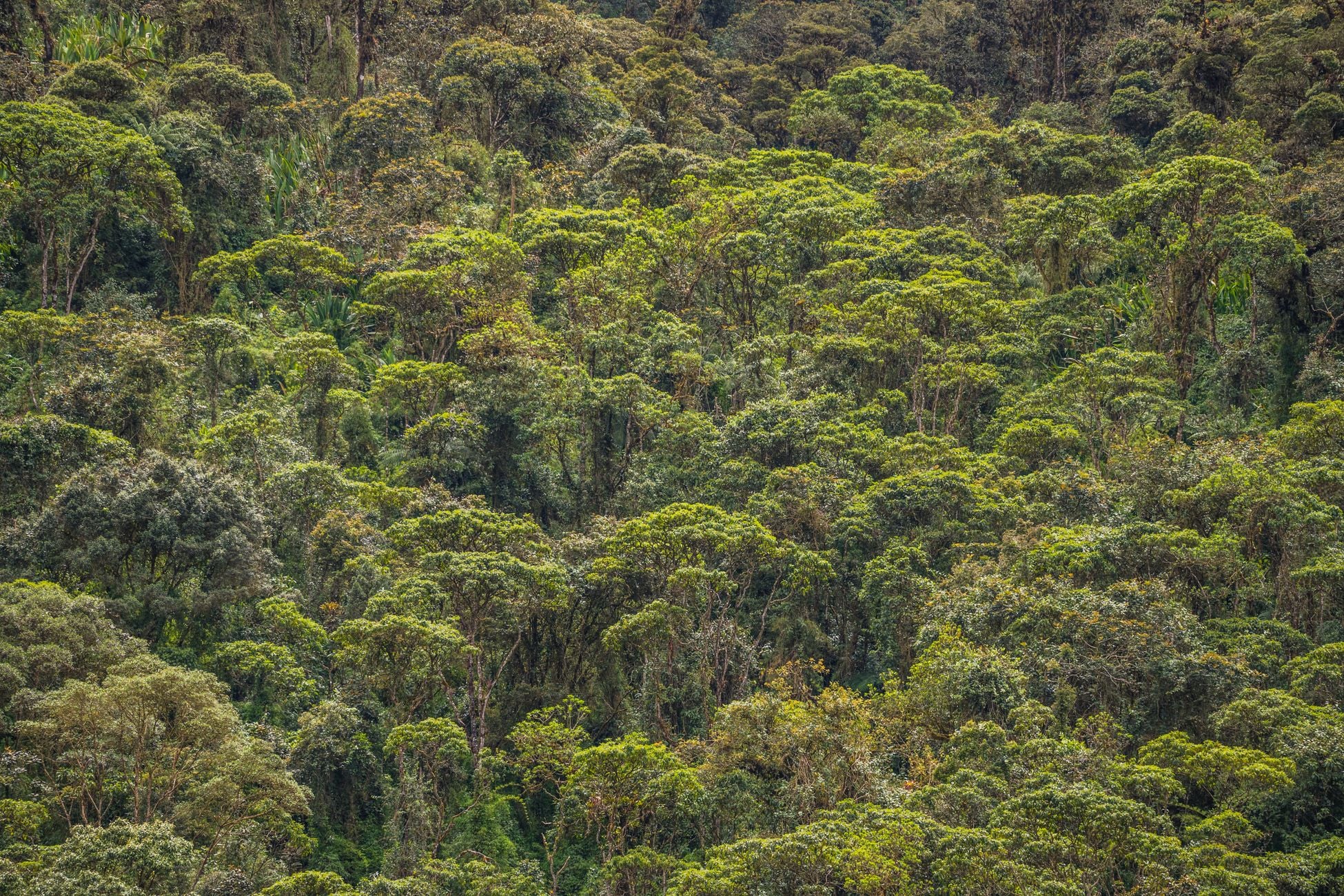
By 2010, Costa Rican forest cover had passed 50%. By 2021 it sat around 54-57% depending on which methodology you used — satellite classification differs on how to count secondary regrowth and agroforestry. Either way, the country had roughly doubled its forested area in three decades while its population grew from 2.7 million to over 5 million and its GDP per capita more than tripled.
Not all of that recovery is attributable to PSA alone. The 1996 law also banned land-use change on forested parcels outright, which meant even non-enrolled landowners couldn’t clear legally. Ecotourism grew into the country’s largest foreign exchange earner, giving forest a private-market value. Cattle ranching became less profitable as global commodity dynamics shifted.
But analyses comparing enrolled and non-enrolled parcels with similar characteristics have consistently found lower deforestation and higher regeneration on PSA land. The payment does something.
The awkward questions
The program has critics, and the critiques are substantive. Early PSA contracts sometimes paid landowners not to cut trees they had no intention of cutting anyway — the parcels were too remote, too steep, or already legally protected. This raises the additionality question: are you actually causing new conservation, or just paying for the status quo?
FONAFIFO has revised its targeting over the years, prioritizing biological corridors, indigenous lands, and areas with genuine deforestation pressure. The additionality has improved, though it remains an ongoing measurement problem.
The second critique is durability. What happens when a contract ends? Does the landowner clear the parcel the day the last cheque arrives? In practice, a five-year contract seems long enough that keeping the forest becomes the default and clearing starts to feel like the active choice; ten-year contracts are stickier still. Follow-up surveys of expired PSA contracts have found most landowners re-enroll or maintain the forest voluntarily, though the pattern is not universal. Some parcels do get cleared.
The export problem
Costa Rica’s model gets held up as a template, and other countries have tried variants — Mexico’s PSA-H program, Ecuador’s Socio Bosque, China’s Sloping Land Conversion Program. Results have been mixed. What Costa Rica had going for it was small size, a functioning cadastre so you could actually identify who owned what, an existing environment ministry with technical capacity, and a political culture that had already abolished its army in 1948 and redirected that budget line toward education and, eventually, environment.
Larger countries with contested land tenure, weaker institutions, or higher opportunity costs from commodity agriculture have found the mechanism harder to replicate. Brazil’s Amazon states have experimented with payments for ecosystem services, but soy and cattle prices there dwarf what any fuel tax could realistically fund.
The quiet cheque
On a ridge above the Reventazón valley, a former cattle farmer named — well, one of thousands — checks his bank account each October. The transfer from FONAFIFO arrives on roughly the same date each year. It is not a fortune. It is enough that the trees on the ridge, which shade a stream that runs down to a coffee cooperative, stay where they are.
Multiply that ridge by 18,000 families and 1.3 million hectares and three decades of gas-pump surcharges, and you get a country that reversed its own deforestation without a single dramatic gesture. No treaty ceremony. No televised pledge. Just a line item, an annual cheque, and a forest growing back one contract at a time.
Related reading on Space Daily: the Costa Rican fuel-tax mechanism in detail, and a symposium on nature-based poverty alleviation.