

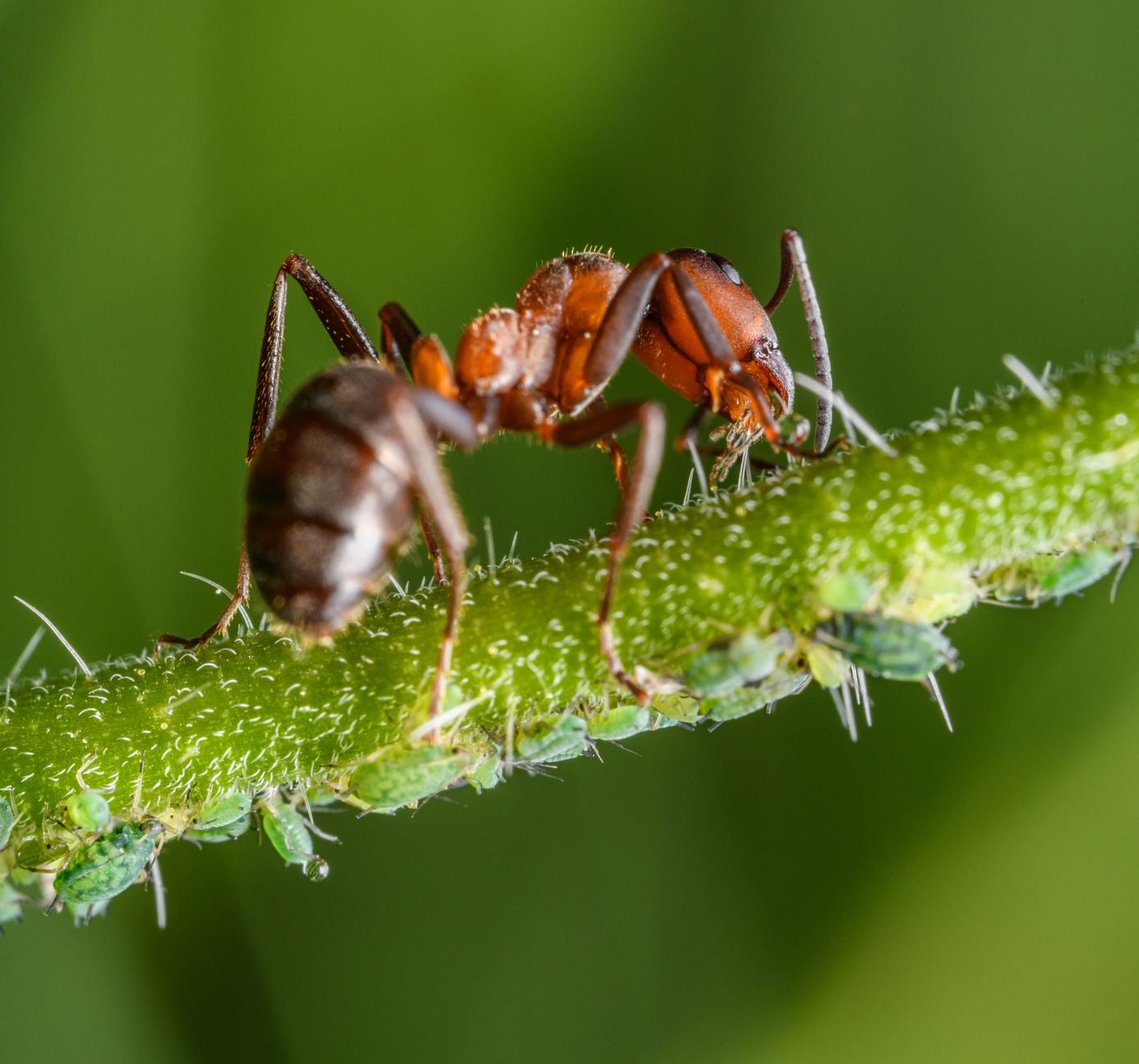
An Argentine ant crossing a kitchen tile does not see where it is going in any way a human would recognise. It drags the tip of its abdomen against the surface at intervals, leaving behind a faint slick of hydrocarbons that the ant behind it will taste with its antennae within seconds. That chemical smear, laid down molecule by molecule, is the entire map. When Bhargav Karamched, an assistant professor of mathematics at Florida State University, built the first mathematical model in 2024 to explain how foraging ants build trails to more than one food source at once, the finding was blunt: the line on your skirting board exists only as long as ants keep walking it. Stop the traffic, and within hours the road evaporates.
The trail is not a decision. It is a residue.
A road that is also its own traffic
Most animals that travel in groups can see each other. Starlings watch nearby birds. Wolves track the pack by sight and sound. Ants, especially the species that infest houses, work differently. A foraging scout wanders out from the nest in a loose, looping search pattern, and if she finds sugar or grease or a dead beetle, she turns around and walks home, laying pheromone the whole way. The next ant to leave the nest bumps into that scent, follows it, finds the food, and lays her own pheromone on top of the scout’s line on the way back.
Every successful trip thickens the trail. Every trip that finds nothing leaves nothing behind. The road is made of the same molecules the ants are chasing, refreshed by the very act of using it.
This is why the line you see on the kitchen counter looks so eerily deliberate. It is not deliberate. It is the accumulated exhaust of hundreds of small successes.
What the chemicals actually are
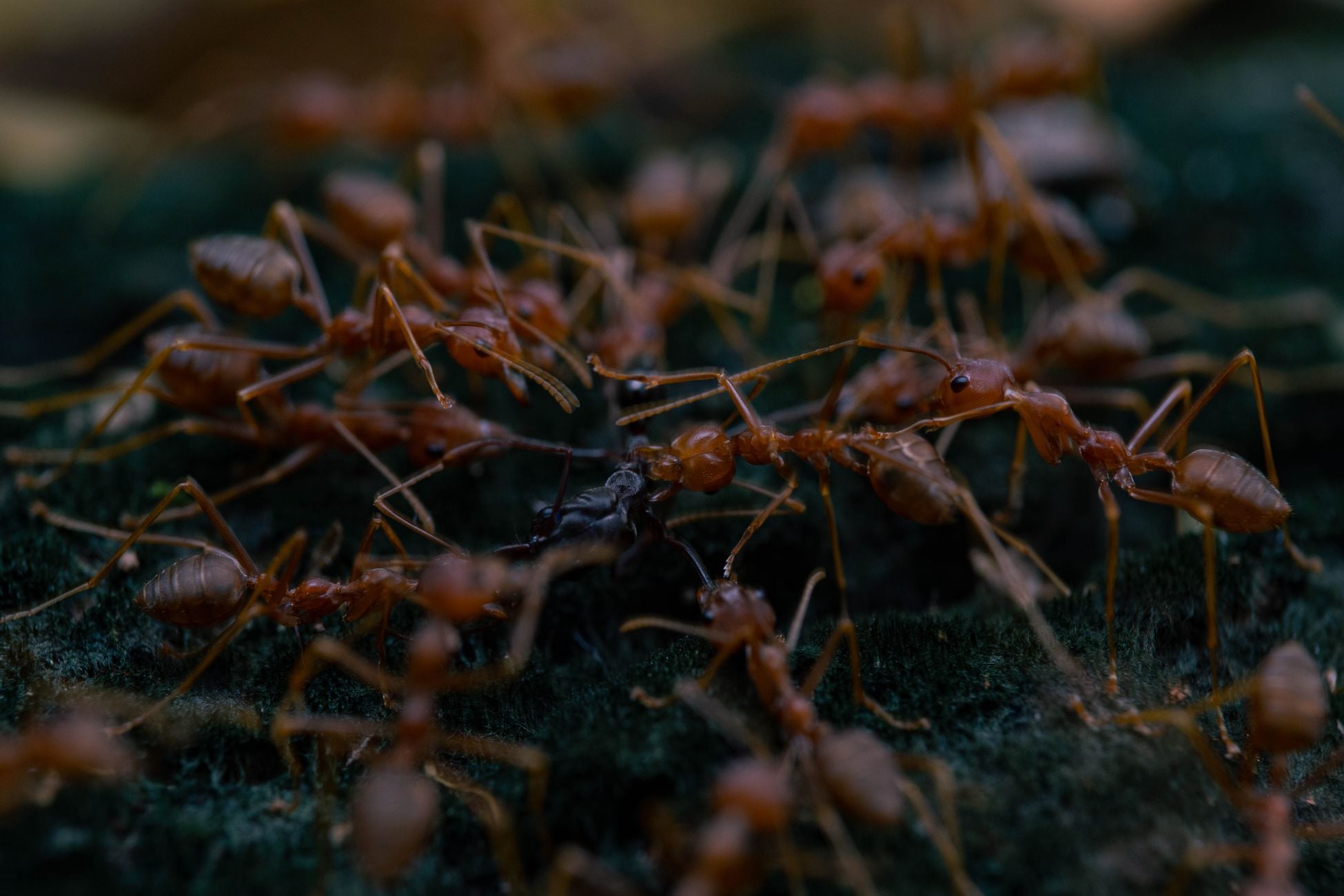
The pheromones ants use for trail-marking are mostly light hydrocarbons and formic acid derivatives, secreted from glands near the tip of the abdomen. Different species use different molecules. The chemical trails vary in potency and persistence depending on the species and environmental conditions.
That evaporation rate is the whole point. A pheromone that lasted forever would leave the colony trapped by its own history, still marching to a jam jar that was thrown out last Tuesday. A pheromone that vanished instantly would give no one time to follow. The chemistry sits in the middle, tuned by evolution to fade at roughly the pace at which food sources themselves get exhausted.
The maths of a fading road
Karamched’s model, published in the Journal of Mathematical Biology in September 2024, treated the trail as a competition. Two food sources exist. Ants deposit pheromone as they return from each. The pheromone evaporates at a fixed rate. Ants leaving the nest choose their direction in proportion to how strong each scent line is at the doorway.
What comes out of the equations is not a stable branching network. It is a winner-takes-most pattern. The richer food source, or simply the one discovered a few minutes earlier, gets more visits, gets more pheromone, gets more visits again. The other trail thins. Once the leading trail’s food runs out and no ants return to top it up, its pheromone half-life takes over and the line dissolves. Within an hour or two the colony has forgotten it existed and the second-best trail, if any ants are still walking it, becomes the main road.
This is the same positive-feedback logic that computer scientists borrowed decades ago to build ant colony optimisation algorithms, now used for routing delivery trucks and scheduling factory jobs. The insect version has been running for tens of millions of years.
No one is in charge
There is a persistent human urge to look at a marching column of ants and assume a general somewhere. There is no general. The queen lays eggs. She does not issue orders. No individual ant knows where the food is, how many other ants are working, or whether the trail she is on will still exist in the morning.
The whole system runs on two rules per ant: ants that smell a pheromone trail will follow it; if you find food, lay trail on the way back. From those two rules, the collective navigation behaviour that lets a colony efficiently exploit a kitchen, a forest floor, or a compost heap emerges without anyone deciding anything.
This is the sense in which the trail is not a thing the ants built. It is a thing the ants are.
The dark side of following your nose
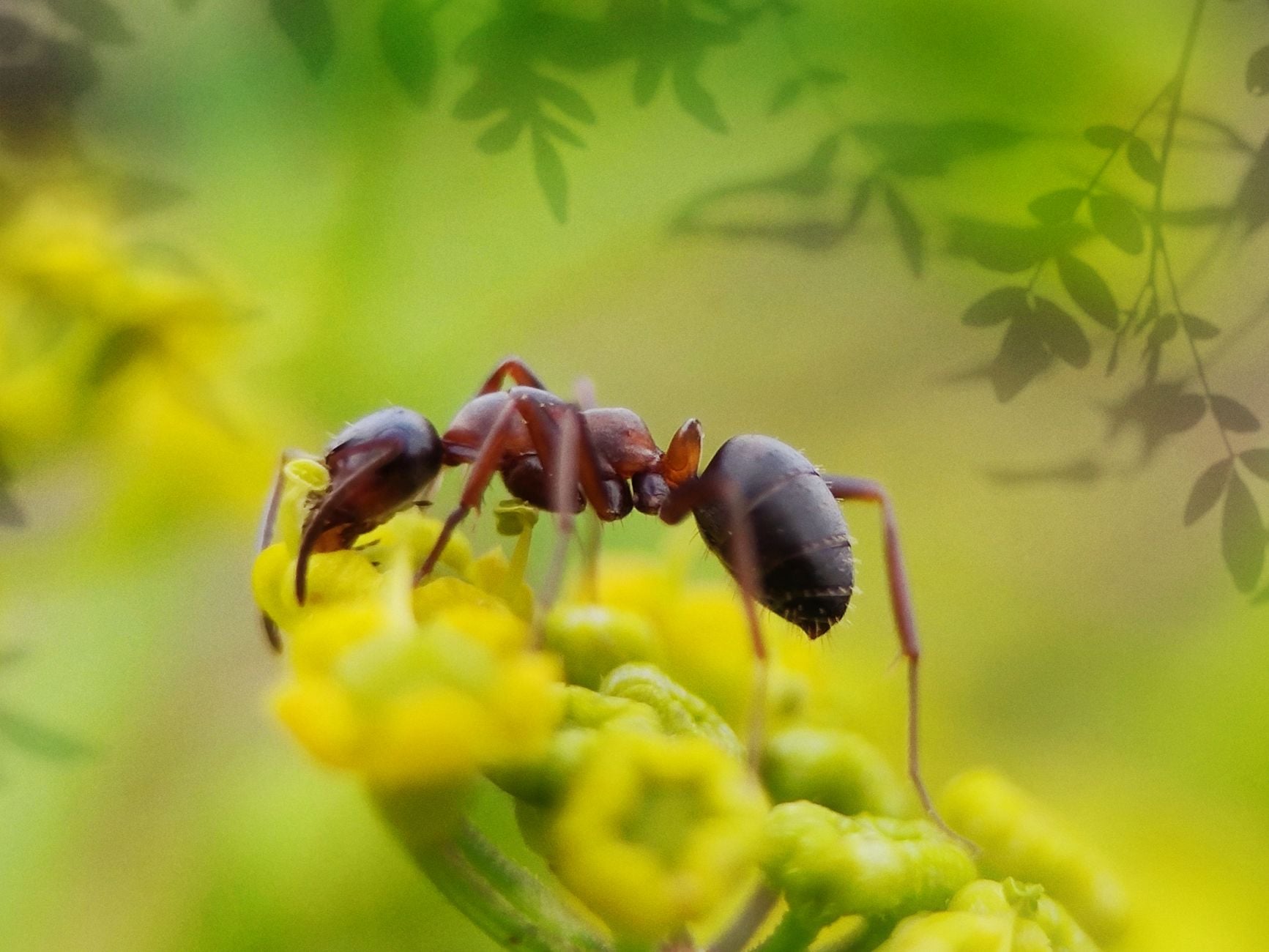
The rule that says ants that smell a pheromone trail will follow it has a horrifying failure mode. A column of army ants can, through some accident of terrain, curve around until the front of the column meets its own back. The ants at the head, smelling strong pheromone, follow it. The ants behind them follow them. The loop closes. The column marches in a circle until most of the ants die of exhaustion.
Entomologists call it an ant mill or a death spiral. It happens because army ants are effectively blind and rely almost entirely on the pheromone trails laid by the ants immediately ahead of them. The same simple rule that lets a colony of a million individuals exploit a rainforest with no leadership will, in the wrong geometry, kill them all. The trail is a road only as long as the road leads somewhere.
What the antennae actually do
An ant’s antennae are covered in thousands of sensilla, tiny hair-like receptors that bind to specific molecules. When a foraging ant sweeps her antennae across a surface she is not sniffing in the way a dog sniffs. She is chemically tasting the ground, left antenna and right antenna reporting slightly different concentrations to a bundle of neurons in her brain that compares the two and turns her toward the stronger side. Walk to the left of the trail, the right antenna reads stronger, turn right. Overshoot, correct. The zig-zag path a marching ant takes along a skirting board, the small side-to-side shimmy that makes columns look almost like they are dancing, is that comparison happening in real time.
Ants possess a dedicated brain region for processing this chemical information, a specialised sensory hub that researchers have not found in other social insects. The hardware to run a pheromone-based society is baked into the anatomy.
Why the trail on your skirting board dies
Cleaning the counter with soapy water and being confused when the ants come back the next day is the standard human experience of this system. Water and detergent break up the hydrocarbon film and the trail is gone. But the nest still exists. The scouts still wander. If the food source is still there, a new scout will find it, lay a new trail on a slightly different line, and the colony will be back on the sugar bowl by evening.
To kill the trail permanently you have to kill the reason for the trail. Seal the food. Empty the bin. Wipe the crumbs. The scouts will keep searching for a few days, laying weak exploratory pheromones that no one reinforces, and then the traffic stops. The chemical residue of the old highway evaporates from the tile within hours. The ants have not decided to leave. They have simply stopped voting for that particular route with their feet.
A message written in the medium of the messenger
Human roads are separate from the vehicles that use them. Roman legions built causeways that outlasted the empire by two millennia. An ant trail cannot outlast its ants by more than an afternoon. The road is the traffic. The traffic is the road. The moment the last returning forager stops adding her drop of hydrocarbon to the line, the line begins to disappear at the rate physics allows.
The column across your kitchen at eleven at night, orderly and silent and slightly hypnotic, is a piece of writing being erased at exactly the speed it is being written. What looks like a decision is a chemical equilibrium. What looks like a plan is the sum of a thousand small returns from a thousand small trips, each ant leaving behind a molecule that says only: something good is this way, for now.