

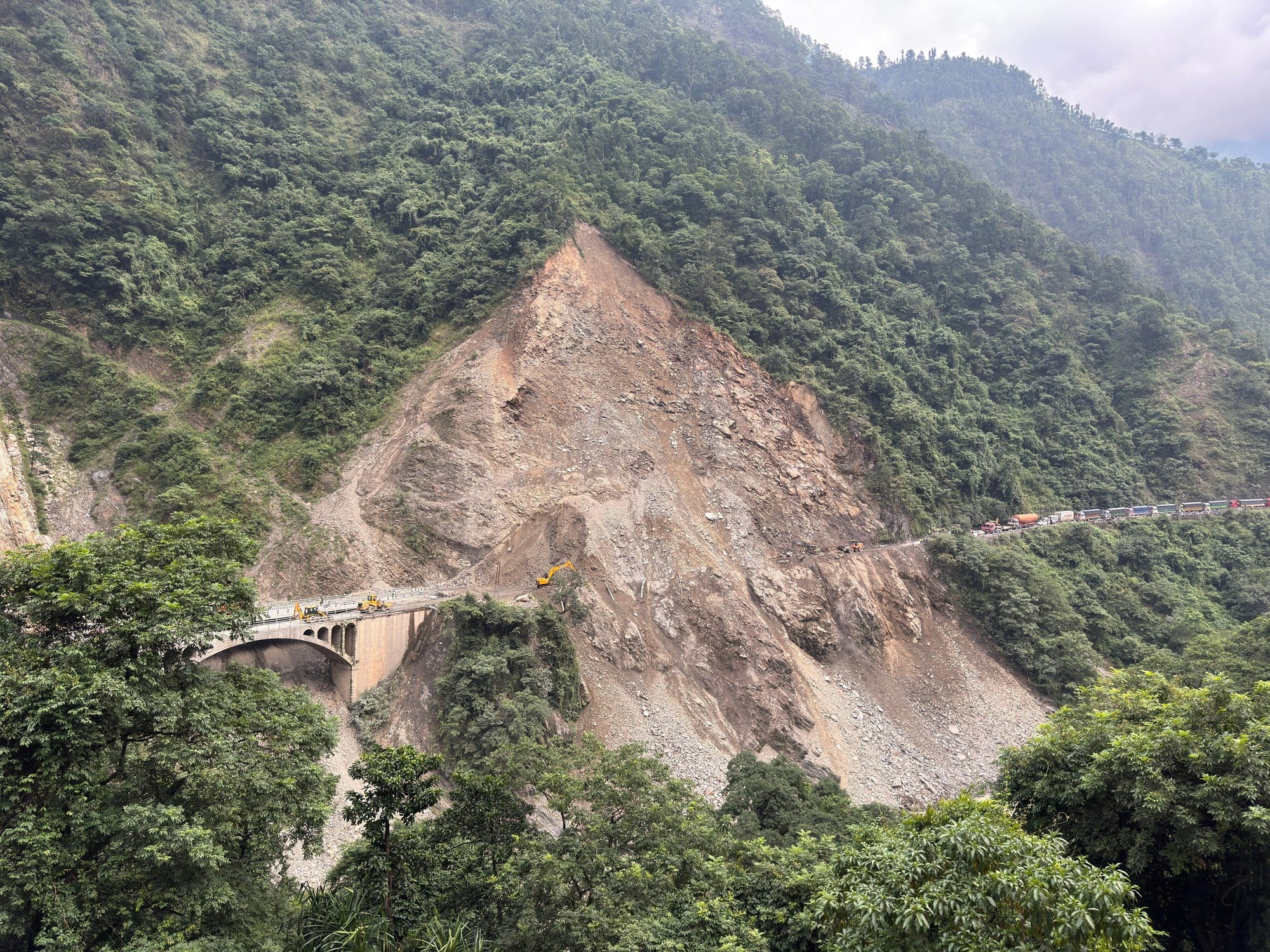
Rescue crews working in flood-hit areas of northern Nepal are still searching for people listed as missing nearly two weeks after catastrophic flooding swept through communities near the Nepal–China border. Al Jazeera English reported that operations had entered their 12th day, with geography, adverse weather and poor connectivity complicating work at flooded hydropower tunnels in Nepal. Across the border region, deep mud and the risk of further landslides have also slowed rescue work.
The accompanying Al Jazeera English report focuses on the difficult and dangerous conditions facing teams searching through the affected districts. Roads, tunnel entrances and recognizable landmarks have disappeared beneath debris, forcing crews to establish safe access before they can move equipment or begin digging.
A likely glacial collapse, then a search that narrowed to tunnels
The disaster struck on 26 August 2026. Authorities cited by Al Jazeera said the flooding was likely caused by a glacial collapse, while Reuters described a huge mass of mud and rock falling into a river after part of a glacier collapsed near the border between Nepal and Tibet. The resulting floods and mudslides swept through valley communities, buried roads and damaged hydropower infrastructure.
At hard-hit hydropower projects in Rasuwa and along the Trishuli corridor, attention soon turned to tunnels and underground facilities where workers might have taken shelter or become trapped. The Kathmandu Post, citing a Nepali Army briefing, reported that approximately 121 people could be trapped inside flood-hit hydropower tunnels. That figure represents part of a larger group of about 900 people who were initially reported unaccounted for at the affected projects. Officials stressed that the 900 figure did not mean all of those people were underground.
The same distinction appears in Reuters reporting carried by SRN News. Reuters also reported that four people had been rescued in recent days: two hydropower workers pulled from a tunnel on Friday, a Chinese national recovered from another tunnel on Saturday and a Nepali woman rescued from her buried house that same day. Officials said the tunnel searches would continue.
Why the ground itself sets the pace
Earlier field reporting from the Kathmandu Post described a tunnel entrance buried beneath thick slurry and surrounding terrain altered so extensively that rescuers could not initially locate the entrance. Project engineers had to use structural plans to identify its position before military engineers could break through the obstruction.
The Nepali Army’s later site-by-site briefing showed how the difficulties varied among projects. At Trishuli 3B, crews were clearing debris to make room for excavation equipment. At Chilime, teams were using a small excavator and a pump to remove sludge, while an excavator delivered by helicopter had to be moved toward the site with ropes. At Upper Trishuli-1, teams were searching with thermal-imaging cameras.
Destroyed roads and bridges have added another constraint. Equipment, fuel and personnel cannot move normally through the affected corridor, leaving helicopters and temporary access routes to carry much of the burden. Al Jazeera reported that adverse weather, difficult geography and limited connectivity continued to hinder operations at the tunnels, while landslide risks remained a concern across the border region.
The result is a cautious operation in which crews must first locate buried entrances, clear mud and debris, bring in suitable equipment and assess whether underground spaces can be entered safely. That combination helps explain why the search has continued for days even as teams remain under pressure to reach anyone who may still be alive.
Tallies that are still moving
As of Al Jazeera’s 6 September report, at least 1,384 people had been killed and more than 5,500 remained missing across Nepal and Tibet. Nepal’s national disaster agency reported that 1,341 bodies had been retrieved and approximately 4,996 people were still missing. Chinese authorities reported 43 deaths and 519 missing in Tibet.
Al Jazeera’s earlier 3 September account put the combined death toll at more than 1,280 and the missing count above 5,600. The difference illustrates how quickly official totals were changing as bodies were recovered and missing-person records were updated.
Those remain working totals rather than final figures. Missing-person lists can change as duplicate reports are removed, people are located safely and employers or authorities reconcile incomplete records. Search operations have continued, and officials have not declared the tunnel searches complete.
The United Nations and humanitarian partners have launched a $49.6 million flash appeal intended to assist more than 84,000 people. That support is arriving in a region where transport routes, power systems and water infrastructure have been badly damaged. For rescue crews, the immediate task remains unchanged: reaching places where the flood erased roads, buried entrances and left the landscape itself standing between them and the missing.