

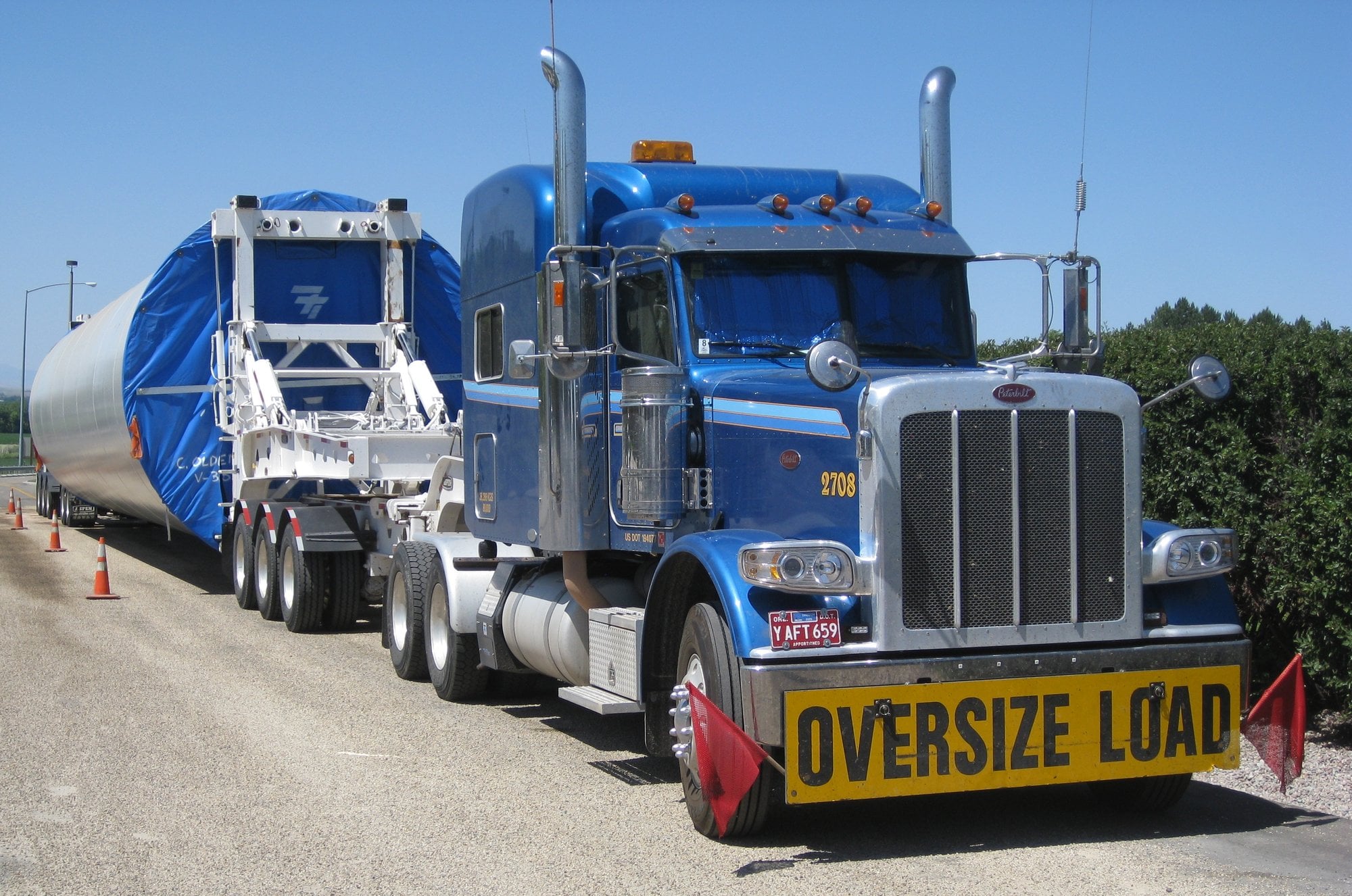
The workaround at Mount Crosby Road was geometry, not speed. Tower sections bound for a wind farm construction site in south-west Queensland were meant to leave the Warrego Highway at an exit ramp, swing clear of a low overpass on the surface roads, and rejoin the highway west of the structure — a detour of a few hundred metres bought to save a few centimetres of headroom. In the early hours of Friday 16 May 2025, at about 1:40am, one truck in that movement did not take the ramp. It stayed on the Warrego near Tivoli, west of Brisbane, and drove an oversize wind turbine tower section into the Mount Crosby Road bridge, an impact that closed the westbound carriageway for about two and a half days.
Queensland Police said the truck failed to follow its pilot and escort vehicles up the off-ramp and continued west on the highway. The driver, a man in his 50s, was taken to Ipswich Hospital for assessment. The carrier, Qube Holdings, said it was cooperating with authorities, and the circumstances remain under investigation.
The ramp was the clearance
Heavy-haulage permits for wind components read less like route plans than like a list of things that must not be touched. Every overhead sign gantry, every powerline, every bridge soffit on the corridor is measured, and where the number does not work, the load leaves the road. That is what the exit ramp at Mount Crosby was doing in this movement: it was not a shortcut or a rest stop, it was the clearance. Tower sections went up the ramp, around the low overpass and back down, because the alternative — passing beneath — did not fit.
That is an ordinary piece of freight labour on the Warrego, which carries Queensland's inland heavy movements west from Ipswich towards Toowoomba and the Darling Downs. Wind farm construction in the state's south-west has pushed a steady procession of tower cans, blades and nacelle components along it, each with its own escort convoy, its own night window, its own list of structures to dodge. The components are big enough that the highway itself becomes the tight part of the system, and the escorts exist to make sure the truck behind them takes the same line they do.
On this night, one truck did not. What arrived at the overpass instead of empty air was a steel cylinder on a trailer, moving west at highway speed under lights, into a bridge deck that had been treated by the rest of the convoy as an obstacle to be avoided rather than passed.
Two and a half days on the Warrego
The physics after impact were awkward in a specific way: the tower section wedged into the structure and effectively became part of it. Transport and Main Roads engineers described the load as acting like a prop under the damaged span, which meant it could not simply be dragged clear. Concrete girders and pavement were damaged, structural inspections had to run before and during the extraction, and the removal was staged slowly so that pulling the turbine out did not take more of the bridge with it.
Underneath, the Warrego stayed shut westbound while that work went on. Traffic bound for Ipswich and the Lockyer Valley was pushed onto detours through local roads that were never built for it, in a corridor where TMR figures reported by the ABC put roughly 30,000 vehicles a day on the westbound side. Freight, commuters and weekend traffic all inherited the same problem from a load that had cleared every other structure on the route.
The ABC reported that the westbound lanes reopened just after 6pm on Sunday — about two and a half days after the strike, and a closure clock that had less to do with clearing wreckage than with proving the span above the road was safe to sit over. Eastbound lanes and the highway's role as a through route recovered first. The bridge did not.
What the overpass can carry now
Mount Crosby Road came back in pieces. One lane of the overpass reopened on the Tuesday after the crash, with the structure unable to carry heavy vehicles until permanent repairs were done — a limit that matters more than it sounds in a district where the Bremer River Bridge has carried its own load restrictions, and where trucks turned off one crossing tend to arrive at another. Girder replacement and permanent structural work ran well past the initial patch-up, stretching into 2026 as an ongoing repair program rather than a single reopening date.
The bill has been discussed in the same hedged register. Ipswich Mayor Teresa Harding said her understanding was that damage would run into the tens of millions of dollars, a figure that reflects the difference between fixing a bridge and rebuilding load-bearing elements of one while keeping a lane of local traffic moving above a national highway. No findings have been published, and the police investigation into the circumstances is not closed.
What remains is the contrast written into the road itself. On the same night, on the same corridor, carrying pieces of the same wind farm, most of the tower sections in the movement took the exit ramp — off the Warrego, around the low overpass, back on. They cleared it by leaving it. One did not leave. The overpass it met needed girders replaced in 2026 before heavy vehicles could use it again — months after the convoy it belonged to finished the drive west.