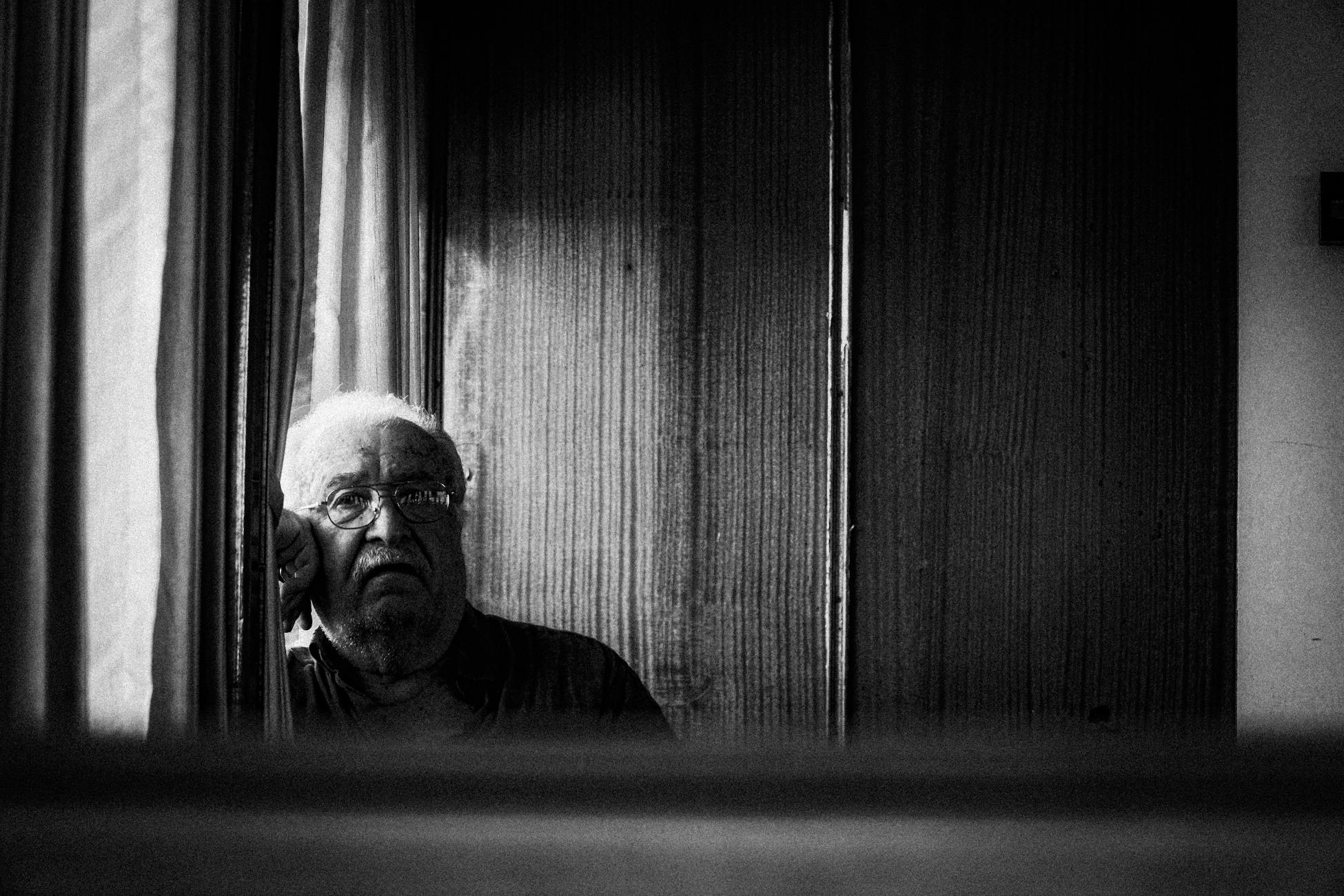
The mortality pattern that haunts geriatricians is not dramatic. It is quiet. A man in later life loses his wife, and in the months and years that follow, his own health can begin to unravel in ways that look sudden from the outside but were often being held together by one relationship all along.
The medical literature calls this the widowhood effect. It describes the increased risk of death after the loss of a spouse. The polite explanation is grief, usually imagined as something romantic and cinematic, the kind of heartbreak that makes a body follow the person it loved.
I’ve come to think that explanation is partly true, but often incomplete. It is the version we tell because it sounds dignified.
Most people assume these men decline because they loved their wives so much. For some couples, that may be exactly right. But it misses something more structural, and more brutal, about how many men of that generation were taught to organise their inner lives.
For many of them, she wasn’t just the love. She was the entire emotional infrastructure.
The one person who used the full name
Think about how a man born in 1948 was addressed across his life. At work he was Brown, or Mr. Brown, or Boss, or mate. At the pub he was a nickname, usually a shortened surname or something cruel from school that stuck. With his own children he was Dad. With his mates he was rarely called anything tender at all. Tenderness between men of that cohort was often forbidden, or expressed only through sarcasm, practical help, and shoulder slaps.
His wife, in many cases, was the only person in the entire world who said his actual first name in a soft voice. Not barked across a worksite. Not formalised on a letter. Just spoken, gently, in a kitchen, at the end of a day. Robert. Come and sit down.
When she dies, that voice does not get replaced. Nobody else in his life has the standing to use his name that way. His sons usually do not. His mates would sooner cut their own hand off. The neighbour calls him Mr. Brown. The GP calls him Robert in a clinical tone that is not the same word at all.
He becomes, functionally, a man no one speaks tenderly to. And he had built a whole life assuming that one person would always be there to do it.
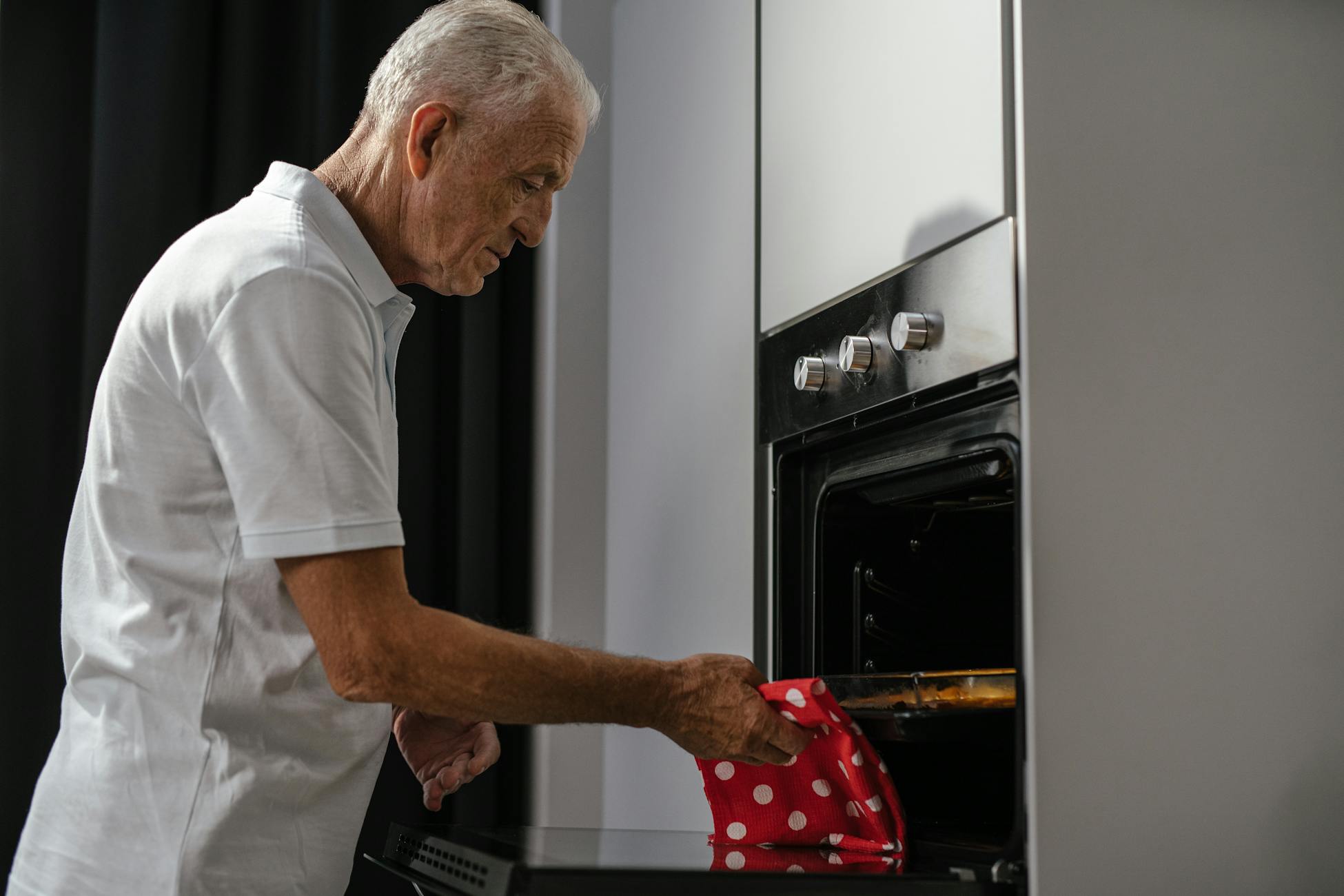
What the data says, and what it leaves out
The mortality pattern is real, even if the exact risk varies by age, country, health status, and how researchers measure it. A large Danish cohort study published in PLOS One in 2023 followed more than 900,000 people aged 65 and older and found that mortality hazards were highest in the first year after spousal bereavement, with younger older men especially vulnerable. For men aged 65 to 69, mortality in the year after spousal loss was 70 percent higher than for comparable men who had not lost a spouse. For women in the same age group, it was 27 percent higher in the first year, then normalised.
A newer study led by Boston University School of Public Health and Chiba University, published in the Journal of Affective Disorders, found a similar gendered pattern in Japan. Widowed men showed higher risks across dementia, mortality, daily functioning, depression, happiness, and social support. Widowed women, by contrast, showed a shorter-term decrease in happiness and were more resilient across several measured outcomes.
The standard explanations are partly correct. Older men may have weaker friendship networks. They may rely on their wives for health management: appointments, prescriptions, what counts as a real symptom. They may eat worse alone. They may drink more. The National Academies have documented in detail how social isolation and loneliness in older adults function as serious health risks, linked with poorer health outcomes and higher mortality risk.
All true. All measurable. None of it quite captures what I think is actually happening.
The structural problem is not only logistics. It is that the wife, for many men of that generation, was the sole channel through which emotional life flowed. She translated the world for him. She told him when his brother was upset. She remembered which grandchild liked which biscuit. She noticed when he was off and asked the question he would not ask himself. When she is gone, he does not just lose her. He loses access to his own interior, because she was the one reading it back to him.
A generation taught not to need
My grandfather’s generation, and to a slightly lesser extent my father’s, were raised on a particular kind of masculine training. You did not complain. You did not name what you felt. You did not hug other men except at funerals and football. You provided, you fixed things, you came home, and you trusted that the woman in the kitchen would handle the parts of being human that you were not allowed to touch.
This was not always cruel. Many of these marriages were genuinely warm. But the warmth was bottlenecked through one person. There was no backup. No second confidant. No men’s group. No journal. No friend you could ring at 11pm and say I feel strange today. The wife was the entire emotional supply chain, and like all single-supplier systems, it was efficient until it failed.
Why the second year can be dangerous
The first year after a death, in my observation of older widowers in my own extended family and the families of friends, is often deceptively functional. Casseroles arrive. Adult children visit constantly. There is a funeral to organise, then a will, then thank-you cards, then the first Christmas, then the anniversary. The calendar carries him.
The second year is when the calendar can run out and the silence sets in. The children have gone back to their lives. The casseroles have stopped. The phone does not ring as much. He sits in the chair he always sat in, and across from him is the chair she always sat in, and there is now no one left in the world who will say his first name softly before bed.
That is when the decline can become visible. Not in a poetic sense. In a practical one. Sleep deteriorates. Appetite drops. He forgets medications because she was the one who reminded him. He stops going to the GP because going to the GP was something they did together. He drinks one extra whisky and then two. To the outside world it looks like grief, but sometimes it is really an organism that has lost its translator.
What many women of the same generation do differently
Widows can suffer terribly too. The evidence does not say women are untouched by bereavement, or that they loved their husbands less. But in many studies, older women appear to have different forms of resilience after spousal loss, and I suspect part of the reason is that women of that generation often built a parallel emotional economy.
A sister they rang every Sunday. A friend from church. A neighbour who knew about the miscarriage in 1971. A daughter who became, over time, a confidant.
When the husband dies, that network may absorb some of the shock. She is grieving, but she is not necessarily alone in her own head. Someone still says her name in a tender voice. Several people do. Anyone who has watched both genders age through bereavement has probably noticed this difference. The women often have somewhere for the feelings to go. The men, often, do not.
What this means for men who are still young enough to fix it
I’m 44. I am, statistically, in the demographic that gets to choose whether or not we recreate this pattern. The men ahead of us did not have many options. They were handed a script and most of them followed it because deviating from it cost more than they could afford socially. We are not really in that bind anymore. We just behave like we are.
Most men I know in their forties still run a single-supplier emotional economy. The partner is the only one who hears the real thoughts. The mates are for laughing at things. The family is for performing competence. If you asked us who, besides our partner, would notice if we went quiet for two weeks, most of us could not honestly name a person.
The fix is not mystical. It is having more than one person who knows you. More than one voice that uses your name softly. More than one channel for the inner life to move through.
This is unglamorous work. It involves ringing a friend for no reason. It involves telling another man something true about how you actually feel and tolerating the awkwardness of his response. It involves building, deliberately and over decades, the kind of redundant emotional infrastructure that women of our grandmothers’ generation built almost without thinking, because they had to.
The thing nobody says at the funeral
When a widower in his seventies dies not long after his wife, the family says he died of a broken heart. It is a generous reading. It honours the marriage. It lets everyone leave the wake feeling that love is powerful enough to be fatal, which is, on some level, comforting.
What I think is often happening is sadder and more avoidable. He had outsourced too much of his interior life to one person, because the culture he grew up in told him that was the manly arrangement. When she went, there was no one left who knew how to find him.
The men currently in their forties get to decide whether the same will be said about us. The arithmetic is not complicated. Build more than one bridge. Let more than one person use your real name in a soft voice. Otherwise the statistic keeps rolling forward, generation by generation, dressed up as romance.