
Eight structures went down on bare sand in 2018. Four years later, the two that nobody planted anything on were carrying 95 coral colonies from seven hard-coral genera across their designated survey plots, all of it arrived by sea rather than by hand.
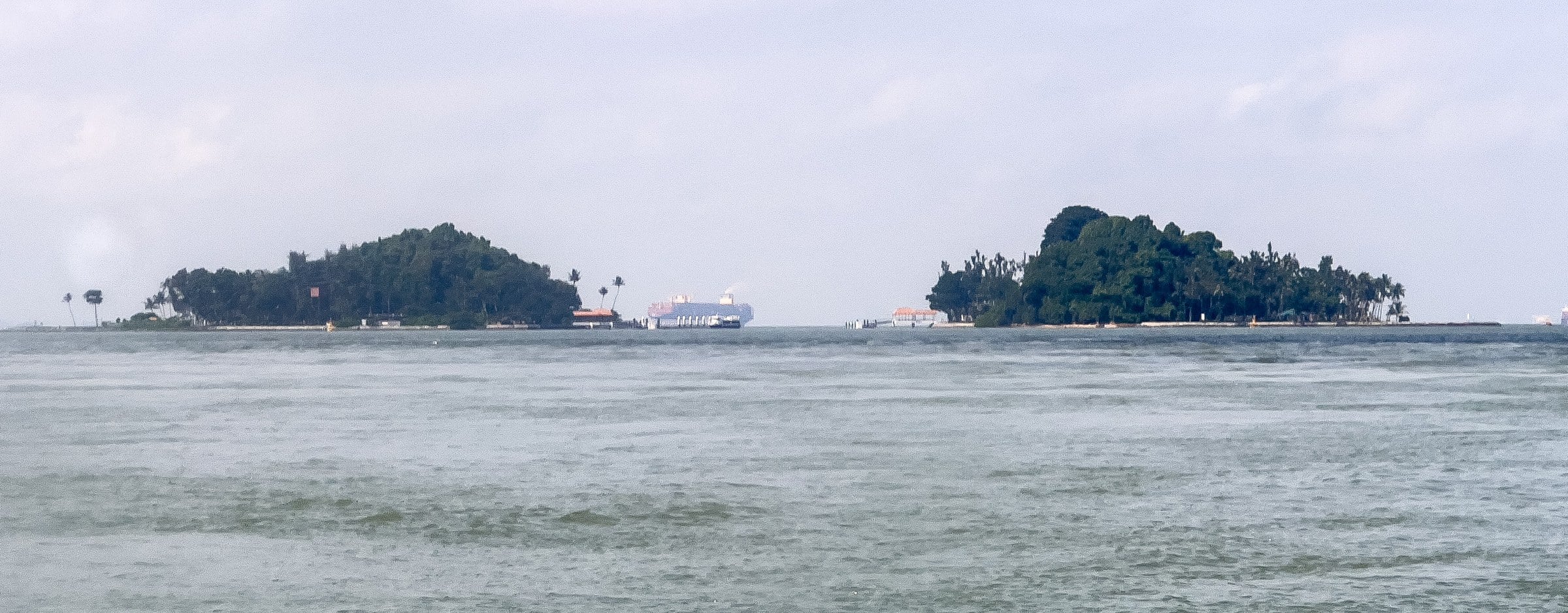
That pairing is the whole experiment. In 2018, JTC and the National Parks Board (NParks) sank eight purpose-built artificial reef structures off Small Sister’s Island, inside the roughly 40-hectare Sisters’ Islands Marine Park, in what JTC describes as Singapore’s largest artificial reef project. Six of the eight were later planted with transplanted corals. Two were deliberately left untouched, a control set against which natural settlement could be measured from a known start date. The Straits Times reported in October 2022, in reporting by Audrey Tan, what surveys in February 2022 found: on the survey plots of the planted structures, 1,961 live coral colonies from 43 genera; on the survey plots of the two unplanted structures, 95 colonies from seven genera that had settled on their own.
Bare sand, chosen on purpose
The site selection is the least visible engineering decision and arguably the most consequential. The structures were placed on seabed that was bare sand, free of existing corals and free of anchorages, immediately adjacent to a living reef slope. That adjacency matters twice over. It puts new hard substrate within larval reach of an established source population, and it means the installation itself destroyed nothing: no existing colonies were crushed, no functioning reef was paved over to make room for an artificial one. Building on sand next to a reef is not a compromise. It is the point.
What went down was not a heap of rubble. JTC’s structures are composite builds combining concrete and fibreglass, with fibreglass panels and fibreglass pipes forming the working surfaces and framework, held down by steel anchor pins and counterweights against current and monsoon. Surfaces were texturized with recycled rocks, giving larvae the microscopic roughness they need to grip; smooth concrete is a poor host, and settling coral planulae are fussy about what they cement themselves to. JTC’s design brief put the structures in a 7 to 11 meter range in height, and The Straits Times described them as up to about 10 meters tall, but height is a design figure, not a result. The relevant number is the one the reef writes afterward.
Installation ran in prefabricated sections. Components were fabricated onshore, barged out, and lowered in sequence, with the base submerged and set first and the upper section mated onto it underwater, a method JTC set out in its press release on the installation. Doing the assembly in two stages keeps lift weights manageable and keeps divers working in predictable sequence in water where visibility is often measured in single-digit meters.
1,933 colonies, and two structures left alone
Between September 2020 and February 2021, a transplanting window of roughly five months, 1,933 healthy coral colonies from 43 hard-coral genera were attached to six of the eight structures. The attachment method was marine cement, applied by divers colony by colony, which is slow, physical, repetitive work at depth. Forty-three genera is a wide taxonomic spread for a transplant program, and it reflects a deliberate choice to seed diversity rather than a single fast-growing workhorse species.
The two structures left untouched are the reason the project reads as science rather than landscaping. JTC frames them as a “Day Zero” natural settlement study: identical substrate, identical placement, identical exposure, with the only variable being human planting. Every colony that appears on those two is a recruit, not a resident, and its arrival date is bounded by a deployment date everyone knows. Very few reef restoration efforts anywhere have that clean a baseline, because most artificial structures are either planted everywhere or monitored without a matched control.
The early tenants were not corals. The Straits Times reported that the first organisms to colonize the new surfaces were encrusting barnacles and bivalves, the standard opening sequence on any hard surface dropped into tropical water. Natural coral settlement was observed only about two years after deployment. That lag is worth holding onto as the realistic clock for engineered substrate in these waters.
What the February 2022 plots counted
The February 2022 surveys, conducted by NParks and reported through Dr. Karenne Tun, produced two figures that need to be read with their boundaries intact. On the designated survey plots of the planted structures: 1,961 live coral colonies from 43 genera, a count that includes natural settlers alongside surviving transplants. On the designated survey plots of the two unplanted structures: 95 coral colonies from seven hard-coral genera.
These are survey-plot counts, not whole-structure totals. A plot is a defined, repeatable area chosen so that the same square can be recounted next year and the year after; it is a sampling frame, not an inventory. Treating 95 as the full coral load of two multi-meter structures overstates what was measured, and treating 1,961 as a clean survival tally for the 1,933 transplants misreads it in the other direction, since the two populations are mixed within the plots.
Nor does the project have a settled figure for how much additional reef area the eight structures contribute. JTC’s feature and The Straits Times report different expectations, and the honest position is that the added area has not been pinned down in a single agreed number. Recruitment is also still early. Seven genera on the unplanted plots against 43 on the planted ones is the expected shape of a young natural community, and it says nothing yet about where that curve tops out.
What the numbers do establish is direction. Sand that held no coral in 2018 now holds engineered substrate that is accumulating colonies without anyone attaching them. The steel pins and counterweights are doing their mechanical job. The biological clock, started at a known hour, is still running.