
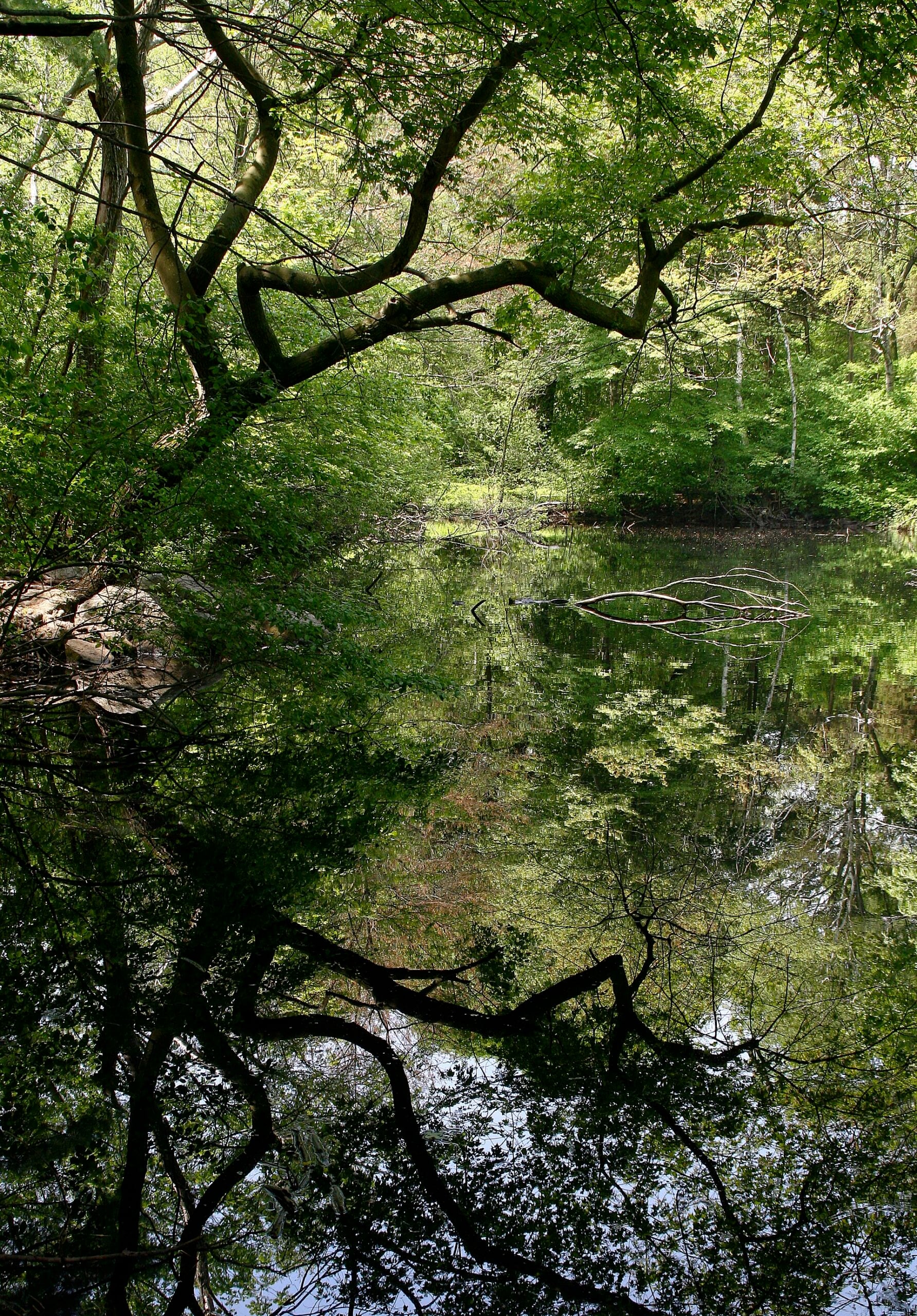
In the fall of 2017, a 14-year-old in Virginia’s Shenandoah Valley picked up a shovel for a high school agriculture class and started digging a hole in her family’s backyard; nine years later, as her father describes in National Wildlife magazine, that same hole holds water, frogs, and a functioning ecosystem she is still tending at 23.
The assignment was ordinary. The result was not, mostly because nobody filled it in afterward. Maggie’s pond — the family calls it that — began as a class project with a deadline and became a fixed feature of the property, a roughly 12-foot circle of water dug by hand and now ringed by plants chosen on purpose. Photographer Steven David Johnson, Maggie’s father, documented the transformation for the National Wildlife Federation’s spring 2026 issue, and the story has since traveled through popular summaries that tend to skip the part where a teenager did the research first.
From patchy lawn to filled water
The baseline matters here, because it was unremarkable. In the summer of 2017, the rural backyard was mostly patchy lawn. Crickets. That was the wildlife inventory a family notices when they are not looking for much.
Maggie researched the design before breaking ground — pond shape, depth, liner, edges — and then dug it, the slow way, with the tools available. Her parents, Steven and Anna Maria, worked the perimeter: soil, rocks, and plants shaped into the shallow shelving and cover that make a hole in the ground legible to an amphibian rather than just wet. By spring 2018 it was filled.
The response was fast enough to surprise the people who built it. American toads showed up within weeks of the pond holding water, according to the family’s account in National Wildlife. Not introduced, not stocked. They arrived because a suitable place to breed had appeared where none existed, and toads are efficient about finding it.
The material scale of the thing is worth stating plainly, because it is the number most likely to be misremembered as larger. The family estimates roughly $160 on the liner, plants, and tools at the outset, and about $100 a year on plants since — a sustained gardening habit rather than a construction budget. In the summer of 2025, they spent around $600 on fencing to keep cats away from the pond edge, which is the kind of expense that only appears once a small body of water has become worth defending.
Buttonbush, joe-pye weed, and a chorus after dark
What went in around the water did as much work as the water itself. Native plantings took over the margins: buttonbush, joe-pye weed, pickerelweed. Later, white water lilies went into the pond proper, where their pads and stems give amphibians and macroinvertebrates something to hide under, cling to, and lay eggs against. Open water is exposure. Structure is habitat.
The garden has since been designated a Certified Wildlife Habitat by the National Wildlife Federation, the program’s shorthand for a yard that supplies food, water, cover, and places to raise young. It is a certification, not a census, and it does not claim the property is a nature reserve. It records that the ingredients are present.
The audible result is the part the family can measure without instruments. Evening calls at the pond now include gray treefrogs and green frogs — species that were not part of the summer 2017 soundscape, when the yard’s contribution to the night was crickets. A gray treefrog’s trill and a green frog’s loose banjo note are distinct enough that a household learns to sort them by ear within a season or two. Nine years in, the sound is routine, which is its own kind of data point: the pond is not a one-summer novelty that peaked and faded.
Maggie, now 23, still observes the pond and still draws what she finds there. The project outlasted the class, the grade, and the high school.
What one backyard hole does and does not solve
It would be easy to overstate this. A single 12-foot pond in one rural Virginia yard does not reverse amphibian declines, does not offset habitat loss at any meaningful scale, and does not make a lawn into a wetland. The honest framing is the narrow one: a specific patch of ground that supported crickets in 2017 now supports breeding amphibians, aquatic plants, and the invertebrate life that moves between them, and it has done so continuously for years.
What the pond does solve is local and immediate. Amphibians need standing water to reproduce, and small ephemeral waters have been drained, filled, and mown out of the American residential landscape with remarkable thoroughness. Restoring one is not symbolic. Toads that bred in that water in 2018 could not have bred there in 2017, because it did not exist.
It also required maintenance. The annual plant spending, the fence, the ongoing landscaping — none of that is the story of a self-running system installed and abandoned. It is the story of a habitat that keeps working because someone keeps showing up for it, which is the less quotable half of every restoration project at every scale.
The thing that makes this particular hole worth reporting is duration. School projects are built to be graded and forgotten. This one was dug by a 14-year-old in the fall of 2017, filled by the following spring, and is still holding water in 2026 — the same circle of ground, the same water, the same person watching it, now with frogs calling in it after dark.