
In 1995, the entire known kākāpō population fit into a single ledger line: 51 birds, 31 males and 20 females, spread across offshore islands where conservation staff had carried them by hand. On 1 September 2026, the Department of Conservation added 90 chicks from the 2026 breeding season to the official tally, and the number that came out the other side was 325, described in DOC's media release as a high for the recovery era. The bird remains critically endangered. Both of those sentences are true at once, and that is the whole shape of the story.
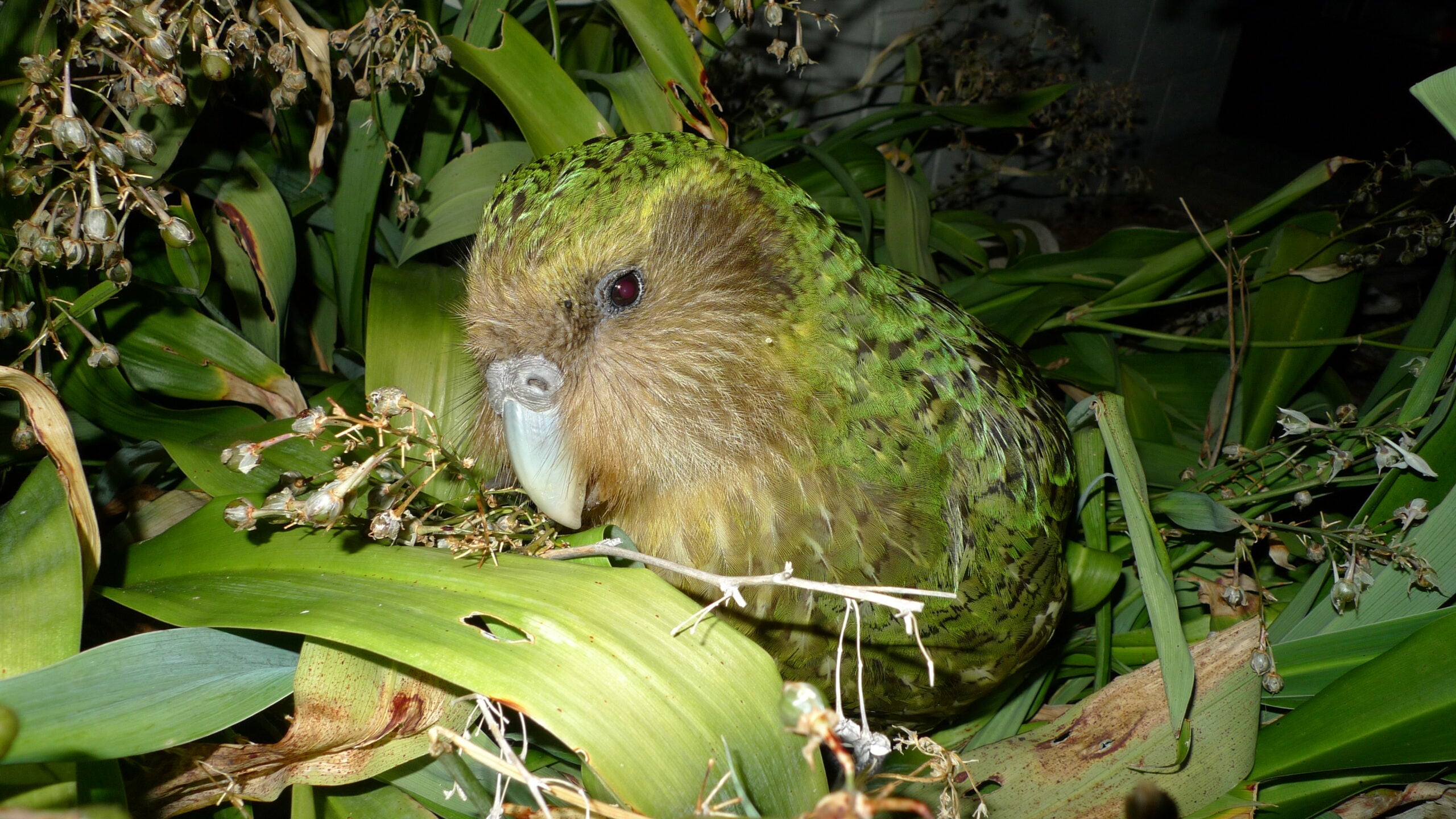
The kākāpō is a flightless, nocturnal parrot that can outweigh a house cat, breeds irregularly, and evolved on a set of islands with no ground-hunting mammals. Every part of that description is an asset in one world and a liability in another. The recovery programme exists because the second world arrived.
Twenty females were the entire future
The founding figure that matters most in 1995 is not 51. It is 20. A population of 51 birds with only 20 females is a population whose reproductive ceiling is set by a number small enough to list on a single page, and every one of those females carried a share of the species’ remaining genetic variation that could not be replaced if she was lost to a stoat, a cat, or bad luck in a breeding year.
DOC’s history of the recovery programme records that the population had slumped to that point despite earlier work moving birds to offshore sanctuaries, evacuations undertaken precisely because predators on the mainland made survival there untenable. The formal Kākāpō Recovery Programme began in 1995 out of that arithmetic. It is worth being blunt about what an island strategy actually is: it is not restoration of a former range. It is triage with a boat. You choose islands where introduced mammalian predators are absent or can be removed, you move the birds there, and you accept that the species will live under permanent management for the foreseeable future, with staff tracking individuals, monitoring nests, and intervening when chicks or eggs need it.
That approach also changed what a breeding season means. Kākāpō do not breed every year; nesting is tied to heavy fruiting of particular native trees, so seasons arrive in pulses rather than annually. DOC counts 13 breeding seasons since the programme began in 1995. Thirteen chances in thirty-one years, which is why a single productive season registers as a step change in the count rather than a rounding adjustment.
Ninety chicks, three islands, one official number
The 2026 season delivered 90 chicks, and DOC’s decision to formally add them to the population count on 1 September is what lifted the official figure to 325. The birds live across three breeding populations: Whenua Hou, also called Codfish Island, off Rakiura in the south, and two Fiordland sites, Pukenui/Anchor Island and Te Kāhaku/Chalky Island.
Three islands is a deliberate spread rather than a convenience. A single site holding every kākāpō alive is a single site where one predator incursion, one disease outbreak, or one severe weather event becomes an extinction event. Splitting the population across separated land masses converts a catastrophic risk into a survivable one. It also multiplies the logistics: three sets of nest monitoring, three sets of supplementary feeding decisions, three sets of transfers when a bird needs to move for genetic or health reasons.
The programme runs in partnership with Ngāi Tahu, the iwi whose takiwā covers the southern islands where the birds are held, a relationship DOC references directly in its announcement of the milestone. DOC has noted the population is thought to have last exceeded 300 around 75 years ago, though that is an estimate reaching back well before systematic counting rather than a census figure, and it sits alongside the 2026 number as context rather than as evidence.
What 325 settles, and what it does not
A recovery-era high settles one thing cleanly: the management model works well enough to grow the population from 51 to 325 across 13 breeding seasons. That is a measurable outcome from a specific set of practices, predator-free islands, individual tracking, nest intervention, and genetic management of who breeds with whom, applied consistently for three decades.
What 325 does not settle is nearly everything else. DOC continues to classify the kākāpō as critically endangered, and the classification is not a formality lagging behind good news. A population of 325 birds is still small enough that the loss of a single island population would be a species-level emergency. The birds remain confined to managed sanctuaries. They are not self-sustaining across their former range, which once covered the North Island, South Island, and Rakiura. Growth at this scale also creates its own problem, one the programme has been open about for years: islands have finite carrying capacity, and more birds means more pressure to find and prepare additional predator-free habitat.
There is also the matter of what a chick tally represents on the day it is announced. Ninety chicks added in September 2026 are 90 young birds entering a population, not 90 future breeders. Attrition happens. The official count is a snapshot with a date stamp on it, and the honest reading is that 325 describes 1 September 2026 and nothing after.
Still, the count is the count, and it is the highest the programme has recorded. In 1995, the species’ entire reproductive future rested on 20 females. On 1 September 2026, a flightless nocturnal parrot that cannot survive alongside stoats and cats without human intervention numbers 325 birds across three southern islands, held there by continuous, deliberate, unfinished work.