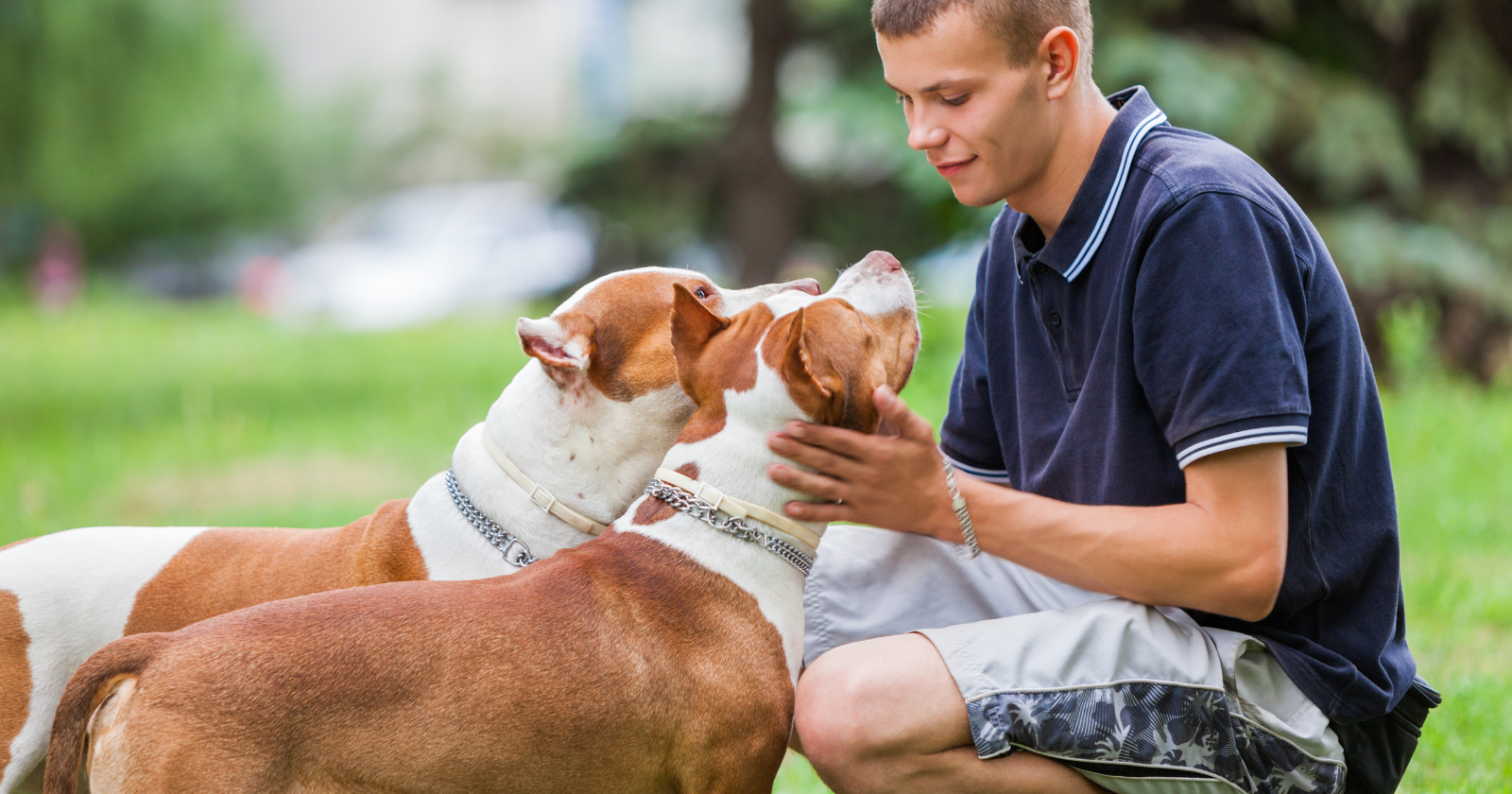
Somewhere in a quiet room at a Japanese veterinary school, a woman sat on the floor with her dog for half an hour and did almost nothing. Then she went and urinated into a cup.
That is the entire experimental design, more or less, and it produced one of the most quoted findings in the science of why people are soppy about their pets. The claim fits on a fridge magnet. Look your dog in the eye and both of you get a hit of oxytocin, the same hormone that floods a mother and her nursing infant. Two species, one chemical circuit, running in parallel.
What happened in the room
Miho Nagasawa and colleagues at Azabu University ran thirty dog-owner pairs through that half-hour session and published the result in Science in 2015. Urine went into the freezer before and after. Pairs who spent the longest in mutual eye contact showed the biggest oxytocin jumps in both the human and the dog. How long the dog stared at its owner predicted the size of the owner’s hormone rise. The owner’s rise, in turn, tracked the dog’s.
The team then did the properly clever bit. They squirted oxytocin up the noses of a fresh group of dogs and put them back with their owners. The effect showed up specifically in the females, who gazed at their owners for longer than untreated dogs did. Their owners, who had been given nothing at all, showed oxytocin increases anyway.
Gaze drives hormone, hormone drives gaze, and around it goes.
That is what the researchers meant by a positive loop.
The wolves that would not look
So what happened when the same team tried it on wolves? Eleven of them, hand-reared by the researchers, sat through the identical protocol. Nothing. No sustained eye contact, no oxytocin correlation, no loop.
Wolves are the closest living relatives of the domestic dog, so the contrast carried weight. If dogs do the thing and wolves raised by people do not, the reasoning goes, then something about domestication installed the behaviour rather than something about being handled by humans from puppyhood. Writing in the same issue, Evan MacLean and Brian Hare of Duke University called it a case of dogs hijacking the human bonding pathway, a lovely phrase, and a large evolutionary claim to hang on one afternoon of samples.
One paper is one paper
Critics turned up fast, aiming straight at the wolves.
Zoltan Kekecs and a team spread across Baylor, Eötvös Loránd and Sussex published a commentary in Frontiers in Neuroscience pointing out that the dog group and the wolf group differed in an awkward way. Dog owners in the study skewed female. Wolf handlers skewed male. Women already show larger oxytocin responses to animal contact than men do, so the species gap and the sex gap were tangled together. Their re-analysis found rises in the female owners of both dogs and wolves, and flat or slightly negative results in the men, whichever animal was in the room.
Sample size was the other problem. Eleven wolves is not many, and the commentary calculated that detecting a genuine dog-versus-wolf difference at conventional statistical power would need closer to forty-four. Sylvain Fiset and Vickie Plourde raised a related set of objections, chiefly that captive wolves and pet dogs live entirely different lives before they ever reach a laboratory.
Measuring the hormone is the hard part
Picture a cup of urine sitting in a laboratory freezer, thawed out weeks later and asked to say something meaningful about what happened in a brain. That is the basic setup behind most of this research, dogs included, and treating the fluid as a stand-in for the organ is a leap.
Daniel Martins and colleagues at King’s College London reported in eLife that single baseline measurements of oxytocin in saliva and plasma were not stable enough to serve as reliable markers of a person’s oxytocin system, and that the two fluids barely tracked each other. Saliva readings after a nasal dose looked more like leftover spray dripping down the back of the throat than evidence of anything neurological.
None of that makes the dog findings wrong. It does mean the instrument everyone is using is blunter than the confident graphs imply.
What has survived
The gaze effect itself has proved reasonably durable, even where the evolutionary story around it wobbles. Nagasawa’s group later ran the nasal oxytocin experiment again with ancient Japanese breeds, which sit genetically closer to wolves than European breeds do, and found the same lift in owner-directed gazing. This time, male and female dogs responded alike, suggesting the original sex split says more about the breeds tested than about dogs generally.
The human side has held up too. A 2024 study led by Gitanjali Gnanadesikan at the University of Arizona measured oxytocin in children playing with their own dog, an unfamiliar dog, or a pile of toys. Per the summary from the National Institutes of Health, the children’s levels ran highest with the family dog, still elevated with a stranger’s dog, and lowest with the toys. The dogs’ stress hormones dropped as well.
Push the other direction, though, and the picture thins out. Lauren Thielke and colleagues at Oregon State University gave pet dogs nasal oxytocin, tested their attachment behaviour towards their owners, and reported limited effects. Dosing an animal with a hormone does not reliably manufacture affection.
So the honest summary sits somewhere in the middle. Dogs and their people do appear to move each other’s oxytocin around, the effect keeps replicating, and the grand claim that this specific circuit was forged by domestication rests on a wolf sample small enough to fit in a minibus.
Which leaves one thing untouched by any of the argument. Dogs look at human faces, constantly and voluntarily, and wolves hand-reared by people largely do not bother. That gap is not a hormone assay or a p-value. Anyone who has been stared at across a kitchen at dinnertime has the data already.