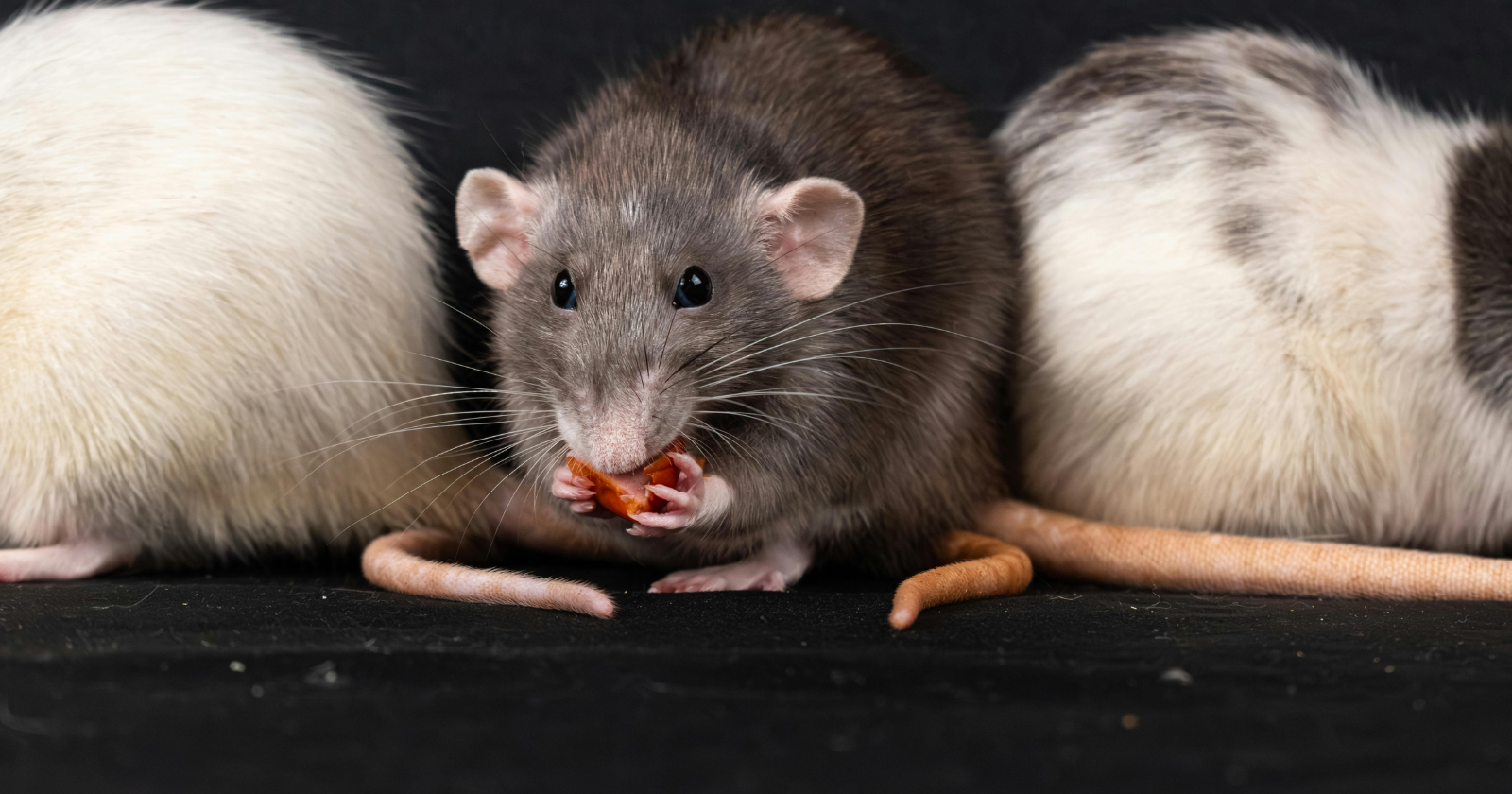
Strip a rat of almost all its dopamine and it will still pull a happy face at sugar.
Rats, orangutans and human newborns share a small vocabulary of facial reactions to taste. Sweetness produces rhythmic tongue protrusions and relaxed lip movements. Bitterness produces gapes and head shakes. No interview required, which makes the method unusually clean for something as slippery as pleasure.
Rats that liked sugar and did nothing about it
Kent Berridge and Terry Robinson, in a University of Michigan laboratory, used a neurotoxin to destroy up to 99 per cent of the dopamine in the nucleus accumbens and neostriatum of rats. In a long review published in Brain Research Reviews, they reported that the animals’ facial reactions to sucrose came through the procedure intact. Their willingness to seek it out collapsed. Left alone with food in the cage, they barely touched it.
Two systems, apparently, sharing one word.
Mice that cannot make dopamine at all
Claire Cannon and Richard Palmiter took a blunter approach at the University of Washington, breeding mice genetically incapable of synthesising dopamine. Their paper in the Journal of Neuroscience, titled Reward without Dopamine, put the animals in front of a computerised lickometer and watched what they chose. They chose sucrose over water, and saccharin too, a sweetener with no calories at all, which rules out a simple energy-seeking explanation. Even juveniles that had never once eaten with their dopamine system switched on already showed the same preference.
What went missing was the fetching. The mice initiated drinking bouts less often and took fewer licks overall than normal mice. Without a daily dose of L-dopa, they will starve next to a full dish.
Turning the dial the other way
Push synaptic dopamine up instead of wiping it out, and the same split shows up in reverse. Susana Peciña and colleagues bred mutant mice that keep only a tenth of the normal dopamine transporter, leaving them swimming in roughly 70 per cent more synaptic dopamine than usual. Writing in the same journal, the team clocked these mice reaching a sweet reward faster and with far less fumbling than ordinary mice managed. Their facial liking reactions to sucrose sat at baseline.
A test built around effort
Put a hungry rat in a cage with two ways to eat: a lever that pays out sugar pellets, or a bowl of plain chow sitting there for free. John Salamone and Mercè Correa built decades of research around exactly this choice. Give the rat a low dose of the dopamine blocker haloperidol and lever pressing collapses while chow intake holds steady, an effect Patrick Randall and colleagues documented in a progressive ratio study in PLoS One.
The animal still wants dinner. It has simply stopped being willing to pay for it.
Salamone and Correa’s Neuron paper puts the conclusion bluntly: calling these cells reward neurons is an overgeneralisation. On their reading, accumbens dopamine handles behavioural activation, exertion of effort, approach and sustained engagement. Appetite itself lives somewhere else.
Where the pleasure actually lives
That somewhere else turned out to be tiny. Berridge later mapped it with Morten Kringelbach, describing hedonic hotspots in Pleasure systems in the brain, patches roughly a cubic millimetre across in the accumbens shell and at the back of the ventral pallidum. Opioid or orexin stimulation there can more than double a rat’s liking reactions to sweetness. Dopamine stimulation in the very same tissue lifts the urge to eat and leaves the liking flat.
Wanting, on this account, runs on large and robust machinery. Liking depends on something small enough to knock over by accident.
How settled is any of this
Some caution belongs here. This is one research programme, and a contested one. Other labs treat dopamine less as a reward signal and more as a teaching mechanism, a prediction error that quietly updates expectations. Others cast it instead as a controller of movement vigour. Robinson and Berridge published a defence of their incentive sensitisation theory in the Annual Review of Psychology, three decades after proposing it, which tells you how live the argument still is.
The dissociation has been robust enough to reshape how addiction gets described. Craving that outlasts enjoyment stops looking mysterious once the two run on separate circuitry, and a drug that sensitises one system has no obligation to touch the other. People who report that a substance stopped being fun years ago, and who chase it anyway, are describing something a rat can demonstrate on camera.
Which offers a cold sort of comfort to anyone who has scrolled for an hour and enjoyed roughly none of it. Pull and payoff were never welded together in the first place.