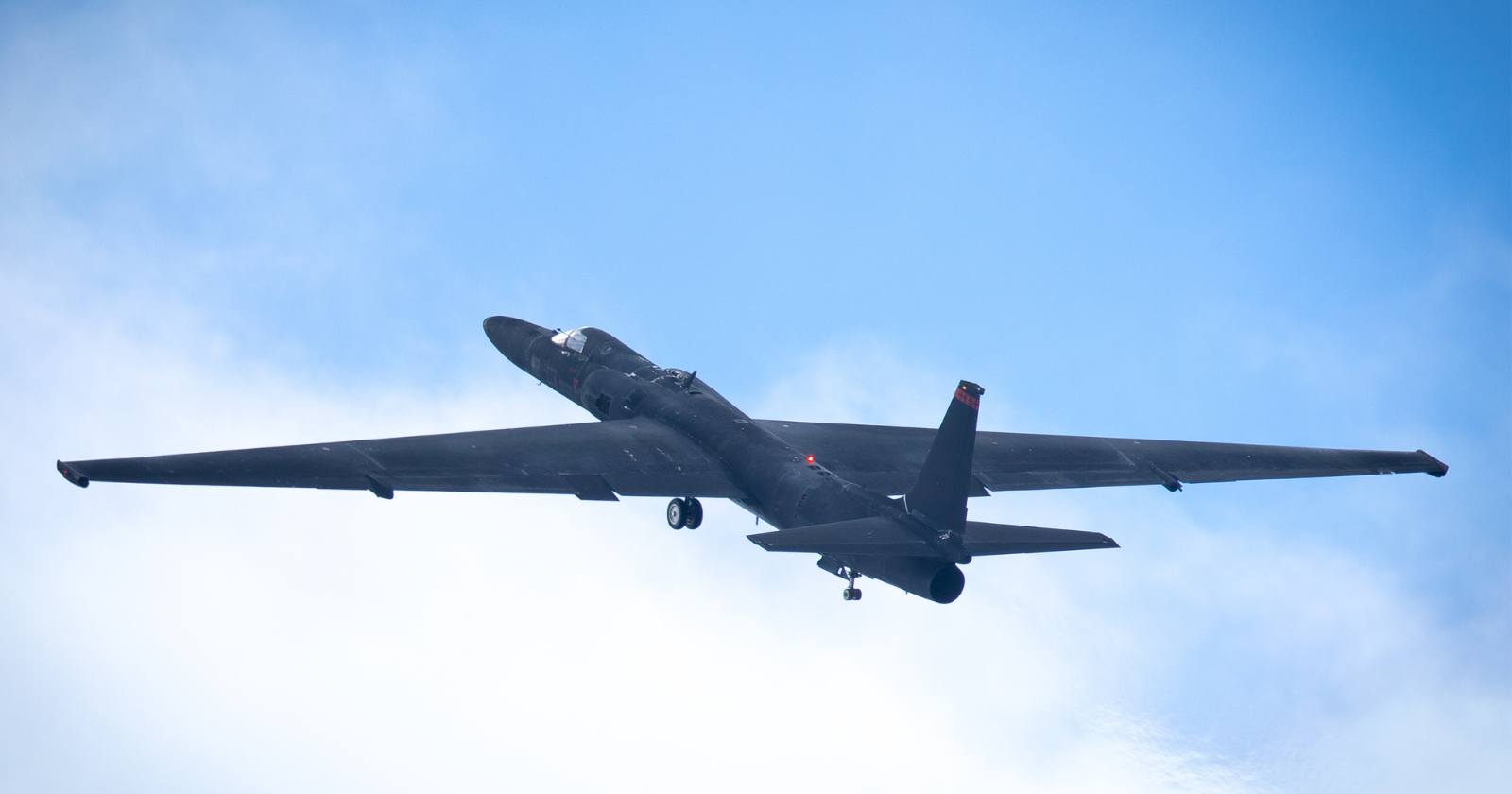
Somewhere over the American Midwest in the mid-1950s, a commercial pilot looked up and saw a coal of fire sitting in a sky that had already gone dark underneath it. He filed a report. So did other pilots, and so did the men in the control towers listening to them.
None of them knew the burning thing was an aeroplane flying at roughly three times their altitude, or that the explanation would stay locked in a filing cabinet for the next forty years.
How high the U-2 actually flew
Altitude was the whole trick. Through the mid-1950s most commercial airliners cruised somewhere between 10,000 and 20,000 feet, and military aircraft generally stayed under 40,000. The CIA’s U-2 operated at 60,000 feet and above, high enough that the sky over the cockpit goes a bruised dark blue and the pilot needs a pressure suit to survive the view.
That gap created an optical problem nobody had budgeted for. Gerald Haines, who was the National Reconnaissance Office historian when he wrote up the agency’s UFO files for the CIA’s in-house journal Studies in Intelligence, noted that the earliest U-2s were silver rather than black, and that they caught the sun at sunrise and sunset. To anyone underneath, they looked like something on fire.
The plane was still catching the sun. The ground below it was not.
What Project Blue Book told the public
So what happens when an air traffic controller rings the Air Force about a fireball at impossible altitude? By the mid-1950s there was an office for exactly that. Project Blue Book, run out of Wright-Patterson Air Force Base in Ohio, logged 12,618 sightings between 1947 and 1969, of which 701 were still filed as unidentified when the programme shut down, as documented by the National Archives.
Some of the investigators knew about the secret flights. Haines records that they offered the public ice crystals and temperature inversions, while privately checking sightings against the U-2 project staff in Washington and matching reports to real missions. Then they said nothing, on the reasonable grounds that a spy plane the Soviets did not know about was worth more than a tidy answer for anxious passengers.
It worked, at least by the metric they cared about. The proportion of sightings Blue Book could not explain fell to 5.9 percent in 1955 and 4 percent the following year, per the same CIA study. That study also carries the claim that made all of this famous: officials who had run the reconnaissance programmes later estimated that their aircraft accounted for over half of every UFO report filed from the late 1950s through the 1960s.
Investigators were solving cases they were not allowed to close honestly.
The history that came out in 2013
In 2005 the National Security Archive at George Washington University filed a freedom of information request for the CIA’s internal account of the programme. Eight years later a much less redacted version landed, and it was the one historians had been waiting for: The CIA and the U-2 Program, 1954-1974, written for the agency’s history staff by Gregory Pedlow and Donald Welzenbach. It put Area 51 on a map, in a document anyone could download.
Chris Pocock, the British author who had spent decades reconstructing the programme from open sources, told NBC News that nearly all of it was already in his books. The difference was that this time the government was the one saying it.
Then, in December 2014, the CIA’s own Twitter account announced that the most-read document it had shared all year was that history, and glossed it in three words: it was us. NPR read the tweet out on air the next morning.
Where the number gets slippery
“Over half” is doing an enormous amount of work in this story, and it deserves a closer look. The figure comes from later estimates by officials who had worked on the U-2 and its successor, the OXCART, not from anyone auditing the sighting files and tallying the matches. Those files have since been opened, which makes the claim testable, and people have tested it.
Robert Sheaffer, who has spent a career deflating UFO reports, argued on his blog that the sighting reports do not line up with the flight records in either time or place, and that the CIA’s claim had managed a rare feat: uniting believers and sceptics in dismissing it, in coverage by Space.com. The photo analyst Bruce Maccabee held a similar view, as reported by the same outlet. One retrospective estimate by interested parties is exactly that, and no more.
What I find hard to shake is the smaller admission sitting inside the big one. Somebody in 1956 realised that the cheapest way to protect a secret was to leave a better story standing in front of it, and that a public chewing over ice crystals and flying saucers would not go looking for a Lockheed contract. That instinct did not retire with the silver paint. Every agency that has ever declined to comment on a hole in the sky has been quietly grateful for the aliens.