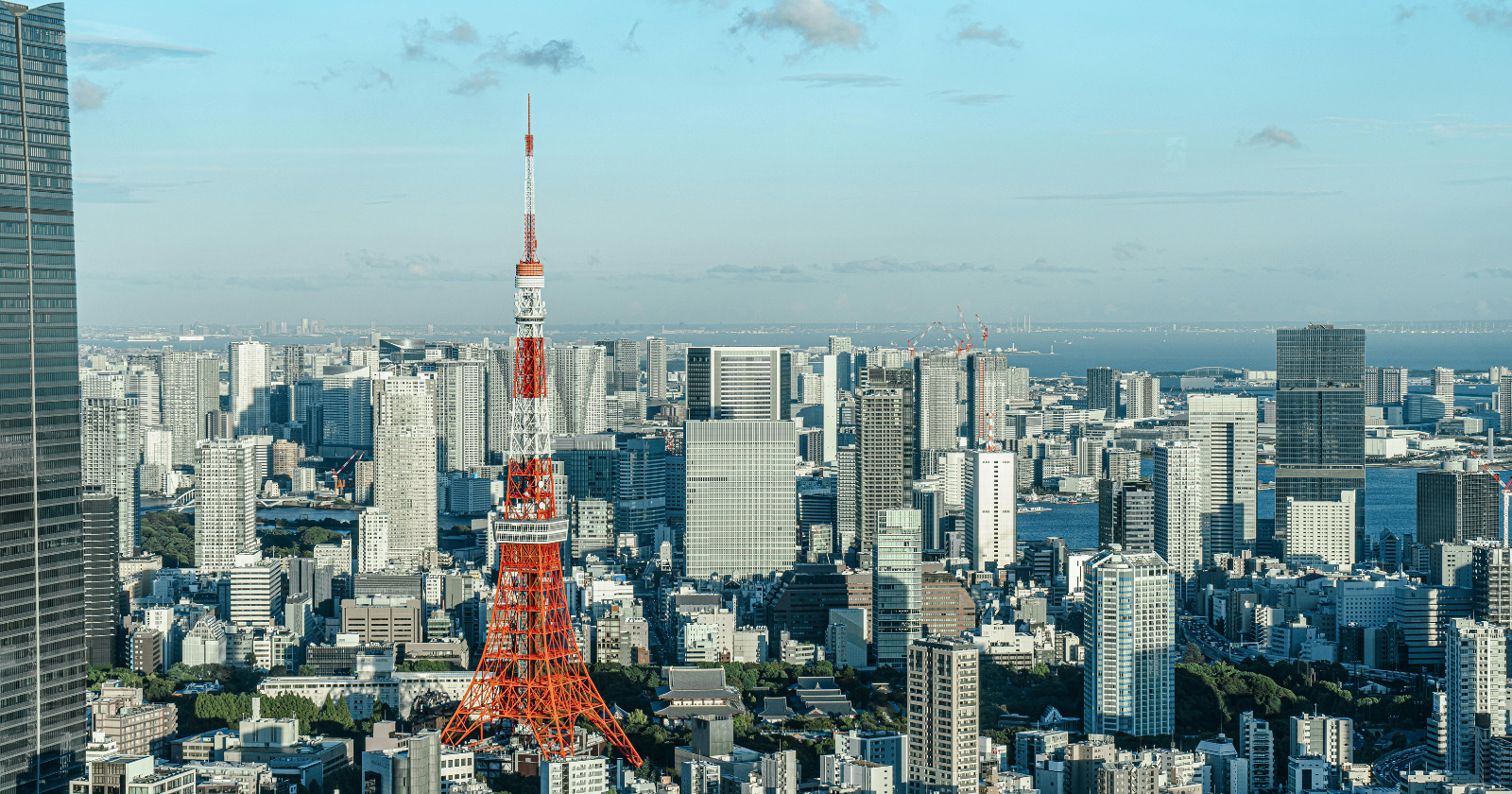
I have been to Tokyo five times in the last decade. I keep going back, partly because the food is the best in the world by almost any metric I can apply to food, partly because I have, by now, a small set of bars and bookshops and corners of particular neighborhoods that I look forward to revisiting, and partly because Tokyo continues to occupy a particular place in my imagination that no other city I have been to has quite replicated.
What I want to write about is the strange thing I noticed on my most recent visit, a few months ago, which was the slow realization that the place in my imagination that Tokyo occupies is, on close examination, no longer accurate to what Tokyo currently is. The Tokyo I was carrying in my head, the one that had been built up by thirty years of cultural exposure, is not, on the ground, the Tokyo I was actually walking around in. The two are different. The difference is, in some real way, the article.
The Tokyo we were promised
The Tokyo of my imagination was assembled, somewhere in the 1980s and 1990s, by a particular set of cultural objects that almost all of my generation absorbed without quite realizing we were absorbing them. The neon-soaked streets of Blade Runner, which were modeled on Shinjuku. The bullet trains. The cyberpunk literature. The video games. The vending machines that sold hot coffee in cans. The vision of a society that had, through some combination of post-war discipline and technological ambition, leapfrogged the rest of the developed world into a future that the rest of the developed world would, presumably, eventually catch up to.
The vision was, at the time, accurate to where Tokyo actually was. In 1985, Tokyo was, by almost every measurable metric of urban modernity, ahead of the cities the rest of us were living in. The trains were better. The vending machines were stranger. The neon was more saturated. The whole place was, in some real way, operating on a different timeline than the rest of the world. The future was happening in Tokyo first, and the rest of us were watching it occur with a particular mixture of envy and anticipation that we would eventually get our own version.
What none of us, on the receiving end of this vision, fully registered at the time was that the version of the future Tokyo represented was a particular version, calibrated to the technological and aesthetic assumptions of the 1980s. The version involved, specifically, the dense layering of physical technology on top of dense urban form. The neon signs. The pachinko parlors. The cassette decks in the taxi cabs. The fax machines in every office. The wonderful, slightly absurd density of physical-world technology that the 1980s Japanese economy had produced in greater quantity than anyone else.
The version was the future of one particular branch of how things might have gone. The branch was the one in which the physical-world layer continued to thicken indefinitely. The branch was also, on the available evidence, not the branch the rest of the world actually took.
What Tokyo did, while the rest of the world moved on
What Tokyo did, somewhere in the early 2000s, was something remarkable that I do not think I fully appreciated until my most recent visit. Tokyo decided, by some combination of cultural preference and economic stagnation, to preserve the 1980s version of the future rather than to keep iterating into whatever came next. The fax machines stayed. The cash culture stayed. The particular kind of urban density and the particular aesthetic of layered neon and small physical interfaces all stayed. Tokyo became, in some real way, a museum of the future as it had been imagined in 1985, maintained with extraordinary care, but no longer being added to.
This is, I want to say plainly, not a criticism. The preservation is, in many ways, glorious. Tokyo continues to be the most pleasant large city I have ever spent time in. The trains still work the way they used to work. The vending machines are still strange and reliable. The convenience stores are still better than convenience stores in any other country I have been to. The whole place still operates with a particular kind of competent precision that the rest of the world, on the available evidence, never quite matched. Tokyo is, by any measure of livability, near the top of the list of major cities I have visited.
What Tokyo is not, on close examination, is the future. Tokyo is, more accurately, the past’s version of the future, perfectly preserved. The actual future, the one that the technological and economic forces of the last two decades have been producing, is happening elsewhere.
Where the actual future is being assembled
I have been to Seoul three times in the last five years. I have been to Shenzhen twice. I have been to Dubai once, for a long week last winter. What is happening in these cities is, on close examination, what Tokyo was doing in the 1980s, but with the materials of the 2020s rather than the 1980s.
Seoul, in particular, has produced, over the last decade, what feels like the genuinely new urban configuration. The integration of mobile payment, real-time public transit data, ambient retail, and what I can only describe as a particular kind of post-physical interface culture, has produced a city that does not feel like a thickened version of an older form. The city feels, more accurately, like a thinned version of an older form, with most of the physical-world friction removed and replaced by digital infrastructure that operates invisibly in the background. The neon is still there. The neon is no longer doing the work it used to do. The work is being done elsewhere, in the layer one cannot see, by the various apps and systems that have, by some quiet process, become the actual operating system of the city.
Shenzhen is, in some real way, the more aggressive version of the same configuration. The city has been built, more or less from scratch, in the last forty years, and the building has occurred on the assumption that the digital layer is the primary layer and the physical layer is the support. The result is a city that I find, frankly, less pleasant than Seoul or Tokyo to actually walk around in. The result is also, on close examination, the city that is most clearly operating on the assumptions of the next era rather than the previous one. The lack of pleasantness is, in some real way, the cost of being on the leading edge of the actual transition.
Dubai is the third version, and the strangest. Dubai is what happens when essentially unlimited capital is directed at the construction of a city designed around the assumptions of the 2020s rather than around any pre-existing urban configuration. The result is, on close examination, slightly uncanny. The city does not feel like a city in the older sense. The city feels more like a particular kind of climate-controlled experience-environment that happens to involve buildings. Whether this is the future, or whether this is the future’s overcorrection, is not yet clear. Either way, it is unmistakably not the future of 1985. It is, more accurately, the future of something that has not yet acquired a clean name.
What this means for how we see Tokyo now
The strange thing about Tokyo, in light of all this, is that the cultural place it occupies in the imagination of people my age has not, in most cases, updated. We still think of Tokyo as the future-arriving-early city. The cultural objects that installed this association are still being produced, in updated form. The new Blade Runner films are still set in versions of cities that are visually Tokyo. The video games are still drawing on the same visual vocabulary. The wider cultural register has, in some real way, frozen Tokyo in the position it occupied forty years ago, even though Tokyo itself has, by quiet preference, also chosen to remain in that position rather than to continue updating.
The freezing has produced a particular kind of double effect. Tokyo, as a destination, has become more rather than less appealing to people my age, because the city continues to deliver the visual experience that our cultural conditioning has trained us to find futuristic. The fact that the visual experience is no longer accurate to the actual frontier of the future is, in some real way, beside the point. We are not, in most cases, going to Tokyo to see the future. We are going to Tokyo to see the past’s version of the future, which is, by any honest accounting, much more visually pleasing than the actual future’s version of itself.
The actual future, the one being built in Seoul and Shenzhen and Singapore, and Dubai, does not, on the available evidence, photograph as well as the 1980s version. The actual future is, in most cases, invisible. The work is happening in the layer one cannot see. The visible layer, in the cities of the actual future, is often less rather than more saturated than the visible layer of Tokyo. The aesthetic peak of the future has, in some real way, already passed. We are now in the post-aesthetic phase, in which the work is being done somewhere the camera cannot reach.
What I now think when I go back
What I now think when I go back to Tokyo is that I am visiting a particular kind of preserved historical artifact. The artifact is one of the more carefully maintained ones in the world. The artifact is also, on close examination, a city whose moment of being the leading edge of the future has been over for at least twenty years, and that has chosen, by quiet preference, to remain at that moment rather than to continue iterating.
This is not, by my honest accounting, a problem. The choice is one of several legitimate choices a city can make. Most of the cities that chose to keep iterating produced, on the available evidence, less pleasant places to be in. Tokyo’s choice to stop produced, on examination, one of the most pleasant cities in the world. The pleasantness is a real thing. The pleasantness is what I keep going back for.
What I do not, on close examination, get out of Tokyo anymore is the sense that I am visiting the future. The sense was, for the first three visits, the dominant thing I was experiencing. The sense has, in the last two visits, slowly faded. I have, in its place, a different experience, which is the experience of visiting a particular era’s high-water mark, preserved with care, still beautiful, but no longer the leading edge of anything. The leading edge is somewhere else. The leading edge is, on the available evidence, in Seoul, in Shenzhen, in Dubai, and probably in several other places I have not yet visited.
The leading edge is, however, considerably less pleasant to be in. Tokyo is, accordingly, what I would now describe as one of the most successful examples in human history of a major city making the deliberate choice to be a beautiful artifact rather than a piece of the future. The choice is, I think, vindicated by the fact that almost all of us, on examination, would rather visit Tokyo than Shenzhen. The vindication is real. The fact that the city we are visiting is not, on close examination, what we think it is, is also real. Both things can be true. Both things, on the available evidence, are.