For four years, an instrument station in the hyperarid core of Chile’s Atacama Desert logged one rain event. It measured 2.3 millimetres. The team reading the data suspected a heavy fog that had thickened and fallen.
That station sat near Yungay, roughly 80 kilometres south-east of Antofagasta. Christopher McKay and colleagues published the four-year dataset in the journal Astrobiology in 2003. Their figure for liquid water is the one worth holding onto: across the whole period, water was present in the soil and beneath stones for 65 to 85 hours. Dew formed often after humid nights and contributed almost nothing. A strong El Niño in 1997 and 1998 soaked the Peruvian deserts to the north and left the central Atacama alone.
What the rain gauges have recorded
Annual precipitation across the driest sector runs below 2 millimetres, and in some interior basins the honest unit is millimetres per decade. NASA’s own account of its field work there puts it at as little as one centimetre of rain in ten years.
The longest verified dry run in the instrumental record belongs to Arica, a coastal city at the desert’s northern edge, where the World Meteorological Organization recognises 172 months without precipitation between October 1903 and January 1918. Arica sits well outside the hyperarid core, and the figure survives because a city keeps someone on hand to read the gauge. Instrumentation in the core goes back decades, not centuries, which is why its strongest numbers come from research stations.
Three things keep it that way. The Andes block moisture arriving from the Amazon basin. Offshore, the cold Humboldt Current holds in an inversion that stops cloud rising far enough to rain, and a persistent subtropical high pushes air downward above both.
The soil chemistry behind the Viking ambiguity
Plenty of places on Earth are dry.
What earned the region its place in planetary science is what its soil does to instruments. Rafael Navarro-González of the Universidad Nacional Autónoma de México, working with McKay and others, published a paper in Science in November 2003 reporting organic compounds at only trace levels in soils from the extreme arid region, with very low counts of culturable bacteria. Two surface samples yielded no recoverable DNA. When the team ran incubations patterned on the Viking landers’ labelled-release experiment, the soil decomposed organic material through non-biological processes, which is what has kept the 1976 results contested ever since.
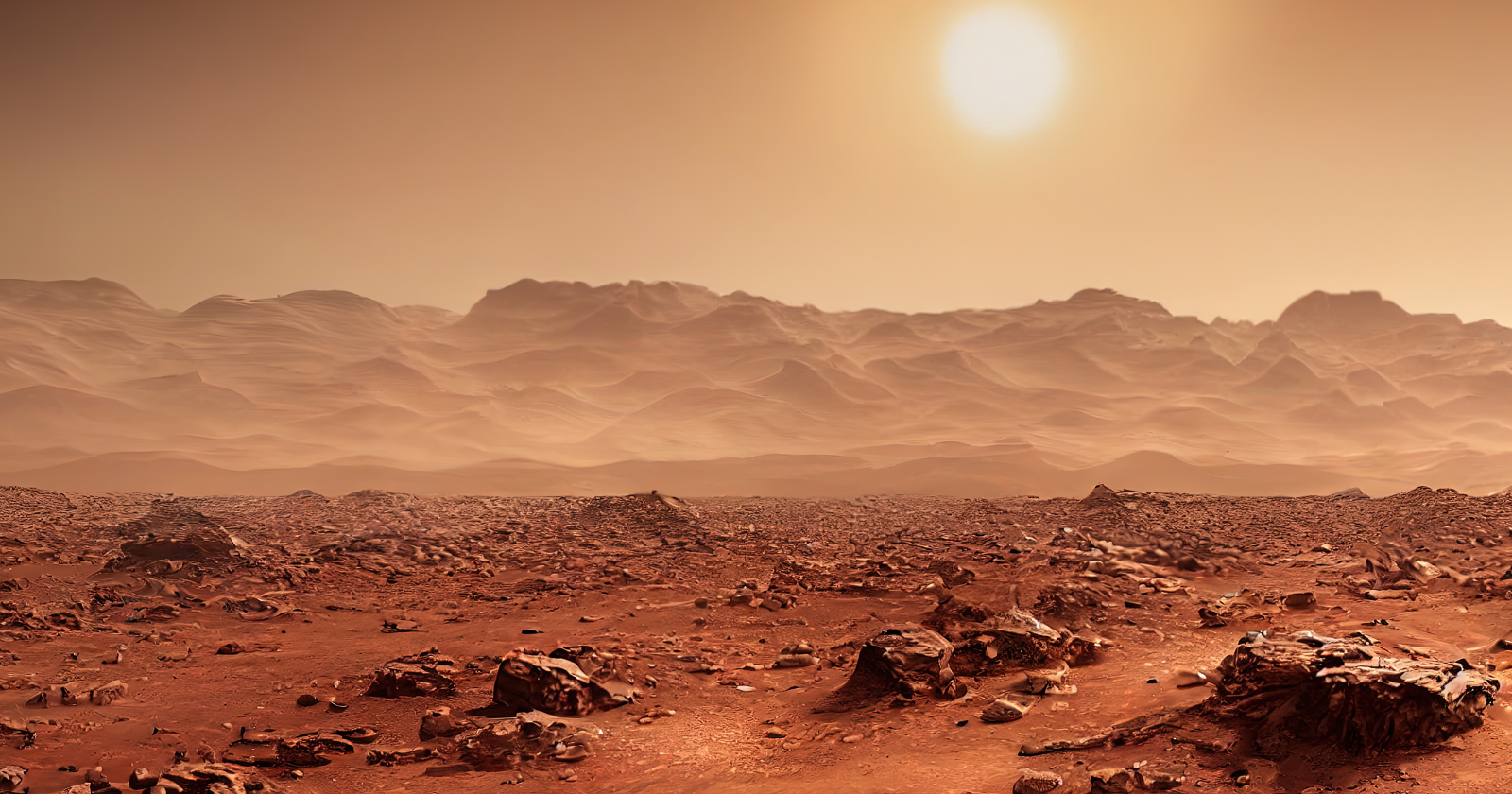
This is what makes the analogy useful to us. The Atacama defeats life-detection hardware in the same specific way Mars does, while still holding life. The visual resemblance is incidental.
The driest site is not the best known one
Yungay became the reference site largely on logistics, before any systematic survey had established where the extreme was. Armando Azua-Bustos, Luis Caro-Lara and Rafael Vicuña reported a drier one in Environmental Microbiology Reports in 2015, a site they called María Elena South. Mean atmospheric relative humidity there was 17.3 per cent against 28.8 per cent at Yungay. A metre down in the soil it held near 14 per cent, a value the authors noted matches the lowest readings taken by the Mars Science Laboratory at Gale crater.
They still found viable bacteria in that profile.
What NASA actually drove into the desert
The rover work in the Atacama is a mission rehearsal, not a flight-hardware shakedown. Between 2016 and 2019, the Atacama Rover Astrobiology Drilling Studies project, led by Brian Glass at NASA’s Ames Research Center, spent about a month a year on site with the K-REX2 rover and a Honeybee Robotics rotary-percussive drill reaching 2 metres.
By the final campaign in September 2019, the rover’s forward payload deck carried SOLID, an immunoassay detector from Spain’s Centro de Astrobiología; PISCES, a capillary electrophoresis analyser derived from the Jet Propulsion Laboratory’s Chemical Laptop; and a testbed version of the Wet Chemistry Laboratory flown on Phoenix. Goddard’s linear ion trap mass spectrometer, LITMS, had been the intended onboard addition, but it ran as a standalone field test in March 2019 and never rode on the rover.
According to the project overview published in Astrobiology, a science team at Ames commanded the rover remotely at a playa site about 20 kilometres from the old Estación Yungay facility, sending daily instructions and waiting for data. The exercise tested whether autonomous drilling, sample handling and detection could work together at distance, with nobody able to walk over and fix anything.
When rain did arrive
In 2015 and again in 2017, unusual rain reached the hyperarid core and left hypersaline lagoons standing for months. Azua-Bustos, Alberto Fairén, Carlos González-Silva and a larger team documented what followed in Scientific Reports. The water killed most of what was living there. Surface microbial species adapted to almost no moisture appeared to die from osmotic shock once it became abundant. Only a handful of organisms stayed active, including a newly identified Halomonas species. No archaea or eukaryotes turned up.
The paper goes on to argue that this bears on how any early Martian microbiota might have fared during wet episodes. That inference belongs to its authors and to this dataset: a finding from two rain events at one set of sites, not a settled account of what happened on Mars.
Where the detection problem now sits
One recent result runs against the optimistic reading of all this. A 2023 paper in Nature Communications from Azua-Bustos and co-authors examined Red Stone, a fossilised river delta whose mineralogy resembles what ground-based instruments have found on Mars. It holds what they call a dark microbiome, organisms largely unclassifiable against existing reference databases. Organic levels were so low that testbed versions of the detectors now on Mars, or bound for it, struggled to register them.
Two decades of work in the desert have shown that life persists at the dry limit. The same ground now shows how easily flight hardware can miss it. What to watch is whether the next life-detection payload is built to register organics at the levels this desert actually holds.