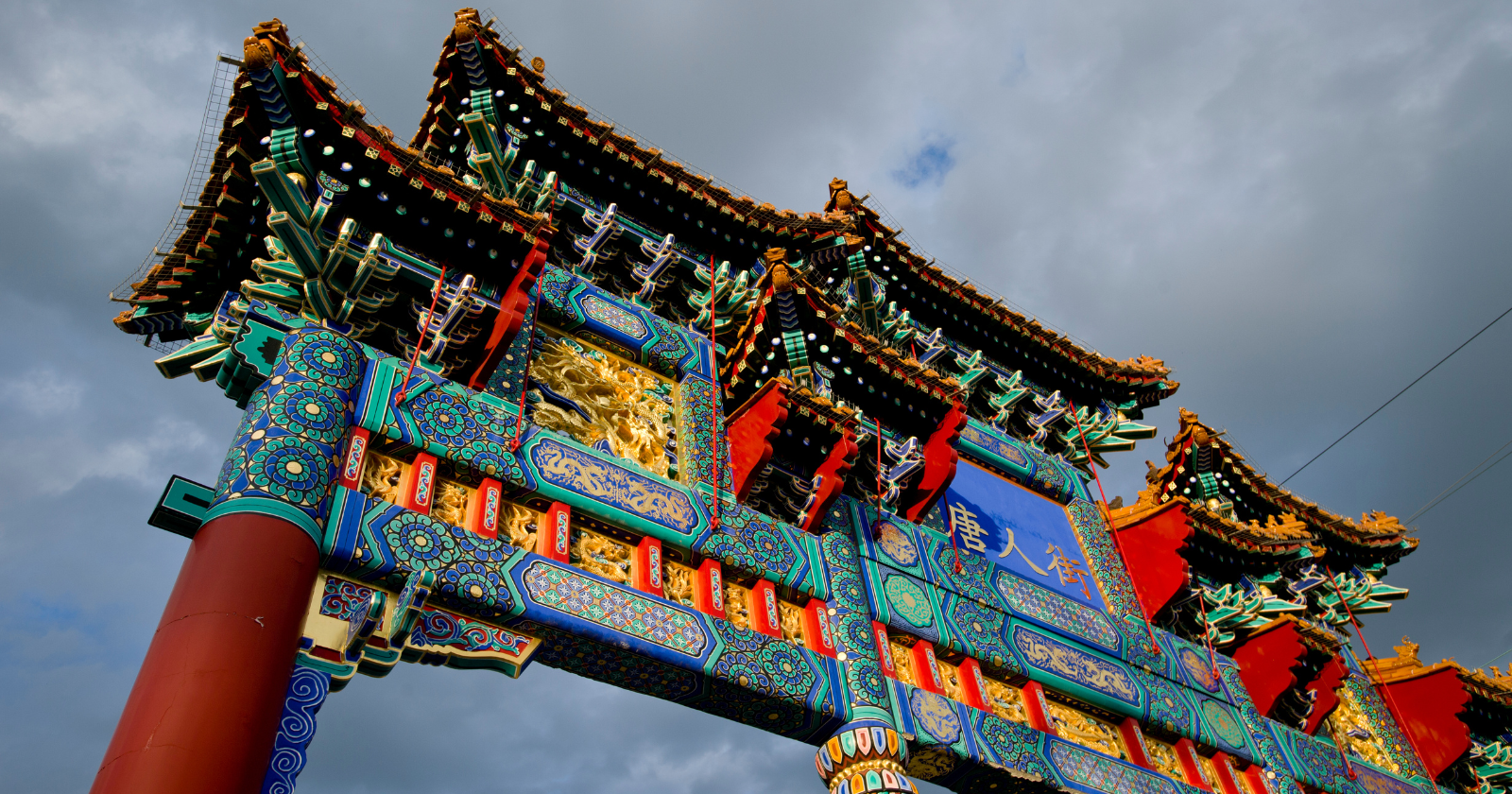
Ask someone in Lima what they want for dinner and the answer might contain a Cantonese verb. Vamos al chifa means let’s get Chinese food, and chifa comes from chī fàn, to eat rice. That phrase has been sitting inside Peruvian Spanish for over a century, and nobody who says it thinks of it as borrowed.
Whether the family cooking that dinner counts towards the world’s largest diaspora depends on who is holding the clipboard.
Why the estimates differ by 35 million
Most headlines settle on about 50 million people of Chinese descent living outside mainland China. Taiwan’s Overseas Community Affairs Council put the total at 49.7 million in its 2022 statistical yearbook: 34.6 million in Asia, 9.8 million across the Americas, as documented by ChinaSource.
The United Nations counts roughly 10 million.
Both numbers are defensible because they answer different questions. In a working paper for the US Census Bureau, the demographer Daniel Goodkind spelled out the split. The UN tallies people actually born in China who now live somewhere else, first generation only. Taiwan’s council includes anyone of Chinese ancestry who still identifies that way, however far back the crossing was. Subtract one from the other and about 35 million people sit in the gap, descendants rather than migrants.
Indonesia is where the two methods diverge most sharply. Taiwan’s council estimated 8.4 million ethnic Chinese Indonesians in 2014. UN figures for Indonesian residents with a Chinese birthplace came to fewer than 100,000.
How indentured labourers built Peru’s national cuisine
The pitch, in 1849, was simple: an eight-year contract, passage across the Pacific, and freedom at the end of it. Peru’s Congress had just passed a law called the Ley China, paying companies to deliver labourers, and around 100,000 Chinese men took the deal between 1847 and 1874. About a third died on the crossing. Survivors were sent to scrape guano off coastal islands and cut cane on haciendas, work that the historian Patricia Palma, writing for the Migration Policy Institute, describes as sometimes indistinguishable from slavery.
Peruvian officials assumed the men would leave once their eight-year contracts expired. They moved to the cities and opened shops instead.
Cheap eating houses called fondas appeared in Lima in the 1860s, aimed at workers who could not afford anything better, and by the 1920s these had turned into chifas with tablecloths and a wider clientele. Hostility tracked the success closely. In 1909 Lima rioted and looted Chinese-owned businesses, prompting the president to suspend Chinese immigration that same month. By 1932, companies had to ensure four in five employees were Peruvian.
Five centuries in the Straits of Malacca
Does a community stop being a diaspora at some point?
Peranakan Chinese are the sharpest test case going. Their ancestors were traders who reached Malacca from the fifteenth century onwards and married local women. Their descendants became the merchant class of the British Straits Settlements. Men are called baba and women nonya. After the Settlements became a Crown colony in 1867, some took to calling themselves the King’s Chinese, per Singapore’s National Library Board. Two Peranakans went on to lead the country: Lee Kuan Yew as its first prime minister, Wee Kim Wee as its fourth president.
They also lost their language. Baba Malay runs Malay vocabulary through Hokkien sentence structure. In coverage by the National University of Singapore, the linguist Nala Lee’s research describes it as endangered and now confined largely to older speakers. Peranakan food, kebaya and beadwork have had a revival. Nobody has worked out how to revive a grammar.
Five centuries of persistence and five centuries of dissolution turn out to be the same process, running at the same time.
Where the diaspora is growing now
Africa, faster than anywhere. Taiwan’s council raised its estimate for the continent from 240,000 in 2010 to 1.18 million in 2022, a jump of nearly 500 percent in twelve years.
That speed doesn’t inspire much confidence in the count. Goodkind points to Zambia, where a former president cited 80,000 Chinese residents while a year-long review of residence permits suggested a figure between 13,000 and 22,000. Published estimates for Chinese people across the whole continent have ranged from 250,000 to two million, an eightfold spread.
Who leaves has changed as much as where they land. Goodkind found a clear tilt in the sex balance: Chinese migrants worldwide ran 8 percent male-heavy in 1990 and 15 percent female-heavy by 2017, pushed by international intermarriage, adoption and a surge in undergraduates studying abroad. Of the 10 million first-generation migrants he counted, roughly one in ten was a student. Anyone still picturing a boatload of contract labourers has the wrong century.
Money is easier to weigh. World Bank data compiled in that same Census Bureau paper shows more than US$60 billion remitted to China through official channels in 2017, with the United States and Hong Kong each accounting for about a quarter.
Dudley Poston and Juyin Helen Wong, in a paper published in the Chinese Journal of Sociology, counted 40.3 million overseas Chinese living in 148 countries. That is one study working from one definition, and swapping the definition moves the total by tens of millions. Geographic sprawl across roughly 150 countries is the solid part of the claim. What gets counted is a judgement, made largely by governments, about who still belongs among people who were never asked the question.