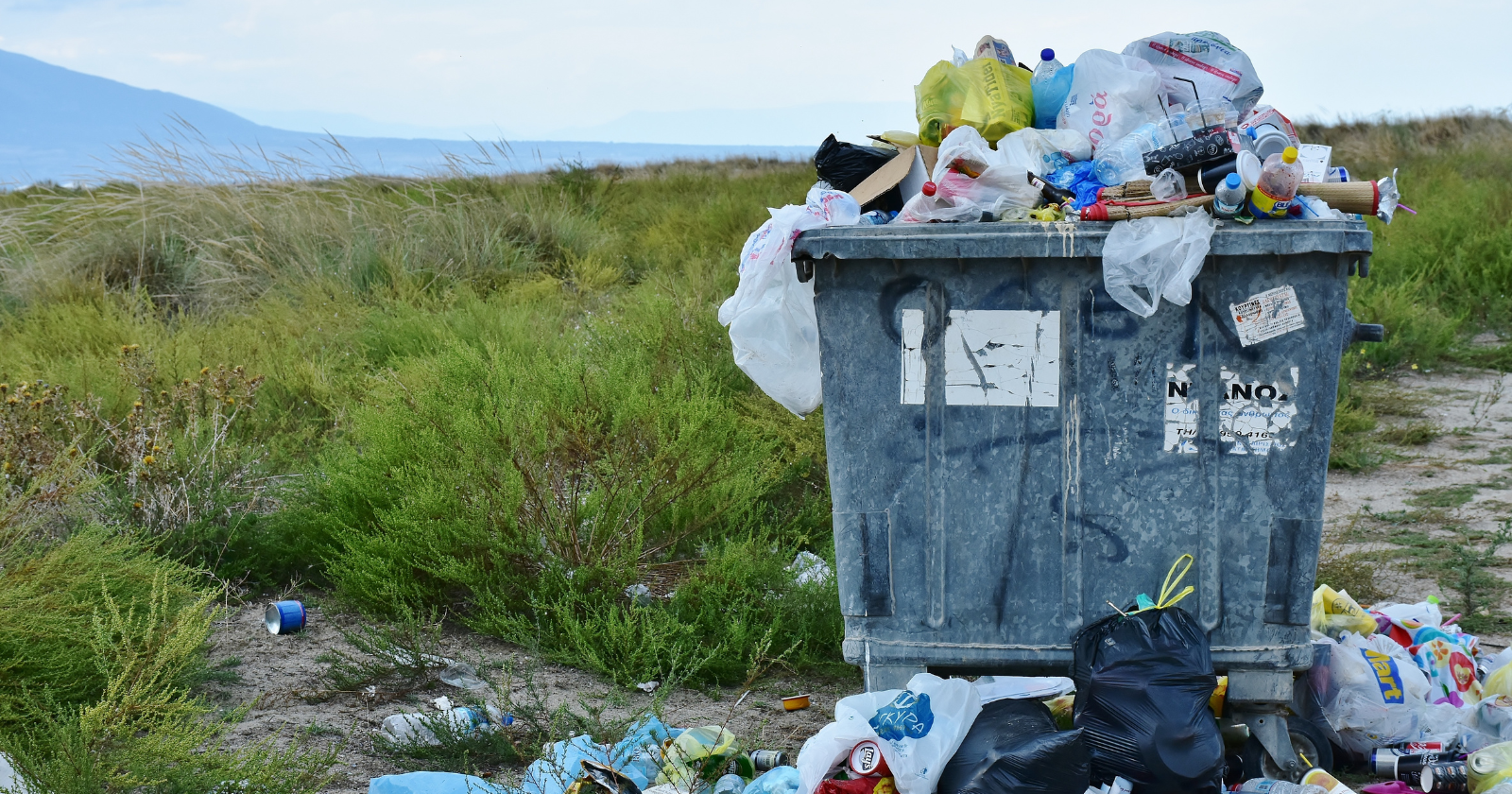
Every morning, lorries stacked with other people’s rubbish grind across the Norwegian border into Sweden, and ships carrying baled British household waste tie up at Swedish docks. None of it is being purchased. Sweden is charging for the privilege of taking it away.
Volumes are large enough to sound like a typo. Sweden brought in 2.92 million tonnes of notifiable waste in 2022, and by 2024 that had climbed to 3.86 million tonnes, per the Swedish Environmental Protection Agency’s import and export figures, with the United Kingdom, Norway and Italy supplying most of it.
All of which traces back to a heating system built before anyone worried about running short of fuel.
How a country ends up short of rubbish
Sweden spent decades building district heating, a setup where one large plant warms an entire suburb through a network of insulated pipes rather than every building running its own boiler. Cold winters made it sensible. Cheap municipal waste made it cheap.
Then the sorting got good. Recycling rates rose, landfill collapsed to almost nothing, and the incinerators, sized for the rubbish habits of an earlier era, found themselves with more furnace than fuel. Swedish incineration capacity now runs comfortably ahead of what the country generates, which is why imports fill the gap, as documented by the Nordic Council of Ministers in its review of Nordic waste incineration. That same report puts the flow of imported waste-derived fuel into dedicated incinerators at 1.4 to 1.6 million tonnes a year, a narrower slice than the headline total, which also covers other treatment routes.
Sweden has furnace capacity it needs to keep busy, and Europe has rubbish it needs to lose.
On a related note, watch this video on how Japan is tackling its waste problem:
Getting paid at both ends
Here is the part that makes the accountants happy. A Swedish plant collects a fee for accepting foreign waste, then sells the resulting heat and electricity to Swedish households. Two revenue streams, one delivery of somebody else’s bin contents.
Pinning down the actual number means going back to 2015, when the public broadcaster SVT calculated the margin on imported waste at roughly 373 kronor a tonne for 2013, drawing on several industry sources. That year the heating plants took in 2.14 million tonnes between them, worth a shade over 798 million kronor. It is a decade-old estimate, and operators treat their current gate fees as commercially sensitive, so nobody outside the industry knows precisely what the rate is today. Scaled against recent import volumes, it would clear a billion kronor a year.
Councils in Norway and the UK are acting on plain arithmetic. Shipping waste to a Swedish furnace is cheaper than landfilling it or building the infrastructure to handle it, once landfill taxes and permits are counted.
What the furnaces actually deliver
Roughly a quarter of Swedish district heating comes from waste incineration, alongside a small slice of the electricity supply. In 2022 the sector produced 17.9 terawatt hours of heat and about 3 terawatt hours of power.
The Swedish Energy Agency puts total energy recovery from waste at 19.5 terawatt hours annually, enough to heat more than 1.47 million apartments and supply electricity to another 940,000. In a country of about ten million people, that is a serious chunk of the winter.
None of this makes the plants dependent on the imports, though. Avfall Sverige, the waste management association, says that if the foreign rubbish dried up, the same boilers could run on biofuel instead. Imports are an economic choice, not a survival strategy.
The awkward carbon arithmetic
Burning rubbish releases carbon dioxide, and a decent share of what goes into a Swedish incinerator started life as crude oil. Plastic packaging is fossil fuel that has been through a moulding machine.
Those numbers are stark. By 2021, waste incineration accounted for 73 per cent of all carbon dioxide equivalent emissions from Sweden’s combined heat and power sector, according to the Nordic Council report, a share that has grown as everything else in that sector switched to biofuels. Swedish district heating looks clean mostly because it stopped burning coal and oil.
The rubbish stayed.
Environmental groups add a second objection. If Sweden keeps offering a cheap disposal route, exporting countries have less reason to build their own recycling capacity, and materials that could have been recovered end up as heat instead. The waste hierarchy underpinning EU policy ranks recycling above energy recovery for exactly this reason.
The tax that lasted two and a half years
Stockholm did try to lean on the practice. A tax on waste incineration took effect in April 2020, starting at 75 kronor a tonne and rising each year, with the stated aim of pushing more material up the hierarchy into recycling.
It did not work, and it did not last. Parliament scrapped the levy from January 2023, having concluded that it was discouraging investment without shifting much waste towards recycling. Norway had introduced a tax of its own on waste incineration back in 2022, so for a stretch both countries were charging for the same activity from opposite sides of a shared market. Once Sweden’s levy disappeared, that price gap gave Norwegian waste one more reason to keep crossing the border.
Which leaves an arrangement nobody quite designed: a continent’s leftovers travelling by road and sea to be burned in the one country with spare capacity, keeping the pipes hot in Malmö and Linköping while the exporting nations postpone their own reckoning. The infrastructure works beautifully. Incentives run backwards.