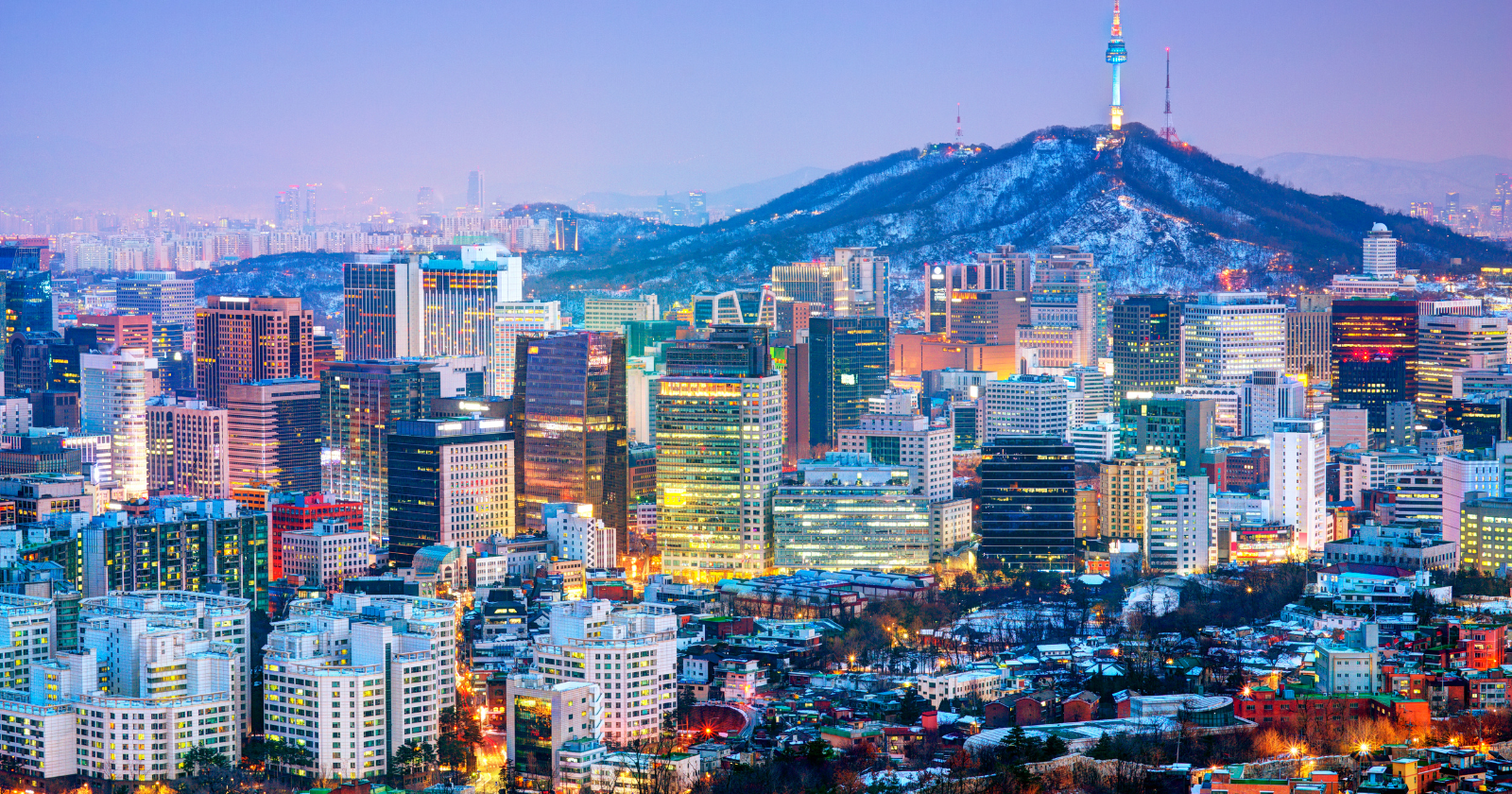
Seoul has a word for eating alone, another for drinking alone and a third for going to the cinema by yourself.
Twenty years ago, none of them were in common use. They now turn up on menus, in map filters, in marketing decks and on the packaging of convenience store meal boxes.
Nearly four in ten households in the South Korean capital contain exactly one person. A Seoul Metropolitan Government report covered by the Korea Herald counted almost 1.66 million single-occupant households in the city in 2024, up from 1.63 million a year earlier. Two-person households came to 26.2 per cent of the total. Households of four, the unit that decades of apartment blocks and family dramas were designed around, made up 12.3 per cent. Since 2016, households containing a child aged five or under have fallen from roughly 350,000 to about 200,000.
The national trend runs a few steps behind and in the same direction. Ministry of Health and Welfare figures, set out in November coverage by the Korea Herald, put single-person households at a record 8.05 million in 2024, above 36 per cent of all households nationwide. The ministry projects the figure will approach 10 million by 2042.
A vocabulary that grew as fast as the numbers
Start with honjok, which stitches honja (alone) to jok (tribe).
Ann Babe, writing in Rest of World, mapped the branches: honbap (eating alone), honsul (drinking alone), honnol (solo leisure), honhaeng (travelling), honyeong (the cinema) and honsho (shopping). A Daumsoft analysis quoted in her piece tracked mentions of the first three terms rising from 44 at the start of the 2010s to more than 60,000 by 2016. Smartphone ownership climbed from 14 to over 85 per cent across the same years.
Money followed the language. The Korea Institute for Industrial Economics and Trade has estimated that single-household spending will approach 200 trillion won by 2030.
Choice explains part of the shift and arithmetic explains the rest. Jung Jae-hoon, a social welfare professor at Seoul Women’s University, told the Korea Herald that the makeup of these households reflects both a rapidly ageing country and the reluctance of young people to move out at all while living costs stay this high.
The infrastructure of one
Coin karaoke booths charge by the song rather than the hour. Cinemas have installed single-seat aisles. Restaurants that once enforced two-serving minimums on stews and grilled meat now set partitioned tables for solo diners, and convenience stores stock single portions and pouches of soju as a core line, not a novelty.
Housing has been slower and stranger. Seoul’s default answer is the officetel, a studio unit inside a mixed-use building, and demand comes overwhelmingly from people living by themselves. Estate agent Yoon Sung-il told Seoul Economic Daily that officetel buyers are mostly single-person households and newlyweds, and that many hesitate anyway, because owning one counts against them in the queue for a conventional apartment later. As owners convert units to commercial use or to monthly rent, he said, studio rents in his patch of Songpa have jumped by about a fifth, from roughly a million won a month to 1.2 million.
So the housing type built for the city’s most common household is still widely treated as a waiting room.
What people living alone actually report
Not everyone living alone is thriving. A Seoul Institute survey of 3,000 single-person households, written up last year in the Korea Herald, found 62.1 per cent describing persistent loneliness and 13.6 per cent with nobody to call when they were distressed, unwell or suddenly short of money. Loneliness ran highest in the 40 to 64 bracket, at 66 per cent. Respondents who were married but living apart from a spouse reported the most of any group. Statistics Korea’s 2024 social indicators, cited alongside it, put the share of the general population feeling lonely at 21.1 per cent, up from 18.5 a year earlier.
Freedom and isolation are separate measurements, and those surveys were taking the second one.
The figure that never makes the marketing deck
Korea treats death in social isolation as a statutory category, godoksa. Reviewing 57,145 police case records, the Ministry of Health and Welfare logged 3,924 such deaths in 2024, a rise of 7.2 per cent on the previous year, as reported by the Korea Times. Men accounted for 81.7 per cent of cases. People in their 60s made up the largest single share, followed by those in their 50s, which puts peak risk a decade or two younger than the pension-age assumption built into most outreach work.
Park Jae-man, a director general at the ministry, said the government has made a lifelong response to social isolation a national priority, and that from this year the policy widens to cover people merely at risk, so they can be identified earlier.
What the city is spending
Seoul has committed 451.3 billion won (about 327 million US dollars) over five years to a plan reported by CNN as an effort to make sure no resident feels alone, built around a 24-hour counselling line, in-person visits and follow-up consultations. Mayor Oh Se-hoon framed loneliness as a problem for the city to solve rather than for individuals to manage privately.
Retail took roughly five years to redesign itself around a single customer. Portions shrank, seating turned inward, and the language caught up almost in real time. Public policy runs on a slower clock, and the people it most needs to reach are the least visible to it: men in their fifties, recently out of work, still technically too young for anyone to think of checking on.